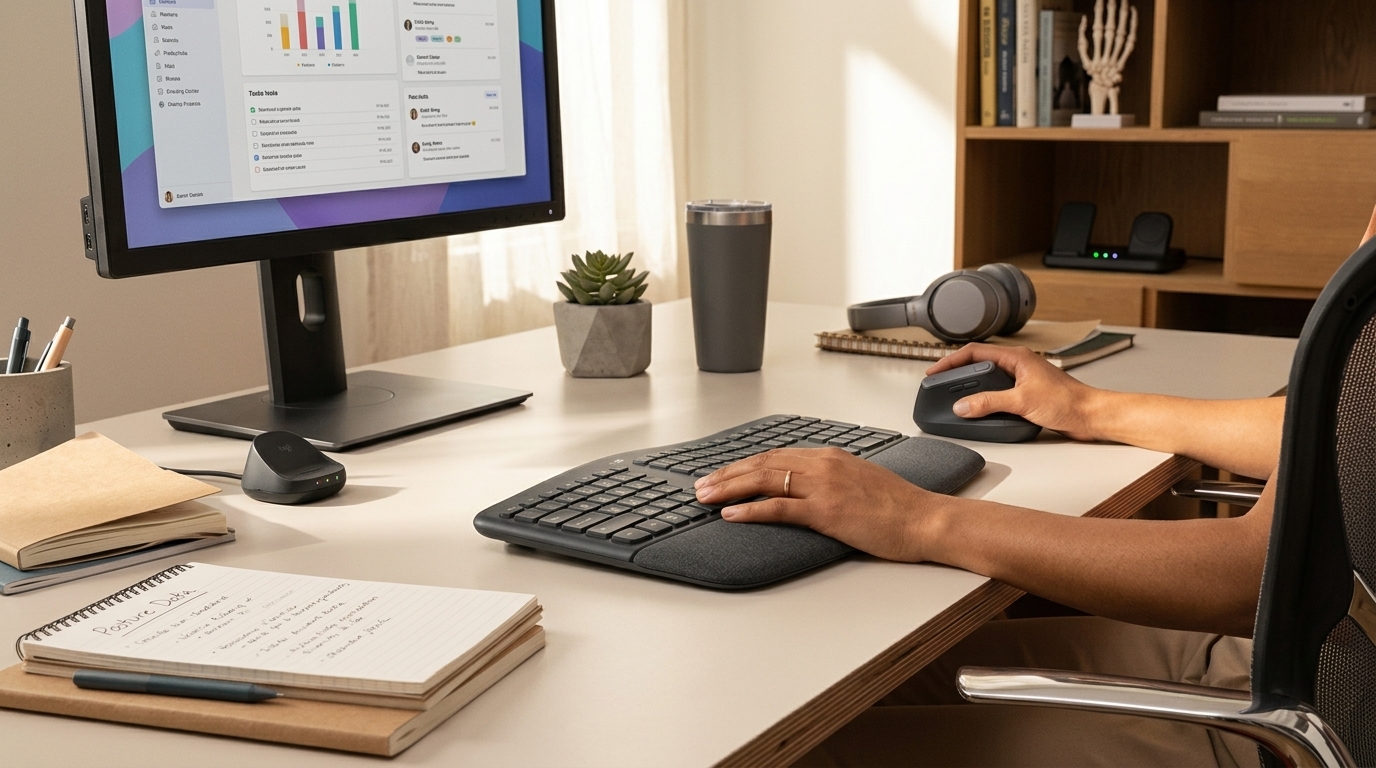
In an era where the average professional spends upwards of eight hours a day tethered to a screen, physical strain is no longer a possibility—it is a certainty. Logitech, a dominant force in the peripherals market, has identified this critical gap and executed a strategic pivot toward "workplace wellness." The recent unveiling of their first comprehensive keyboard and mouse set featuring integrated palm rests is more than just a product launch; it is a manifesto for the future of human-computer interaction.
The Science of Ergonomic Design
For Logitech, ergonomics is far more than a marketing buzzword. The company has funneled millions into its dedicated Ergo Lab, where data scientists, physiotherapists, and industrial designers collaborate to analyze posture and muscle micro-movements. The new set, focusing on the natural alignment of the hands, aims to significantly reduce muscle activity in the forearms and shoulders. By utilizing layers of memory foam and premium fabrics in the integrated palm rests, Logitech ensures that pressure is distributed evenly, mitigating the risks of Carpal Tunnel Syndrome and other Repetitive Strain Injuries (RSI).
The Wave Keys keyboard, for instance, adopts a signature undulating shape that allows fingers to rest at a more natural angle. This stands in stark contrast to traditional flat keyboards that force wrists into an unnatural outward flare (ulnar deviation). Logitech claims that transitioning to these ergonomic tools can improve user comfort by up to 57%, a figure that represents a drastic reduction in end-of-day fatigue for heavy users.
Beyond Comfort: Productivity as a Health Outcome
There is a persistent misconception that ergonomics sacrifices speed for the sake of comfort. Logitech's latest innovations prove the opposite. By integrating the palm rest directly into the chassis of the devices, they eliminate the need for third-party accessories that often slide around or clutter the desk. This "all-in-one" approach allows the user to maintain a consistent, healthy posture without conscious effort.
- Significant reduction in muscle tension by supporting the soft tissues of the wrist.
- Optimized workspace footprint with compact yet fully ergonomic layouts.
- Cross-platform compatibility, allowing seamless transitions between different devices and operating systems.
Furthermore, the company is doubling down on sustainability. These new products are manufactured using a high percentage of post-consumer recycled plastic, proving that caring for the user can coexist with environmental stewardship. This holistic approach solidifies Logitech's position not just as a hardware vendor, but as a provider of lifestyle solutions for the modern age.
The Challenge of Corporate Adoption
Despite the clear physiological benefits, the primary hurdle remains mass adoption within corporate environments. Many organizations still view peripherals as low-cost consumables. However, Logitech presents a compelling ROI case: the cost of an ergonomic workstation is negligible compared to the financial burden of sick leave and long-term disability claims related to musculoskeletal issues. In the post-pandemic landscape, where talent retention and employee well-being are paramount, providing superior hardware has become a core pillar of corporate social responsibility.
"Comfort is not a luxury; it is the fundamental prerequisite for sustained creativity and professional longevity in the digital realm."
In conclusion, Logitech’s decision to prioritize user health serves as a wake-up call for the entire tech industry. As the lines between home and office continue to blur, the tools we interact with daily must adapt to our biology, rather than forcing our bodies to adapt to rigid hardware. Investing in ergonomics is, ultimately, an investment in human potential.