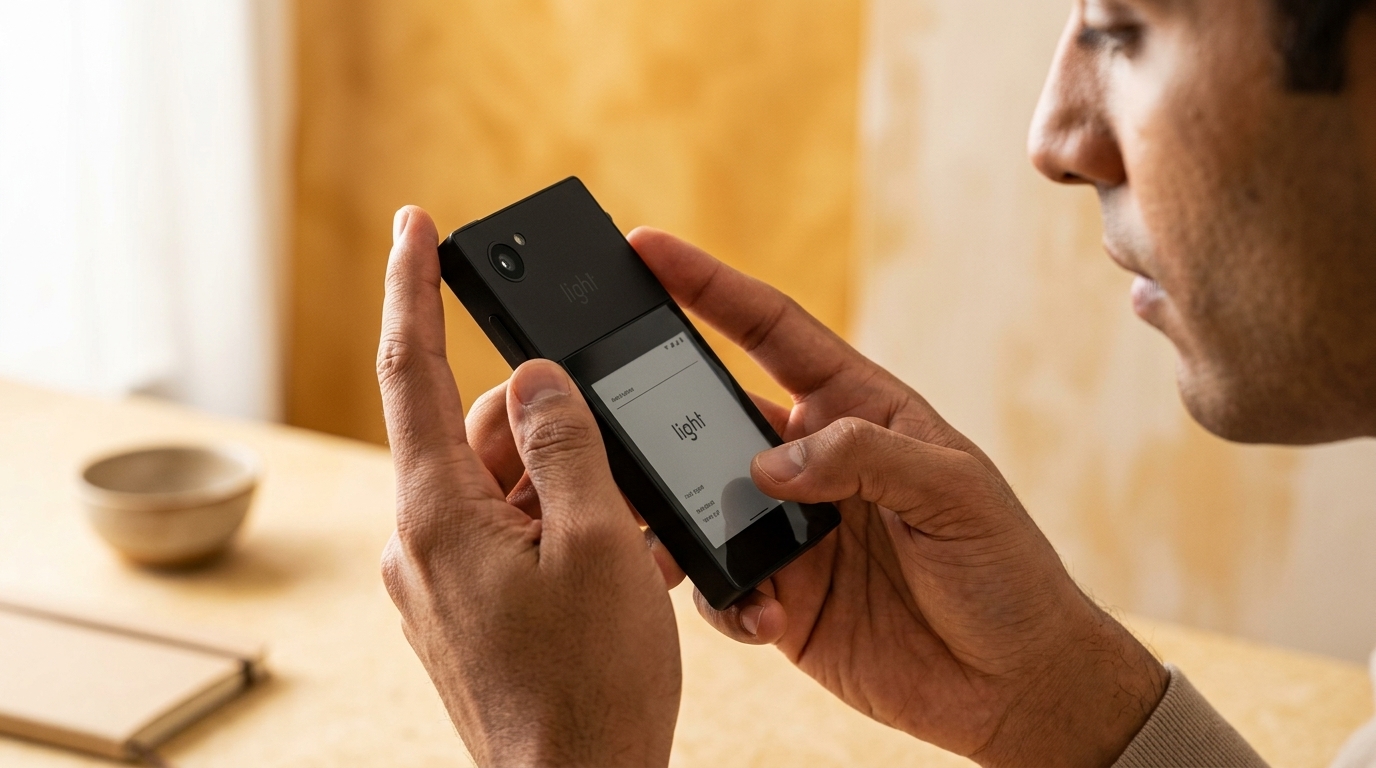
In a world where our attention has become the most valuable commodity of the 21st century, Light Phone, the company that became synonymous with the 'digital detox' movement, is making a move that many consider bold and others dangerous. With the announcement of a new Developer Kit (SDK) for LightOS, the company is opening its closed, monochrome platform to third-party developers. This move is not aimed at turning the Light Phone into just another smartphone, but at enhancing its utility through what the founders call 'tools' rather than 'apps.'
The Philosophy of Intentional Technology
Since its inception, Light Phone has championed a radical idea: a phone designed to be used as little as possible. With its electronic ink (e-ink) display and the absence of social media, browsers, or email, the Light Phone II served as a sanctuary for those feeling overwhelmed by the barrage of notifications from iPhone and Android devices. However, absolute simplicity came at a price. Many users found it difficult to completely abandon their smartphones because they needed specific functions, such as public transit tracking, ebook reading, or access to specialized productivity tools.
The new developer program aims to bridge this gap. By allowing the community to create its own 'tools,' Light Phone hopes to provide a personalized experience that remains true to its principles. "We don't want to build an App Store," the company leadership stated. "We want to give users the ability to have exactly what they need to function in the real world, without the algorithms that steal their time."
From Apps to Tools: A Crucial Distinction
The distinction between an 'app' and a 'tool' is central to Light's strategy. A typical smartphone app is designed to maximize engagement. It features push notifications, infinite scrolling, and psychological tricks to keep the user hooked. In contrast, a 'tool' on LightOS must have a clear beginning and end. For example, a tool for bus schedules in London or New York would allow the user to see when the next bus arrives and then put the phone back in their pocket.
- Local Customization: Developers can now create solutions for local problems that a global corporation might overlook.
- Mental Peace: New tools must adhere to strict design guidelines, avoiding colors and unnecessary notifications.
- Open Source Ethos: This move strengthens the open-source community, allowing transparency in how tools operate.
The Challenges of an Open Platform
Of course, opening a platform carries risks. The first and foremost is the loss of control over the user experience. If developers start creating tools that are overly complex or attempt to introduce social media elements through the 'back door,' Light Phone's core promise will collapse. The company intends to maintain a curatorial role, ensuring that every new tool meets its standards for 'digital peace.'
Furthermore, there is the issue of data security. In an era where privacy breaches are common, introducing third-party code into a device that many chose specifically for its security requires careful handling. Light Phone will need to develop robust sandboxing protocols to ensure that a weather tool, for instance, cannot access a user's contacts or messages.
The Future of Minimalist Tech
Light Phone's move coincides with a broader market shift. Generation Z, the first to grow up entirely within the smartphone ecosystem, is showing signs of fatigue. The rise of 'dumb phones' and the search for devices that don't induce anxiety is a reality that Silicon Valley giants struggle to address, as their business models are built on advertising revenue.
"Technology should be like a hammer: useful when you need it, but invisible when you don't."
With the new Developer Kit, the Light Phone III (expected to launch soon) could become the first device to offer the 'golden mean': the functionality modern life demands without the mental burden. If the experiment succeeds, we might see a new category of devices defined not by what they can do, but by what they choose not to do.