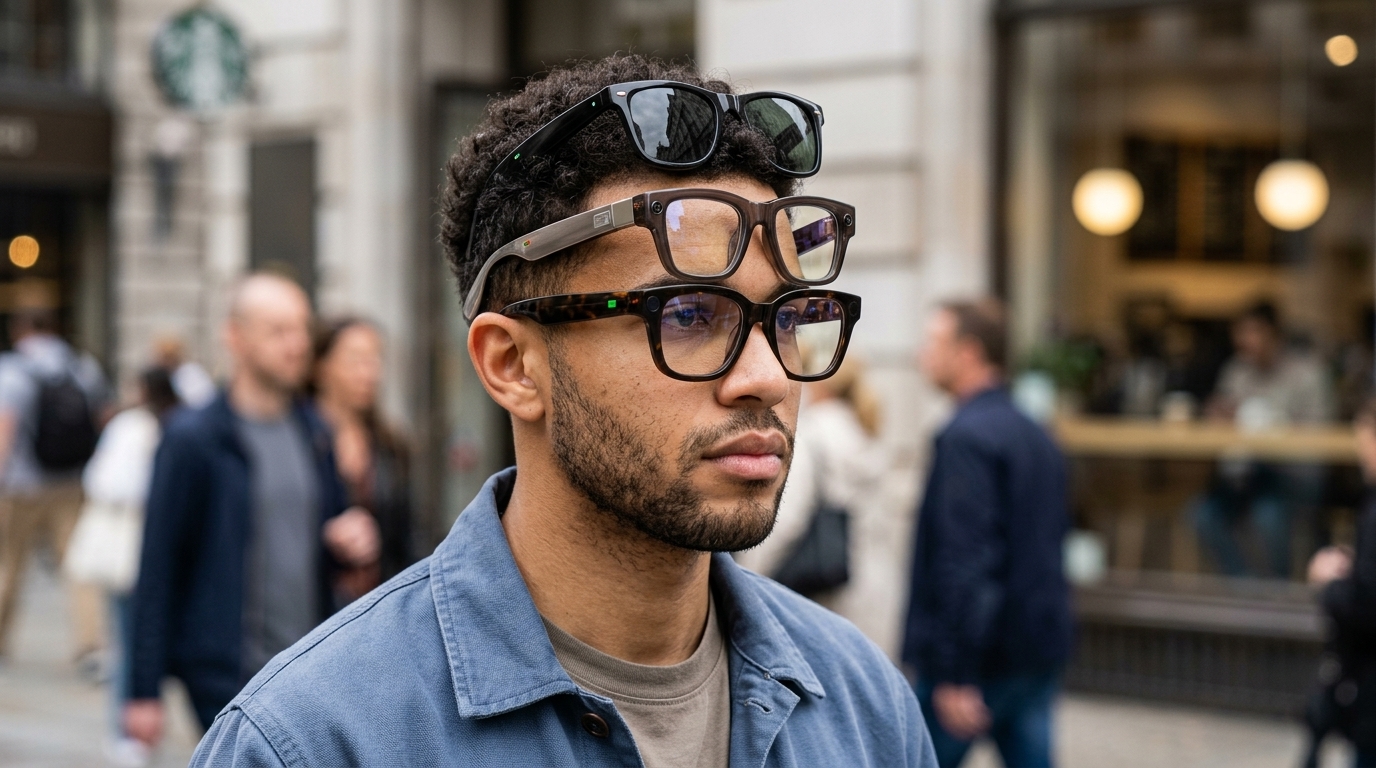
The scene is familiar to any tech enthusiast: a desk cluttered with sleek boxes, charging cables, and frames that look like standard eyewear but house processors, cameras, and microscopic displays. From the minimalist Even Realities G2 to the market-dominating Meta Ray-Bans and the bulkier, screen-centric models from Rokid, the wearable industry is undergoing a renaissance. Yet, behind the impressive engineering lies a nagging question: What exactly are we supposed to do with them?
The Illusion of Utility
For years, the promise of smart glasses was liberation from the tyranny of the smartphone screen. We imagined a world where navigation cues floated above the pavement, translations appeared in real-time as we spoke to a stranger, and notifications were subtle whispers in our field of vision. Today, many of these features are technically feasible. The Even Realities G2, for instance, offers a superb monochrome heads-up display (HUD) that projects notes or directions without being intrusive.
However, the reality is often less than magical. Navigation via glasses is frequently less reliable than Google Maps on a phone. Real-time translation suffers from latency that makes conversations awkward. And reading notifications directly on your retina doesn't necessarily reduce digital anxiety—it often amplifies it. The industry has succeeded in shrinking the hardware, but it has yet to make the experience essential. We are seeing a solution in search of a problem.
The Meta Phenomenon and Social Acceptance
Meta (formerly Facebook) seems to have found a middle ground, not through complex Augmented Reality (AR), but through social integration. The Meta Ray-Bans succeeded where Google Glass failed spectacularly: they look normal. They don't make you look like a cyborg. Using them to capture photos, listen to music, and interact with an AI voice assistant is straightforward and functional. It leverages the existing habit of wearing sunglasses.
Yet, even here, the utility remains narrow. The camera is excellent for content creators, but for the average user, it’s just a way to take photos without reaching into a pocket. Is that enough to justify a device that requires daily charging and raises constant privacy concerns for those around us? The "social friction" remains the biggest hurdle. Despite the stylish design, the knowledge that someone could be recording you with a tap of their frames remains an unsettling thought in the public consciousness.
Competition and Fragmentation
While Meta focuses on style and audio, companies like Rokid and Xreal are doubling down on the "personal screen" experience. These glasses connect to a phone or laptop and project a massive virtual display in front of your eyes. They are ideal for watching movies on a plane or working in a cramped space, but they fail as everyday accessories due to their bulk and the necessity of cables.
This fragmentation indicates that the market still doesn't know what smart glasses want to be. Are they a fashion accessory with AI? Are they a portable cinema? Or are they a productivity tool? As companies experiment, consumers are left with a collection of expensive gadgets that often end up in a drawer after a few weeks of novelty. The lack of a "killer app"—an application that makes glasses irreplaceable—is more evident than ever. We have the stage, but the actors haven't arrived.
The Future: From Hardware to Context
The next phase of smart glasses won't be about screen resolution or battery life, but about "context." Artificial Intelligence is the key. If my glasses can recognize that I am in a grocery store and display my shopping list, or if they can remind me of the name of someone approaching whom I've only met once, then their value proposition changes radically. This requires a level of environmental awareness that we are only beginning to see.
Until then, we are in the "awkward teenage years" of wearable tech. We have the tools, we have the sensors, but we lack the cohesive vision. Smart glasses remain a promise waiting to be fulfilled, a reminder that technology doesn't just need to be "smart"—it needs to be useful in a way that the smartphone cannot replicate. For now, the smartphone remains the undisputed king of our digital lives, and the glasses on our faces are little more than expensive ornaments.