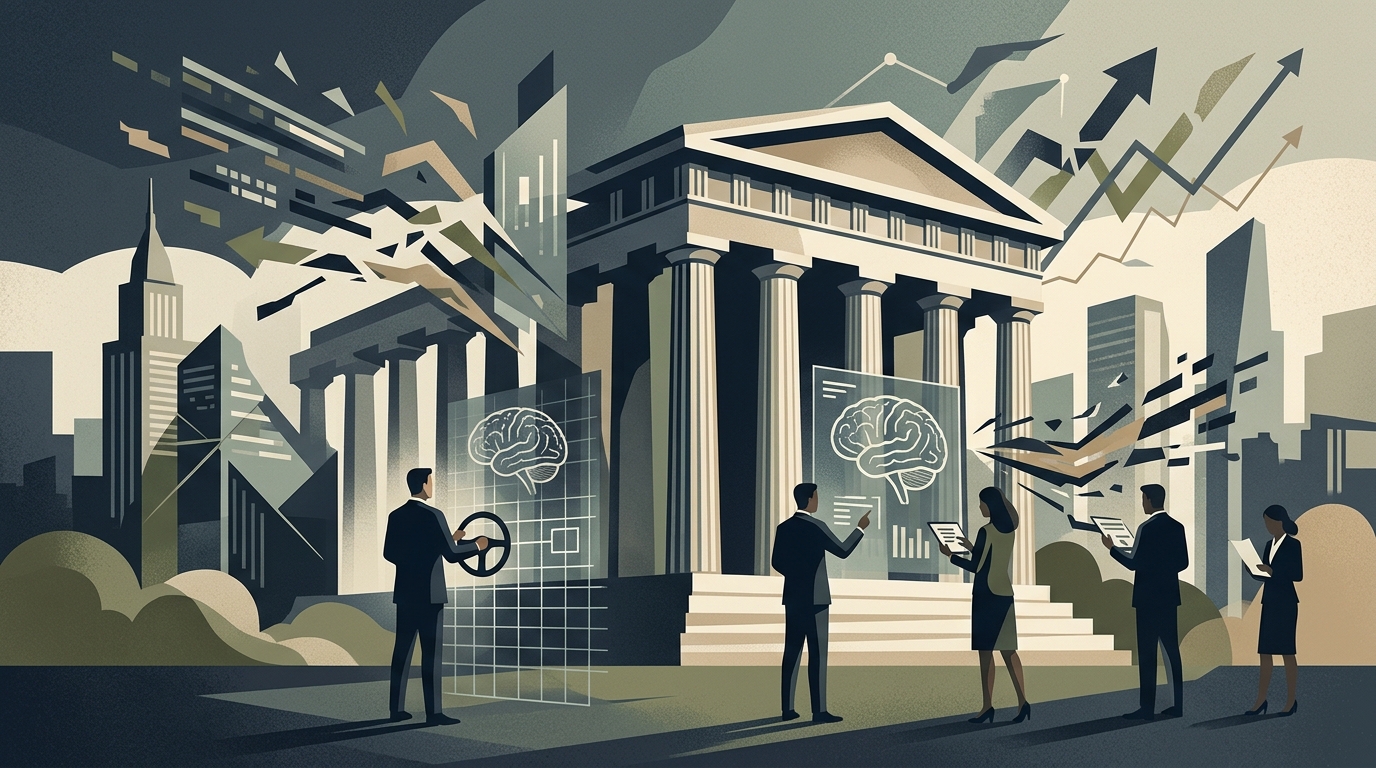
History often repeats itself, but rarely with such clear warnings. Before the Great Depression of 1929, there was the "forgotten" depression of 1893, where U.S. unemployment jumped from 3% to 18% in just two years. The violent lurch from an agricultural to an industrial economy had created a volatile environment, triggered by the bursting of a financial bubble. Today, we stand at a similar tipping point, with artificial intelligence threatening to destabilize an already fragile economic ladder.
The Broken Ladder of Mobility
The data reveals a stark erosion of economic mobility. While someone born in 1940 had a 90% chance of out-earning their parents, those born in 1985 saw those odds drop to 50-50. Nearly half of American households now struggle to make ends meet. The technological disruption of AI does not arrive in a vacuum; it builds upon decades of policy choices that decoupled national growth from worker prosperity.
Claude Corps: AI for Civil Society
In this landscape, Anthropic co-founder Daniela Amodei has introduced the "Claude Corps." The initiative aims to embed 1,000 AI-fluent fellows within hundreds of organizations that hold civil society together, such as food banks, legal aid offices, and veteran networks. Partnering with the nonprofit CodePath, which has already trained over 40,000 alumni from diverse backgrounds, the program seeks to equip young Americans with the skills to develop high-impact solutions that once required entire consulting teams.
Investing in a New Safety Net
The core premise is that public-interest institutions are typically the last to receive new technology due to budget and staffing constraints. Claude Corps intends to change this by putting AI into the hands of those managing education, housing, and mental health services. The challenge now is whether policymakers and funders can move fast enough to use these new instruments to prepare Americans for a rapidly changing economy, akin to historical "moonshots" like the Marshall Plan or the WPA.