In a world dominated by the "Swiss Army Knife" of technology—the smartphone—the survival and flourishing of dedicated translation devices is a paradox worth examining. For years, conventional wisdom suggested that apps like Google Translate would render any other device obsolete. However, 2026 finds the market for handheld translators stronger than ever. This isn't merely a trend of "retro" tech, but a conscious choice by travelers seeking meaningful connection and reliability beyond the confines of a touchscreen.
The Technology Behind the Magic
Modern handheld translators, such as Pocketalk or Vasco, are far more than dictionaries in a box. They operate through a sophisticated ecosystem that combines three core pillars: Speech-to-Text (STT), Neural Machine Translation (NMT), and Text-to-Speech (TTS). When you speak into the device, your voice is isolated from ambient noise via microphone arrays equipped with noise-cancellation technology—something smartphones often struggle with in crowded markets or train stations.
Next, your voice is converted to text and sent to the cloud—or processed locally if the device has offline capabilities. The integration of Large Language Models (LLMs) has revolutionized accuracy, allowing the device to understand context, idioms, and subtle irony. Finally, a natural-sounding voice delivers your message in your interlocutor's language, often with the appropriate accent that facilitates understanding and trust.
The Psychological and Practical Edge
But why carry an extra device? The answer lies in the user experience. Using a smartphone for translation in a foreign country involves risks and awkward moments. Handing your expensive iPhone to a stranger to speak into is a move many avoid for security reasons. Furthermore, notifications from WhatsApp or emails popping up on the screen interrupt the flow of conversation, making communication feel mechanical and impersonal.
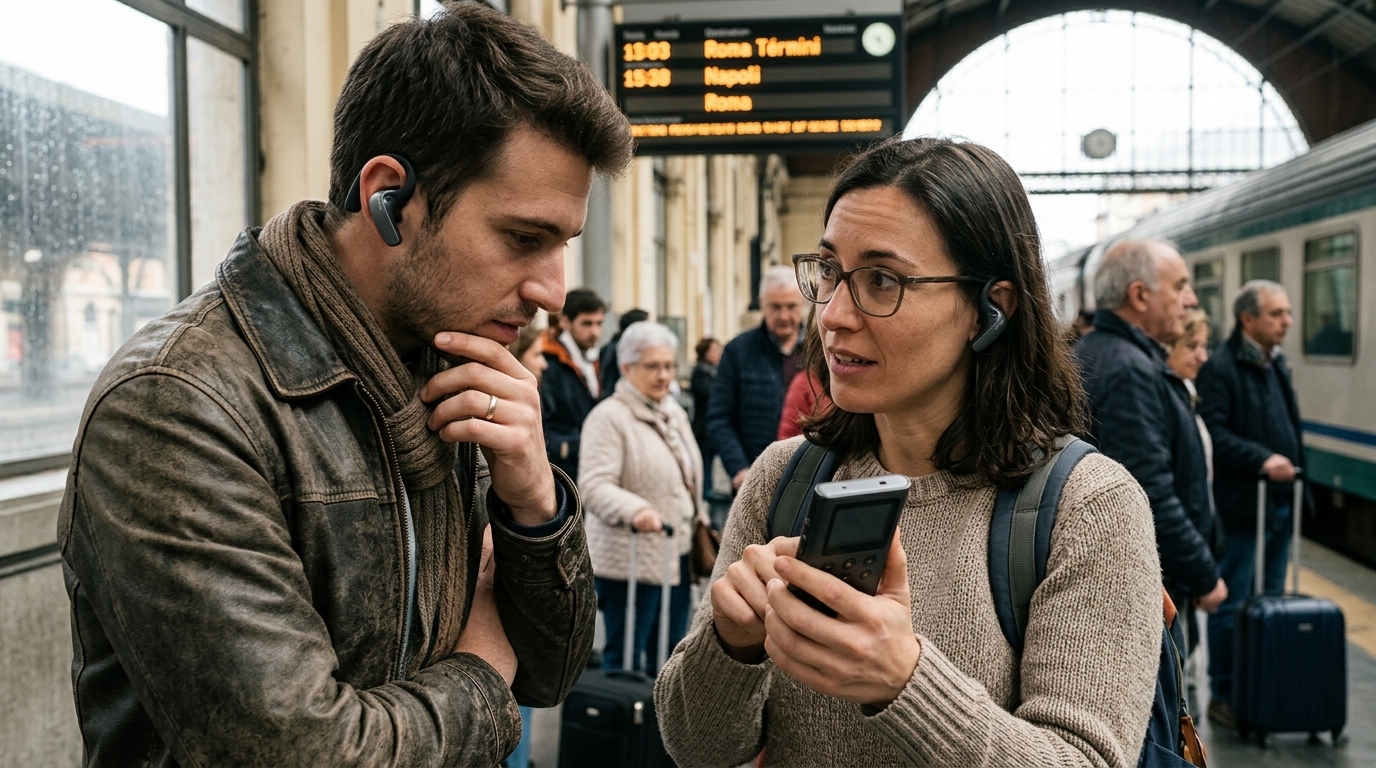
Dedicated devices are designed to promote eye contact. With ergonomic buttons and screens that are often dual-facing—one for you and one for the person you're speaking to—the device becomes a bridge rather than a barrier. Moreover, battery life is tailored to a traveler's needs. While a phone running GPS and translation apps might die by noon, a handheld translator can last for days, often featuring its own built-in SIM card with free data in hundreds of countries.
The Social Dimension of Translation
Beyond technical prowess, these devices change how we perceive the "other." In remote areas of Asia or Latin America, where English is not a given, the ability to ask about the history of a local dish or seek directions from an elderly resident creates bonds that silence would have prevented. Technology here does not isolate; it unites.
"Translation is not just about replacing words; it's about carrying an entire world from one side to the other," linguists say, and handheld translators achieve this with a simplicity that borders on magic.
In conclusion, the rise of handheld translators is a reminder that specialization still holds value. In an era where everything is becoming digital and centralized, returning to tools that do "one thing but do it perfectly" is a breath of fresh air for the modern world traveler. They represent a shift from utility to empathy, proving that sometimes, the best way to move forward is to have a dedicated tool for the journey.