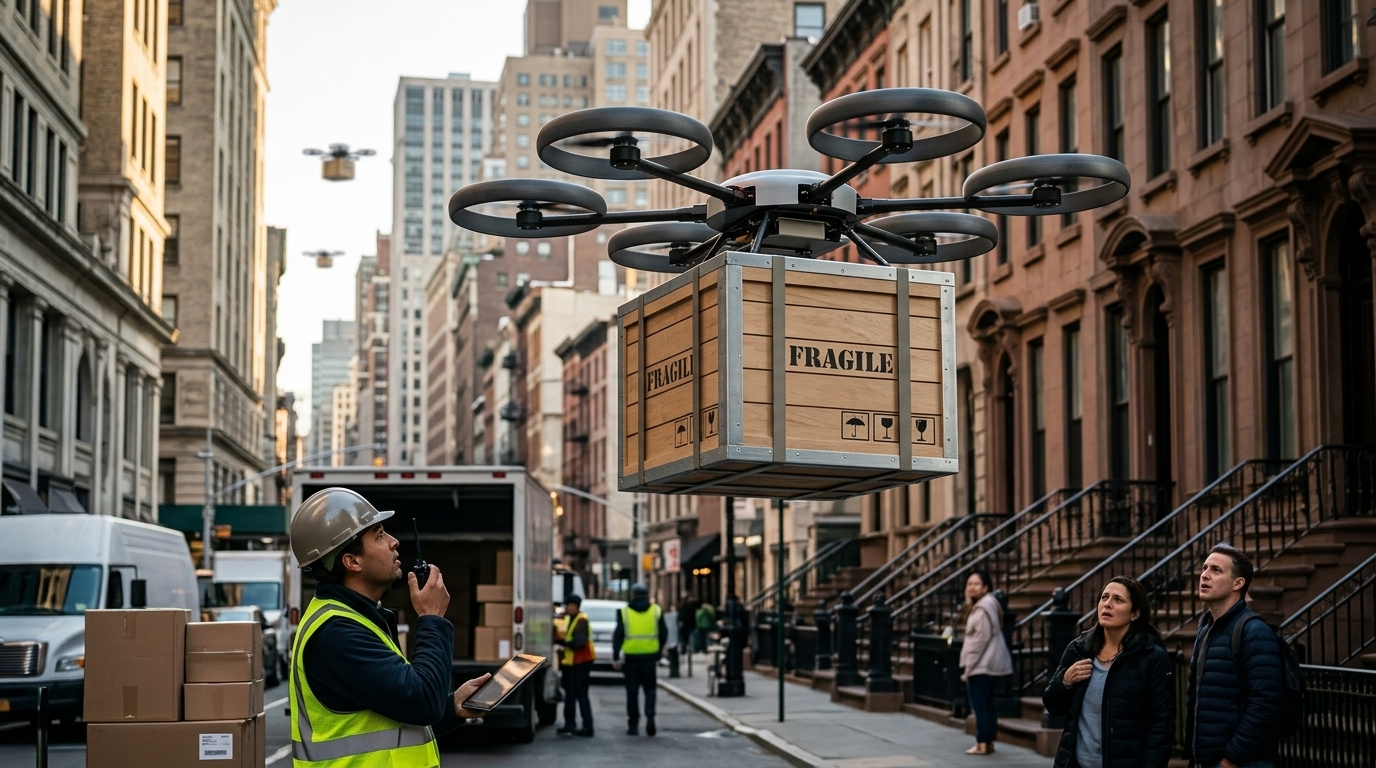
New York City is a metropolis built on noise. From the wail of sirens to the rhythmic rumble of the subway and the constant chatter of the streets, its sonic identity is unmistakable. Recently, however, a new frequency has joined this urban concerto: the high-pitched buzz of rotors. Delivery drones are no longer a sci-fi trope or a localized test in the Arizona desert. They are flying over Brooklyn and Manhattan, carrying everything from medical supplies to fast-food orders, sparking a fierce debate over whether the city actually needs them—or if they are simply adding another layer of chaos to an already saturated sky.
The Regulatory Frontier and the Politics of Speed
The shift toward drones in NYC didn’t happen by accident. Under Mayor Eric Adams, the city has adopted a tech-forward stance, loosening strict rules that had been in place for years. In 2023, the city announced a new permitting process allowing private companies to apply for drone flight authorizations with significantly less red tape. This move was framed as a way to reduce street congestion, lower carbon emissions from delivery trucks, and slash delivery times to mere minutes.
However, the Federal Aviation Administration (FAA) remains the ultimate arbiter. Regulations for "Beyond Visual Line of Sight" (BVLOS) flights are the industry's holy grail. Without this approval, every drone requires a human spotter to maintain a visual on the craft, which effectively kills the economic viability of the model. In New York, where skyscrapers create wind tunnels and GPS signals are notoriously fickle, the safety of these flights is a technical nightmare. Critics argue that the rush to embrace the technology bypasses fundamental questions about pedestrian safety should a mechanical failure occur over a densely populated sidewalk.
The Psychology of Noise and Privacy
Beyond regulations, there is the matter of quality of life. Drone noise is unlike the low-frequency hum of a car; it is variable, piercing, and often unpredictable. Studies have suggested that the sound of small rotors is more annoying to humans than road traffic at the same decibel level. In a city where personal space is already a luxury, the idea of hundreds of drones buzzing outside 20th-floor apartment windows is meeting stiff resistance.
"The sky is the last commons we have left in the city. Turning it into a highway for Amazon and Walmart is a concession that should not be made lightly," says one digital rights advocate.
Privacy is the other side of the coin. Most delivery drones are equipped with cameras and sensors for obstacle avoidance. While companies promise they do not record personal data, the presence of flying cameras over private backyards and balconies creates a sense of constant surveillance. The question is clear: Is the delivery of a latte in five minutes worth the loss of our visual and auditory peace?
The Paradox of Urban Logistics
From a business perspective, New York is the ultimate gauntlet. If drones can work here, they can work anywhere. But the city’s geography is inherently hostile. Strong updrafts between buildings, thousands of pigeons that view drones as territorial threats, and a total lack of landing zones make the operation incredibly complex. The "last yard" problem remains unsolved: How does a package reach a tenant in a high-rise? Does the drone land on the roof? The sidewalk? Or does it hover outside a window like a mechanical hummingbird?
Currently, the most successful applications are in the medical sector. Transporting blood or organs between hospitals while bypassing gridlock offers a clear social benefit. But when the conversation shifts to consumerism, the cost-benefit ratio blurs. Electric cargo bikes are already remarkably fast and efficient in NYC without occupying the airspace. The push for drones often feels more like tech companies attempting to capture infrastructure than a genuine solution to an existing problem.
Conclusion: A Sky Under Negotiation
The future of drones in New York will be decided not just by technology, but by social license. If New Yorkers feel their sky has been "sold off" to corporations, political pressure will force a retreat. Conversely, if the technology becomes silent and unobtrusive, we might one day look up and see a logistics network as mundane as the plumbing beneath our feet. For now, the flights over New York remain an expensive and uncertain experiment—a reminder that in the realm of technology, the fact that we "can" do something does not always mean we "should."