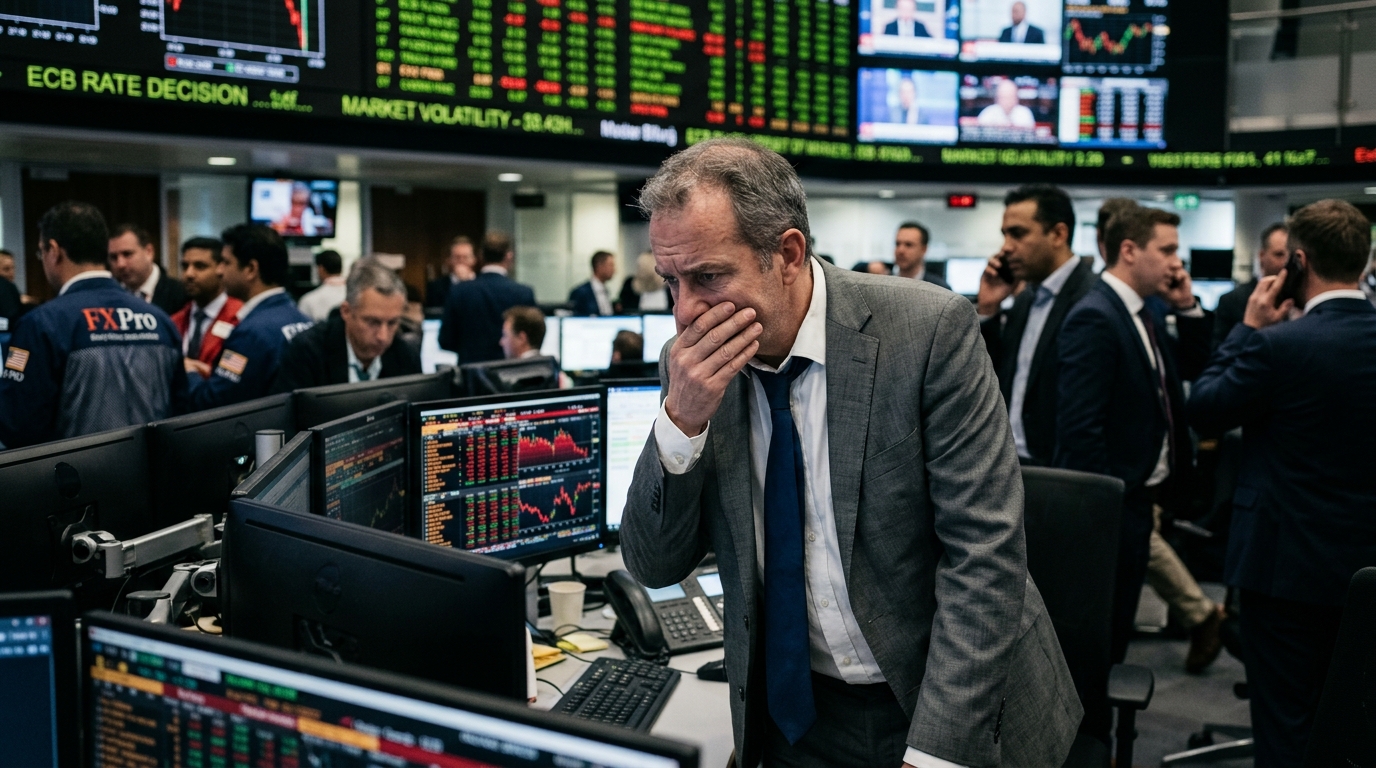
As of June 6, 2026, the global economy stands in a state of nervous apprehension. The latest report on U.S. national debt is not merely a figure on a spreadsheet; it is a clarion call for an impending storm that threatens to upend decades of financial stability. As U.S. debt continues its relentless ascent, analysts warn that we are approaching the 'maximum level of sustainability,' beyond which interest payments will trigger a default crisis that even the most aggressive tax hikes will be powerless to remedy.
The Mathematical Trap of Compounding Interest
The core issue is not the debt itself, but the cost of servicing it. For decades, the United States enjoyed historically low interest rates, allowing Washington to borrow cheaply to fund everything from social programs to military interventions. However, the era of 'cheap money' has vanished. With interest rates remaining elevated to combat persistent structural inflation, interest costs have surged, now consuming a terrifying percentage of the federal budget.
According to recent projections, interest payments are set to surpass national defense spending in the near future. This creates a lethal feedback loop: the government must borrow more simply to cover the interest on existing debt. When a sovereign entity borrows to pay interest, it enters what economists describe as a 'fiscal Ponzi scheme.' Sustainability evaporates when the market realizes that GDP growth can no longer keep pace with the exponential rise in debt servicing costs.
"Bond markets unravel sooner when investors believe that the government will not restore fiscal sustainability," the report highlights.
Beyond Taxation: Why Hikes Alone Can't Save the Budget
A common misconception is that a significant increase in taxation can solve the fiscal gap. However, there is a threshold, famously known as the 'Laffer Curve,' beyond which higher tax rates begin to stifle economic activity, ultimately resulting in lower total revenue. At current debt levels, exceeding 125% of GDP, even a return to the tax brackets of the 1950s would not generate sufficient surpluses to halt the interest avalanche.
Furthermore, the political reality in Washington makes any serious fiscal consolidation nearly impossible. In a deeply polarized society, cutting spending on 'third rail' issues like Social Security and Medicare is viewed as political suicide. Consequently, the only remaining path appears to be 'financial repression' or inflating the debt away—a strategy that effectively penalizes savers and the middle class while devaluing the currency.
The Psychology of Bond Markets and the 'Minsky Moment'
Debt sustainability is as much a psychological metric as it is a mathematical one. The U.S. relies on the 'exorbitant privilege' of the dollar as the world's reserve currency. This allows the Treasury to always find buyers for its bonds. But what happens when foreign creditors—such as China, Japan, or the Gulf nations—begin to doubt the ability (or the will) of the U.S. to repay its debts in dollars with real purchasing power?
A sudden loss of confidence could lead to a 'Minsky Moment,' where bond prices collapse and yields skyrocket within days. In such a scenario, the Federal Reserve would be forced to intervene as the 'buyer of last resort,' printing trillions of dollars and igniting a hyperinflationary cycle that would destroy the purchasing power of the citizenry. Sustainability, therefore, ends where investor panic begins.
Conclusion: The Need for a New Architecture
The current trajectory is mathematically untenable. History is replete with empires that crumbled under the weight of their debts, from Rome to post-WWII Great Britain. The United States is not exempt from the laws of economic gravity. A solution will require either an unprecedented technological boom that skyrockets GDP (perhaps through Generative AI integration) or a painful restructuring that will alter the American social contract forever.
The question is no longer if a crisis will occur, but when and in what form. As 2026 progresses, the shadow of debt grows longer, reminding us that prosperity built on borrowed time always has an expiration date that cannot be indefinitely postponed.