In an era where user attention is the most valuable currency in the global digital economy, Google is making a strategic move that promises to reshape the landscape of home entertainment. The integration of a dedicated YouTube Shorts row directly onto the Google TV home screen is more than just a technical update; it is a definitive admission that short-form content is no longer confined to our smartphone screens but is claiming dominance in the traditional "temple" of family entertainment: the television.
The Architecture of the New Experience
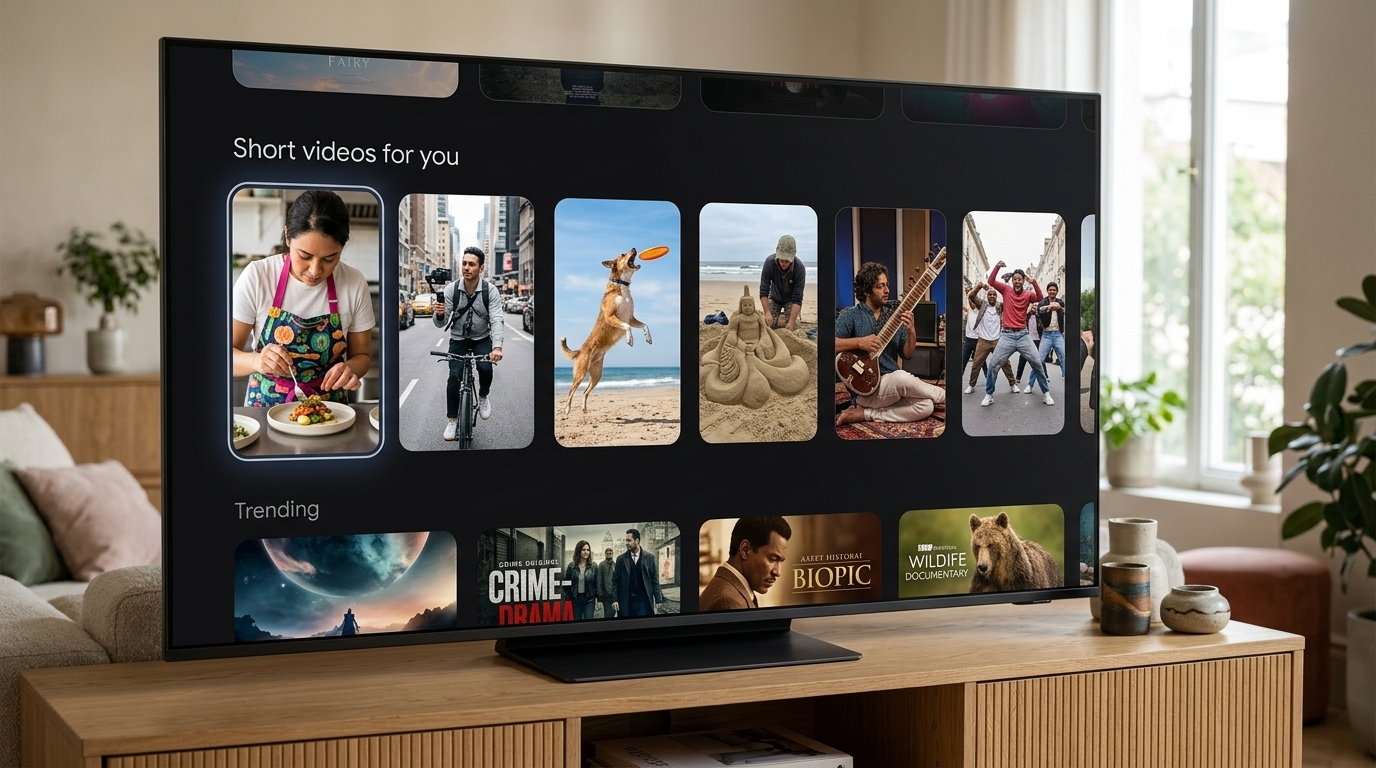
The new addition, titled "Short videos for you," will appear as a horizontal row in the main Google TV interface. Previously, users had to open the YouTube app and then navigate to the specific Shorts section to enjoy this content. With this new update, Google removes that barrier, bringing the recommendation algorithm to the forefront. This move aims to reduce "friction" during navigation, allowing the user to dive into a continuous stream of videos with a single click.
Technically, this implementation poses a challenge. YouTube Shorts is designed for vertical viewing (9:16), while televisions are horizontal (16:9). Google has invested significant resources into developing a player that frames vertical video with blurred backgrounds or supplementary information, ensuring the experience doesn't feel "alien" on the big screen. The new row on the home screen will use previews designed to pique interest, based on the viewing history and preferences of each user profile.
The Battle for User Time
Why is Google choosing to promote Shorts so aggressively on TV? The answer lies in the competition with TikTok. ByteDance's app has already made its appearance on smart TV platforms, and Google cannot afford to leave this field open. Television remains the device with the highest degree of "engagement" – when someone sits on the couch, they usually have more time than when they are on a bus with their phone.
- Algorithmic Dominance: Bringing the Shorts algorithm to the TV means Google can now collect data on our preferences in yet another environment.
- Ad Revenue: Shorts is a growing revenue stream. Displaying them on TV opens new doors for advertisers who want to combine the immediacy of social media content with the prestige of the big screen.
- Ecosystem: The connection between various Google services is strengthened, making Google TV a central hub that offers not just movies and series, but social networking as well.
Social and Psychological Implications
Beyond the numbers and technical details, this move raises serious questions about the nature of television viewing. TV has traditionally been a "lean-back" experience – the user sits and watches long-form content, such as a movie or a match. Shorts introduce the culture of the "infinite scroll" into the living room. This constant switching of stimuli, lasting 15 to 60 seconds, can affect concentration and turn the TV from a medium of relaxation into one of overstimulation.
"Television is ceasing to be a window to the world and is becoming a mirror of our algorithm," industry analysts say, pointing to the risk of creating "echo chambers" even within the home.
Furthermore, this integration highlights the trend of the "mobilization" of everything. Interface designers are no longer trying to adapt the content to the medium, but the medium to the content that is most addictive. As Google TV updates, users will face a dilemma: will they remain loyal to the cinematic experience, or will they surrender to the quick pleasure of short videos?
Conclusions and Future Outlook
The update is expected to roll out gradually to all compatible Google TV and Chromecast devices. It is clear that Google is betting that the future of television is not just Netflix and Disney+, but also amateur creation, viral clips, and the non-stop flow of information. In a world moving at breakneck speeds, the TV is simply following the pace, even if it means learning to "see" vertically.