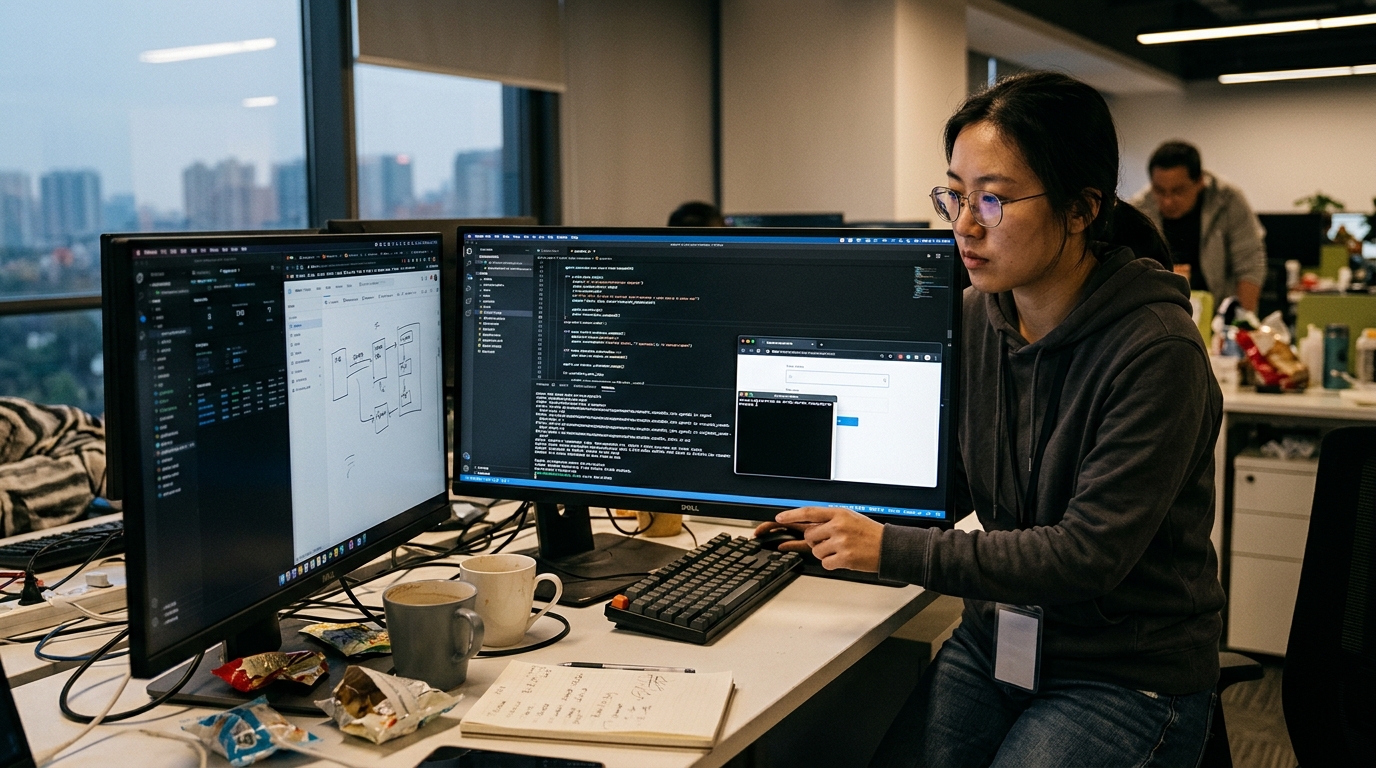
For decades, the process of hiring a software engineer at Google—and by extension across Silicon Valley—resembled an intellectual marathon in isolation. Candidates were tasked with solving complex algorithmic problems on a whiteboard or a basic text editor, without internet access, relying solely on memory and raw cognitive speed. However, 2026 marks the end of this era. Google has officially announced a pilot program for a new technical interview process where candidates are not only allowed but encouraged to utilize Artificial Intelligence tools.
From Rote Memorization to Architectural Thinking
Google's decision is more than just a policy update; it is an admission of the new reality within the technology sector. In today’s professional environment, no developer writes code in a vacuum. The use of GitHub Copilot, Google Gemini, and other Large Language Models (LLMs) has become an inseparable part of the daily workflow. Banning these tools during an interview began to look increasingly anachronistic, like asking a mathematician to solve a complex equation by hand just to prove their worth while a calculator sits on the desk.
According to sources within the company’s HR department, the goal of this new approach is to assess "real-world problem-solving capabilities." Instead of focusing on whether a candidate remembers the specific syntax of an obscure function, the emphasis shifts to how they guide the AI (prompt engineering), how they verify the accuracy of the generated output, and how they synthesize individual solutions into a broader architectural framework.
The Challenge of Assessment in the Age of Gemini
Naturally, this shift brings significant challenges. The primary question facing recruiters is: How do you distinguish a truly talented engineer from someone who is merely proficient at using an AI chatbot? Google’s answer appears to lie in the complexity and nature of the questions. New assessments are designed to be more open-ended, requiring critical thinking and decision-making that AI cannot yet perform autonomously.
- Code Analysis: Candidates are asked to identify bugs or security vulnerabilities in AI-generated code.
- Optimization: The focus moves from "does it work?" to "how efficient is it for the overall system architecture?".
- Explainability: The candidate must be able to explain every line of code in depth, regardless of whether it was written by them or the AI.
This transition is expected to have an immediate impact on education. Universities and coding bootcamps will need to reconsider their curricula, placing less emphasis on memorizing algorithms and more on the nuances of human-machine collaboration.
Societal and Professional Implications
Google’s move may act as a democratizing force. Many talented developers who did not have the luxury of spending months preparing for traditional "LeetCode-style" interviews will now have the chance to demonstrate their value using the tools they use every day. On the flip side, there is a risk of "homogenization" of solutions, as many candidates might rely on the same underlying AI models, potentially stifling unconventional creative approaches.
"We are no longer hiring people to be human code encyclopedias. We are hiring people who can navigate complexity using the best tools available," a Google executive stated.
Ultimately, Google isn't just changing how it hires; it is redefining what it means to be a "good engineer" in the 21st century. The ability to partner with AI, to challenge its outputs, and to steer it toward the correct solution is now the most critical skill in the global labor market.