As heatwaves become more frequent and water usage regulations tighten globally, the garden of 2026 is no longer a place of passive leisure, but a managed ecosystem. Smart irrigation technology has matured, moving from simple mechanical timers to sophisticated systems that make real-time decisions based on soil moisture, weather forecasts, and specific plant needs.
The Rise of Matter and Seamless Interoperability
2026 marks the year that the Matter standard became the absolute norm in irrigation systems. Where users once had to struggle with incompatible apps and closed ecosystems, today’s leading controllers—such as the Rachio 4 and Orbit B-hyve Pro—integrate flawlessly into any smart home setup. This unification allows the garden to "communicate" with the rest of the house. For instance, if motion sensors detect intruders (like stray animals) at night, the system can trigger the sprinklers as a deterrent.
The adoption of the Thread protocol has also solved the biggest headache for outdoor devices: range. With devices acting as nodes in a mesh network, connecting a hose timer at the edge of a large estate no longer requires expensive Wi-Fi repeaters. Stability is now a given, allowing homeowners peace of mind during long vacations.
Artificial Intelligence and Hyper-Local Weather Forecasting
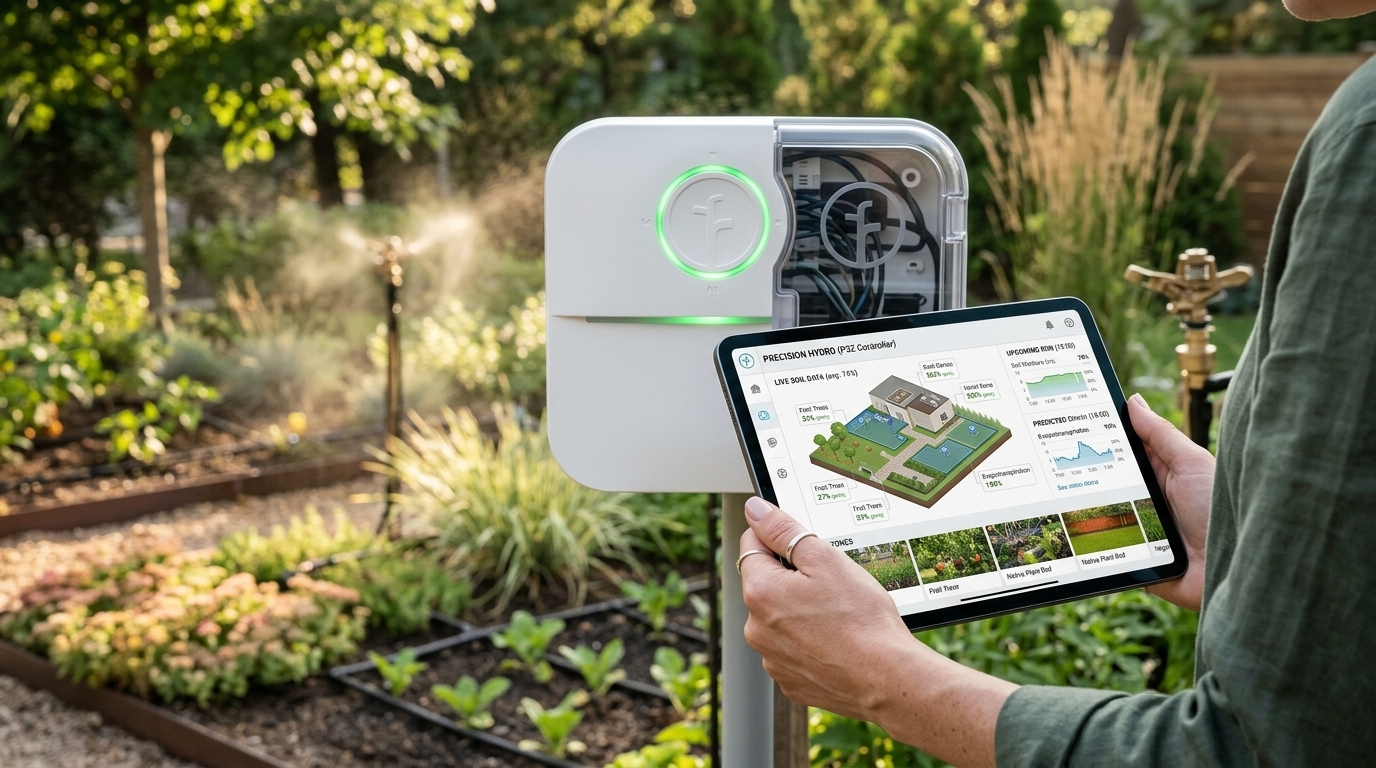
The most significant innovation we've observed in our testing this year is the integration of generative AI into water management. Systems no longer rely solely on generic forecasts from the nearest airport. They utilize data from thousands of local weather stations and, combined with next-generation soil moisture sensors, create a personalized profile for every zone in your garden.
- Adaptive Watering: If the system "knows" rain is expected in two hours, it will cancel the scheduled cycle, saving thousands of gallons annually.
- Leak Detection: Using machine learning algorithms, controllers can identify unusual water flow indicating a burst pipe or a clogged nozzle, sending an immediate alert to your smartphone.
- Plant Health: Apps like Gardena’s now use AI-powered cameras to identify signs of plant stress or disease, suggesting adjustments to fertilization and watering schedules.
Options for Every Need: From Balconies to Estates
For those with in-ground systems, the Rachio 4 remains the undisputed king. Its ease of installation and exceptional software make it unbeatable. However, for renters or those with smaller gardens, smart hose timers have made massive strides. The Eve Aqua, with Matter support, is the top choice for Apple and Android users alike, offering full automation without the need for complex plumbing work.
"Water conservation is no longer an option; it is a necessity. The smart systems of 2026 prove that technology can protect the environment without sacrificing the aesthetic of our urban spaces."
A notable mention goes to Wyze, which continues to offer the most budget-friendly solution on the market. While it lacks some of the advanced AI features, its controller is ideal for those looking to enter the world of smart irrigation with minimal investment. Conversely, Hunter and Rain Bird remain the preferred choices for professional installations, offering durability that withstands extreme weather conditions.
The Economic and Environmental Dimension
Investing in a smart irrigation system in 2026 pays off faster than ever. With water costs rising in urban areas, the 30-50% reduction in consumption offered by these systems translates into significant relief for the household budget. Furthermore, many European cities now offer subsidies or tax breaks for installing such systems as part of "Green Transition" initiatives.
In conclusion, choosing the right system depends on the size of your garden and the level of control you desire. Whether it’s a simple timer on a balcony tap or a 16-zone controller for a large estate, 2026 technology ensures that every drop of water is used to its fullest potential. Your garden is no longer just green; it’s intelligent.