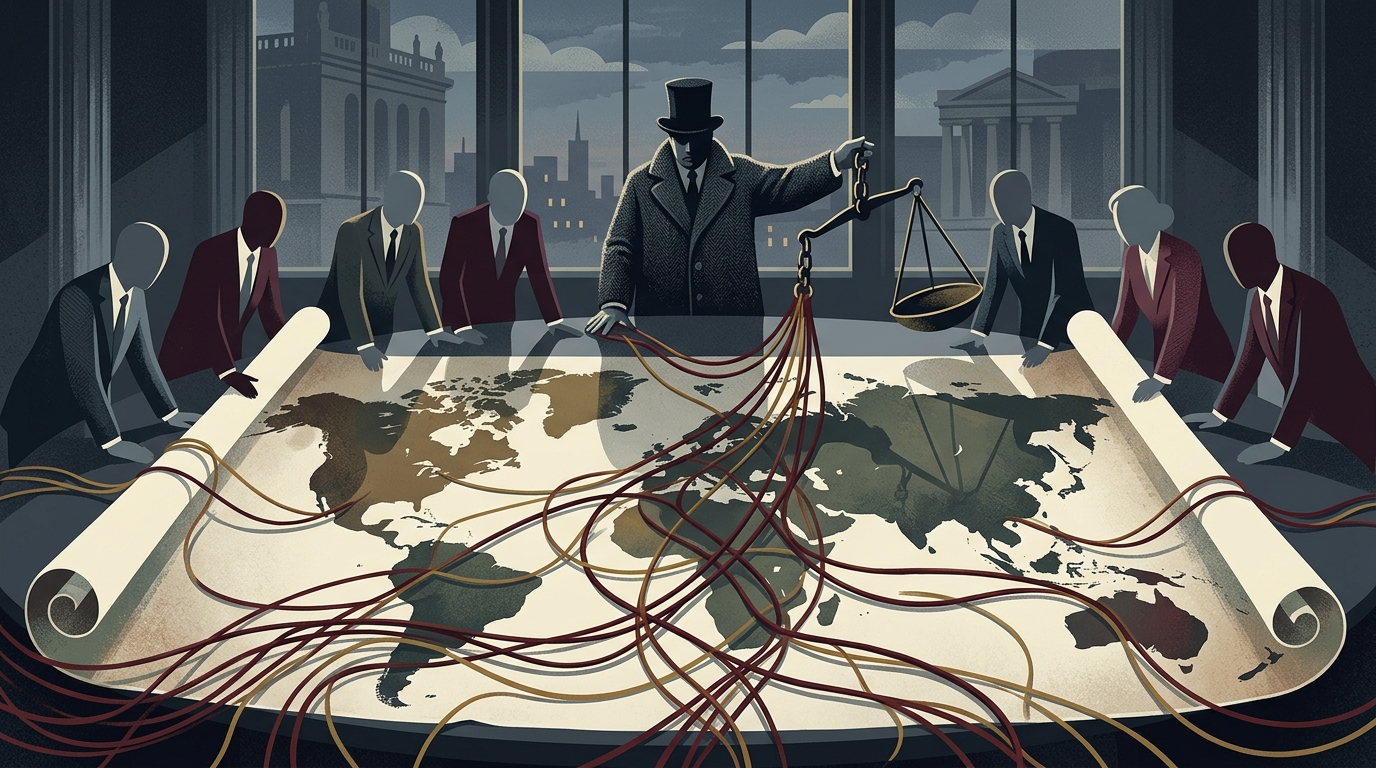
In the twilight of the 2020s, the political landscape of the United States bears little resemblance to the traditional contests of the past. Recent critiques aimed at Donald Trump, centered on his increasing reliance on artificial intelligence tools to shape his public persona, open a deeper debate about the nature of leadership in the digital age. Salon.com, in a biting analysis, argued that the former president needs "artificial" intelligence precisely because he lacks the "other" kind—conventional, rational judgment. However, beyond the partisan barbs, the reality is far more complex and concerns the transformation of democracy itself.
The Rise of the Algorithmic Candidate
The use of AI by the Trump campaign is not merely a matter of automation; it is a survival strategy in an environment of information saturation. In 2026, algorithms are used not only for ad targeting but for creating content that resonates with the deepest insecurities of the electorate. The ability of AI to generate "synthetic" rhetoric—speeches optimized to trigger emotional responses—allows politicians like Trump to maintain a constant presence, even when their physical presence wanes. This "algorithmic amplification" acts as a mirror, reflecting back to voters exactly what they want to hear, bypassing the need for coherent political discourse.
- Real-time Micro-targeting: AI analyzes data from millions of users to adjust messaging by the second.
- Deepfakes and Disinformation: The use of synthetic images and voices to create alternative narratives.
- Automated Response: Bots flooding social networks to drown out opposing views.
The Erosion of Truth and Geopolitical Instability
The critique that Trump lacks "real" intelligence may satisfy his detractors, but it overlooks the fact that AI has become the great equalizer. On the international chessboard, the use of such tools by a superpower sets dangerous precedents. US allies in Europe and Asia watch with concern a leader who can use AI to manufacture crises or deflect responsibility by citing "manipulated" data. Geopolitics in 2026 is no longer based solely on military might but on dominance over the algorithmic narrative. If a leader can convince their audience that reality is subjective, then diplomacy loses its solid ground.
"Artificial intelligence does not replace the political leader; it magnifies them. If the leader is chaotic, AI will produce digital chaos with unprecedented efficiency."
Intelligence as a Political Trophy
The question posed by Salon.com touches the heart of modern cognitive science. What does "intelligence" mean for a politician? Is it the capacity for deep analysis or the capacity for survival? Trump has demonstrated a unique "instinctive intelligence" in understanding the masses, which AI is now beginning to codify and scale. AI is not just a crutch for the intellectual deficiencies attributed to him, but a weapon that turns impulsivity into a strategic advantage. In the future, the distinction between human decision and algorithmic suggestion will become so blurred that the concept of "political responsibility" may need to be fundamentally redefined.
Conclusion: Democracy in the Age of Synthetic Discourse
As we approach the next major elections, the Trump case serves as the ultimate case study. Artificial intelligence provides the means for continuous, uninterrupted communication that does not require traditional mental exertion. The stakes are not whether Trump is "smart" in the traditional sense, but whether the electorate can discern the difference between a leader and a well-programmed algorithm. The challenge for the international community is to shield institutions against a form of power that derives its strength not from truth, but from the efficiency of its artificial processing.