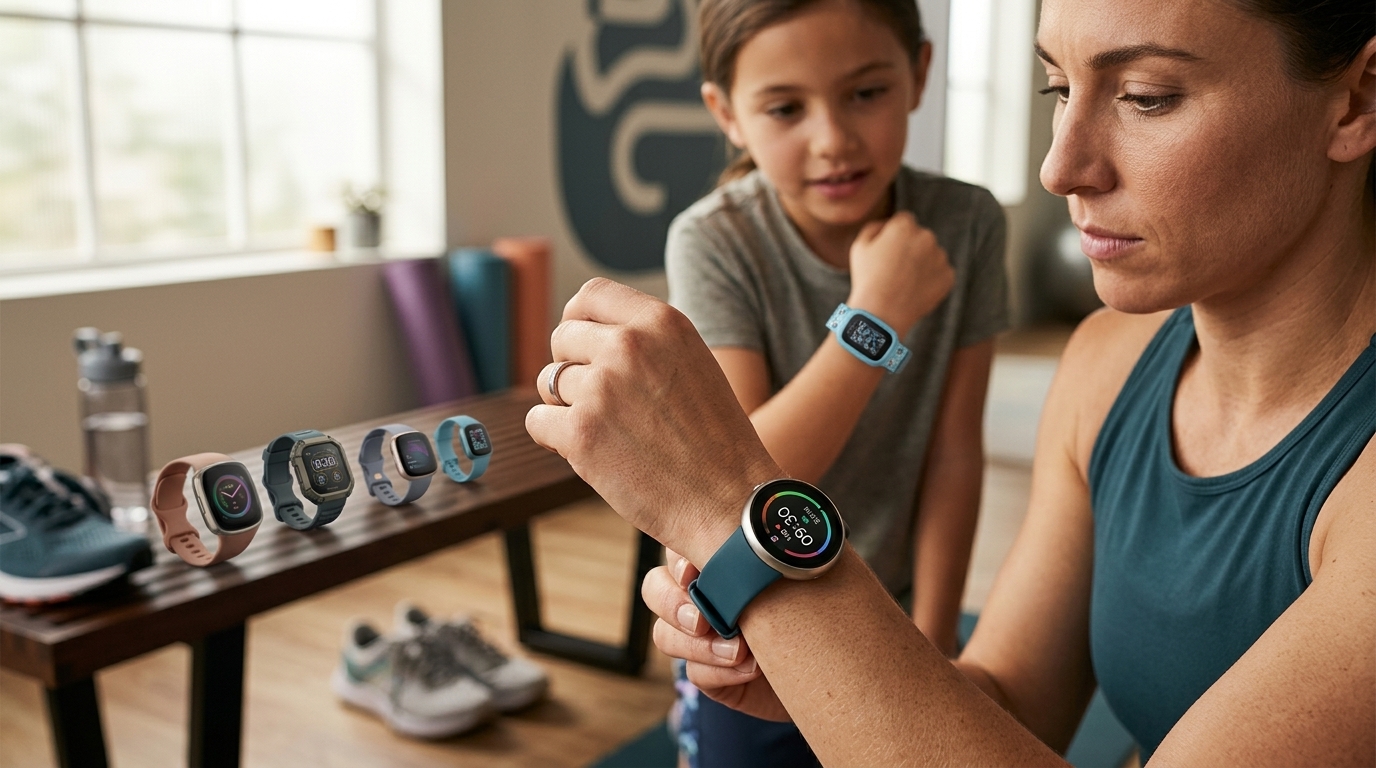
In the twilight of the 2020s, Fitbit, now fully integrated into the Google ecosystem, has transformed from a simple pedometer manufacturer into a predictive health powerhouse. The 2026 wearables market is no longer just about tracking calories; it's about understanding our biological identity through Artificial Intelligence. Choosing the right device now requires a deeper understanding of how our data translates into action.
The Return to Simplicity: Choices for Beginners
For those just starting their fitness journey, the Fitbit Inspire 4 remains the undisputed king. In a world full of overly complex smartwatches, the Inspire 4 offers a "digital detox" without sacrificing the essentials. Its slim silhouette and a battery life that now reaches 12 days make it ideal for those who want to forget they're wearing technology.
The key for beginners in 2026 is the "AI Health Companion" feature, which utilizes Google’s Gemini model to provide simple, verbal advice instead of complex charts. For example, instead of just showing a drop in Heart Rate Variability (HRV), the Inspire 4 might suggest: "It looks like your body needs an extra 30 minutes of sleep tonight." This democratized access to data analysis is what makes Fitbit's entry-level model so appealing to the general public.
Performance and Resilience: The Athlete's Arsenal
For serious athletes, the conversation shifts to the Fitbit Charge 7 and the Fitbit Sense 3. The Charge 7 has evolved into a precision tool that bridges the gap between a fitness tracker and a high-performance sports watch. With the integration of the new "Photo-G2" sensor, heart rate accuracy during high-intensity interval training (HIIT) has reached chest-strap levels.
- Daily Readiness Score 2.0: A redesigned algorithm that considers not just sleep and activity, but also cortisol levels via the cEDA sensor.
- Multiband Built-in GPS: Essential for runners and cyclists who demand accuracy in urban environments with tall buildings.
- Advanced Strain Analysis: A new feature that predicts when an athlete is about to hit an overtraining state.
The Sense 3, on the other hand, is the ultimate biofeedback tool. Capable of taking Electrocardiograms (ECG) and monitoring skin temperature in real-time, it targets those who view their health as a data system to be optimized. Stress analysis is no longer a passive measurement but an active process of guided breathing and meditation that adapts to the user's biorhythms.
The Next Generation: Fitbit Ace and Child Wellness
The kids' wearables category remains sensitive, but the Fitbit Ace 4 manages to balance entertainment with parental control. In an age where sedentary lifestyles are a global threat, the Ace 4 uses gamification to nudge children into movement. "Virtual Expeditions" allow kids to unlock digital worlds as they complete their steps, turning exercise into an adventure.
"Technology for children should not be about surveillance, but about empowering healthy habits early on," market analysts note.
Privacy enhancements are significant in 2026. The Google ecosystem for the Ace 4 operates on a "closed loop" where location and activity data are accessible only to guardians, without being used for advertising purposes. This commitment to data security is what keeps Fitbit at the top of parental preferences, despite fierce competition from cheaper, anonymous devices.
Conclusion: The Choice That Fits You
Choosing a Fitbit in 2026 is not a one-size-fits-all decision. The beginner will find peace in the Inspire 4, the athlete will find a partner in the Charge 7 or Sense 3, and the parent will find a health tool in the Ace 4. The common thread connecting all these devices is the transition from mere tracking to meaningful understanding. Ultimately, the best Fitbit is the one that doesn't force you to change your life to serve it, but the one that quietly adapts to your needs, offering insight and motivation.