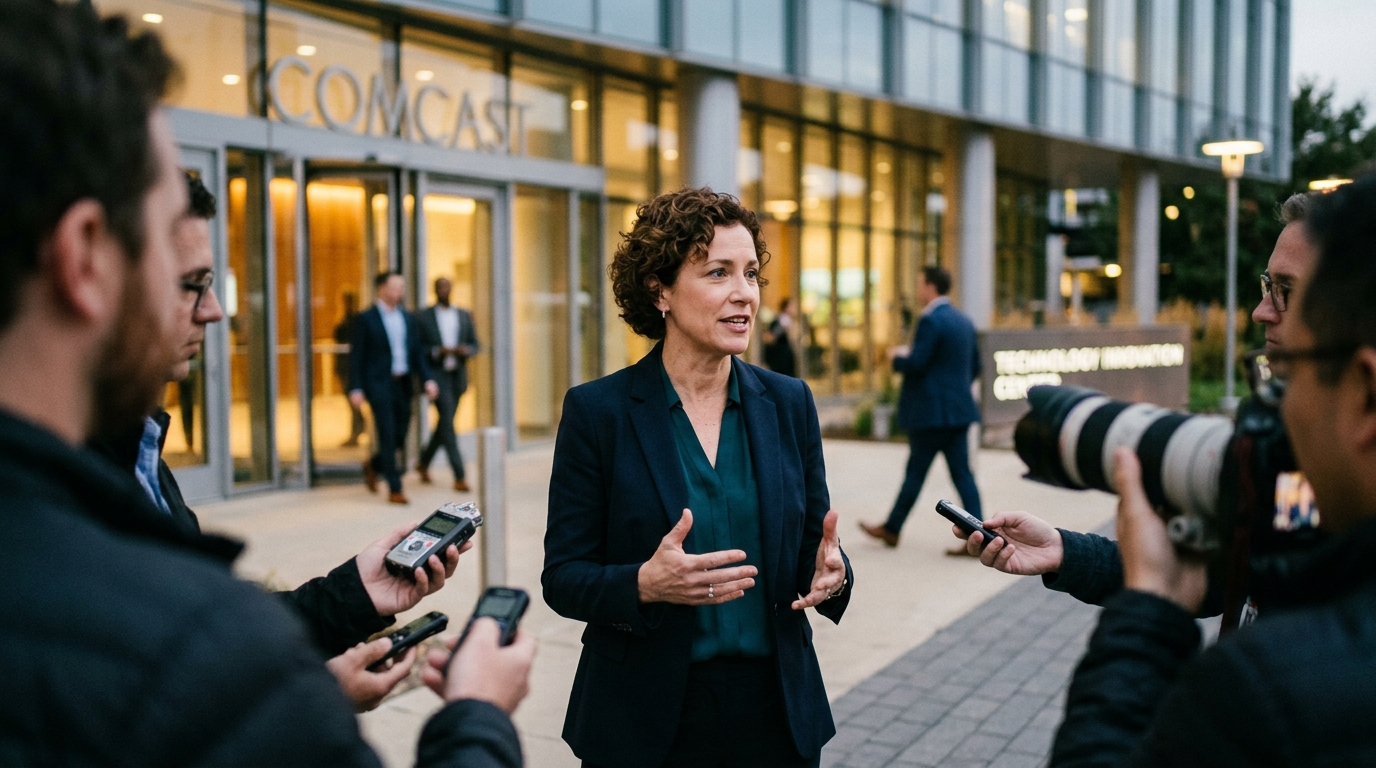
In an era where the U.S. telecommunications industry stands at a critical crossroads, Comcast Corp. has managed to deliver a positive surprise to Wall Street. The first-quarter 2026 results, released today, reveal a company that, while pressured by intense competition and shifting consumer habits, is demonstrating remarkable resilience in its core business: broadband provision.
Broadband Resilience Amidst Competition
The central narrative of Comcast’s results for the current quarter is the deceleration of broadband subscriber losses. While analysts had predicted a steeper decline due to the rise of Fixed Wireless Access (FWA) services from providers like T-Mobile and Verizon, Comcast limited losses to levels significantly lower than estimates. The company’s strategy of focusing on connection quality and integrating advanced network management technologies appears to be paying off.
According to the data, Comcast lost significantly fewer broadband subscribers than in the same period last year. This is partly attributed to the widespread rollout of the DOCSIS 4.0 standard, which enables symmetrical multi-gigabit speeds over existing cable infrastructure, offering a reliable alternative to competitors' fiber offerings. Furthermore, the company has begun extensively using artificial intelligence algorithms for predictive maintenance and automated network traffic optimization, reducing customer complaints and disconnections.
The Peacock Enigma and Entertainment
Despite the positive outlook in telecommunications, the streaming sector remains a challenging field for the Philadelphia-based giant. The Peacock platform, despite massive investments in content and exclusive sports broadcasting rights, showed rather lackluster growth. Subscriber fatigue from multiple platforms and rising subscription prices have created an environment where acquiring new users is becoming increasingly expensive.
"The challenge for Peacock is no longer just about content, but about the value proposition in a saturated world," industry analysts noted.
However, Comcast managed to offset streaming losses through its cinematic arm, Universal Pictures. Recent box office hits and the steady profitability of theme parks (Universal Destinations & Experiences) provided a necessary financial cushion. The strategy of "vertical integration"—where the company controls both the distribution network and the content—is once again proving to be its lifeboat in turbulent times.
The Impact of Artificial Intelligence
Behind these financial figures lies a deep technological transformation. Comcast is no longer just a provider of data "pipes." The use of Generative AI in customer service has drastically reduced operating costs, as the company's digital assistants can now resolve complex technical issues without human intervention. Additionally, AI is being used to personalize offers, helping to stem churn by providing targeted discounts and upgrades to customers deemed at "high risk" of canceling.
Financial Performance and Outlook
Adjusted earnings per share (EPS) beat the average analyst estimates, while total revenue remained stable despite the headwinds. The market reacted positively to the news, with the company's stock rising in pre-market trading. The question remaining for the rest of 2026 is whether Comcast can maintain this momentum in broadband as FWA competitors continue their aggressive expansion and fiber penetration increases nationwide.
- Earnings per share were higher than expected.
- Broadband subscriber losses were 20% fewer than forecasts.
- Theme park revenue increased by 5% year-over-year.
- Peacock continues its search for profitability amidst fierce competition.
In conclusion, Comcast is demonstrating that a legacy giant can adapt to new realities, provided it invests in the technological superiority of its infrastructure. The battle for the "last mile" of home connectivity is far from over, and Comcast seems determined to fight it to the end, utilizing every tool available, from AI to next-generation cable standards.