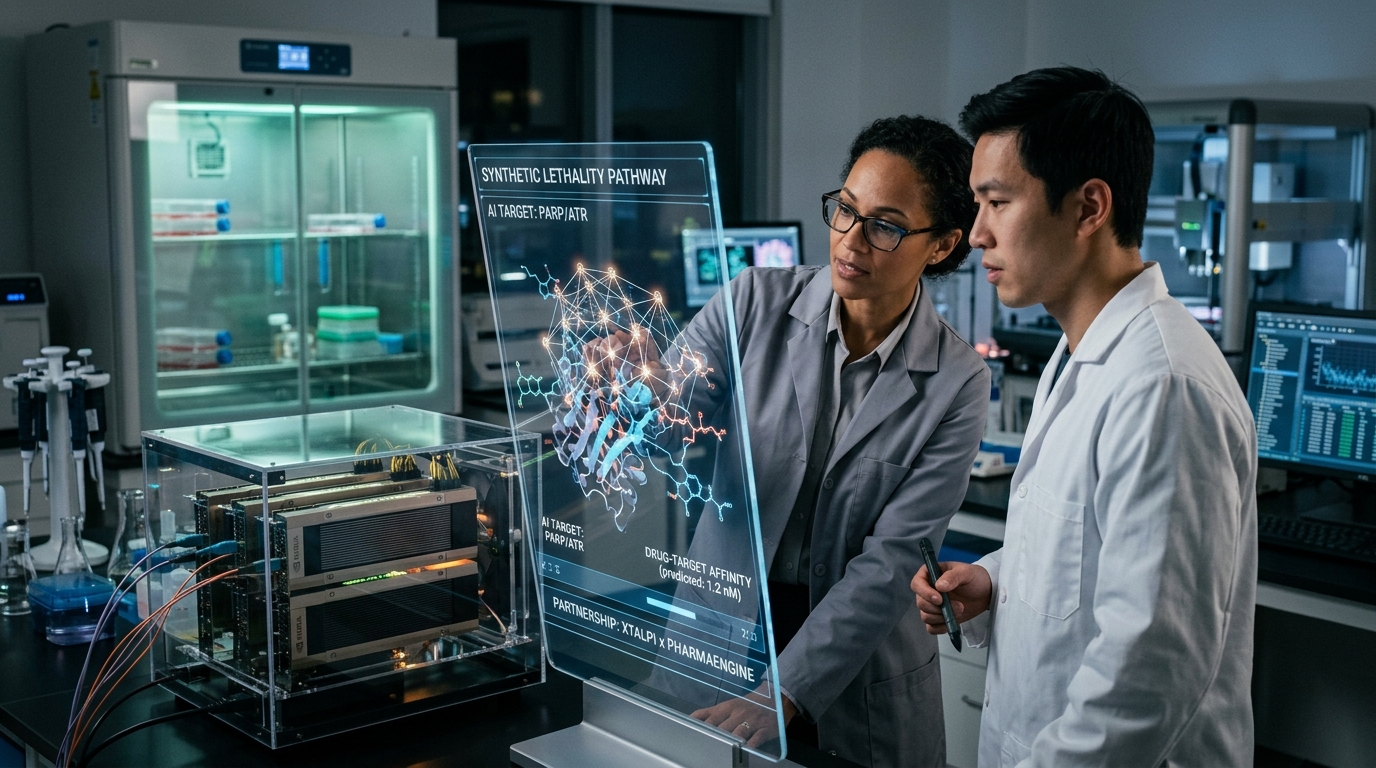
The integration of computational power and biological science is no longer a futuristic promise but a present reality reshaping the oncology landscape. The recent announcement from XtalPi and PharmaEngine regarding the achievement of a significant patient enrollment milestone for the PEP08 program, alongside the initiation of a second synthetic lethality program, marks a pivotal moment for the biotechnology sector.
The Strategy of Synthetic Lethality
Synthetic lethality represents one of the most promising approaches in personalized cancer therapy. The core concept is as elegant as it is complex: certain cancer cells survive despite genetic mutations because they possess alternative DNA repair mechanisms. By targeting these specific pathways, researchers can induce cell death in cancerous cells while leaving healthy cells—which possess functional redundancies—unaffected. The PEP08 program focuses on this pathway, offering hope for treatments with fewer side effects and greater efficacy.
The Role of XtalPi and Quantum Physics
What sets this collaboration apart is the use of XtalPi’s platform, which combines quantum physics, artificial intelligence, and robotic automation. XtalPi does not merely use machine learning algorithms to predict molecular behavior; it performs simulations at the atomic level, allowing for the precise prediction of the physicochemical properties of drug candidates before they are even synthesized in the lab. This "digital twin" approach drastically reduces the time and cost required to move from design to clinical trial.
- Acceleration of drug discovery through high-precision computational simulations.
- Reduction of failures in the early stages of research.
- Ability to explore a vast chemical space that would be inaccessible via traditional methods.
Clinical Progress and Future Outlook
Reaching the enrollment milestone for PEP08 suggests that the transition from computer to patient is proceeding smoothly. PharmaEngine, with its expertise in the clinical development of oncology drugs, is leveraging XtalPi’s technological edge to move faster in a highly competitive market. The launch of the second synthetic lethality program confirms the companies' confidence in their collaborative model. As clinical trial data begins to accumulate, the industry will be watching closely to see if AI-driven discovery truly translates into superior clinical outcomes for patients.
"The success of PEP08 is not just a win for these two companies, but proof that AI can unlock new therapeutic avenues that were previously considered too complex or non-viable," industry analysts note.
In conclusion, the case of XtalPi and PharmaEngine serves as a blueprint for how strategic partnerships between tech giants and specialized biopharmaceutical firms can accelerate medical innovation. In a world where cancer remains one of humanity's greatest challenges, the union of quantum physics and biology offers a new ray of light.