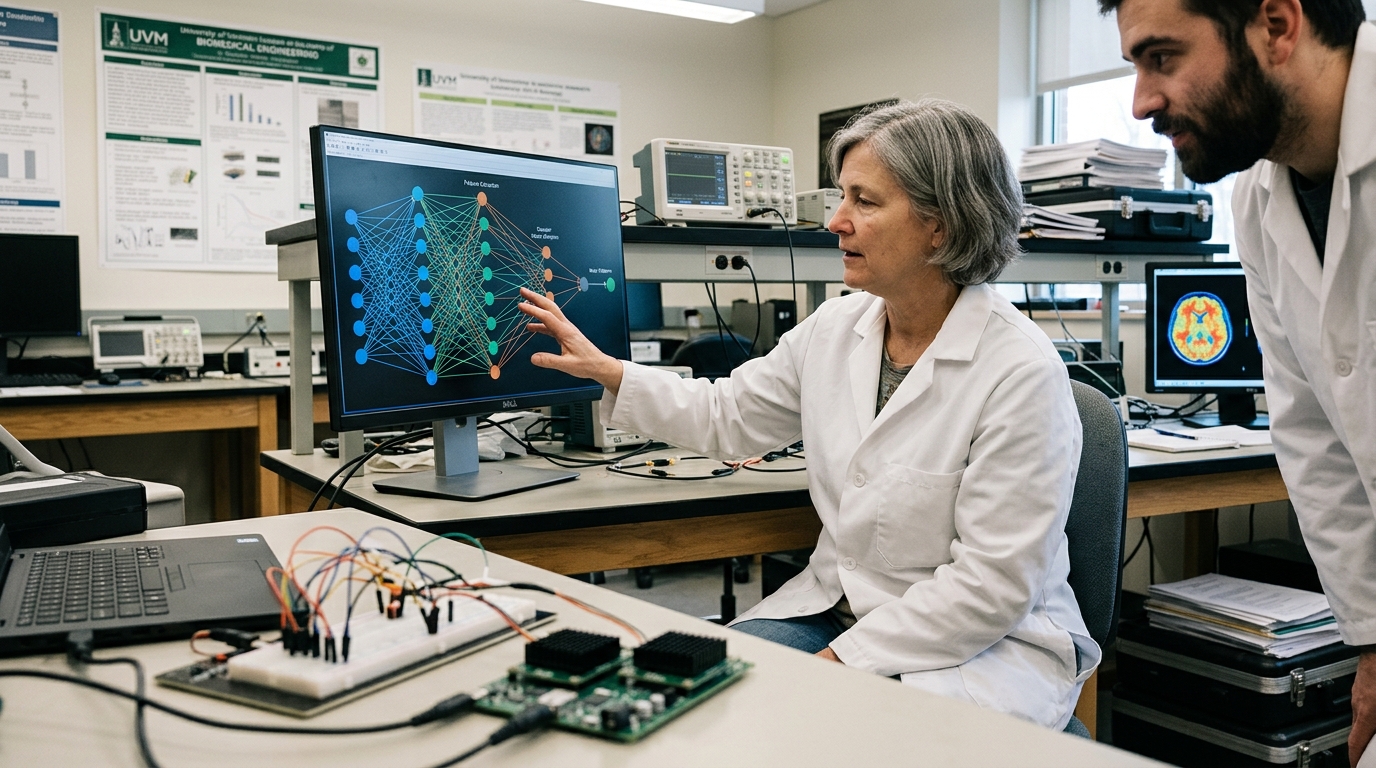
At the intersection of medical technology and neuroscience, a breakthrough from the University of Vermont (UVM) promises to fundamentally reshape how we diagnose Parkinson's disease. The research, recently published and garnering international attention, focuses on utilizing artificial intelligence to analyze subtle vocal patterns—nuances invisible to the human ear but clear indicators of the disease in its nascent stages.
The Voice as a Digital Biomarker
Parkinson's is a progressive neurodegenerative disorder primarily known for affecting movement. However, long before the hallmark tremors or rigidity appear, the disease begins to impact the muscles controlling speech and respiration. The tool developed at UVM leverages advanced machine learning algorithms to analyze speech recordings lasting only a few minutes.
As researchers explain, AI can detect "vocal jitter" and "shimmer"—microscopic fluctuations in frequency, intensity, and speech rhythm. These changes often precede motor symptoms by several years. "Our voice is one of the most complex systems we possess," the study notes. "It requires the perfect coordination of dozens of muscles and neural pathways. When this coordination begins to falter, AI is the first witness."
A New Era in Early Diagnosis
The primary challenge with Parkinson's today is that diagnosis typically occurs only after 60% to 80% of dopamine-producing neurons have already been lost. This delay drastically limits the efficacy of available treatments. The UVM tool aims to shift diagnosis from a reactive measure to a proactive intervention.
- Accessibility: The test can be conducted remotely via smartphone, reducing the need for costly visits to specialized clinics.
- Accuracy: In initial trials, the model demonstrated success rates surpassing traditional clinical assessment methods in early-stage detection.
- Monitoring: It allows clinicians to track disease progression and medication response in real-time.
"We are not trying to replace the neurologist, but to provide them with a telescope where they previously looked with the naked eye," the lead researchers state.
Challenges and Ethical Dilemmas
Despite the excitement, integrating AI into clinical practice is not without obstacles. A primary concern is data privacy. Voice recordings contain biometric information unique to every individual. How can we ensure this data isn't exploited by insurance companies or employers for discriminatory purposes?
Furthermore, there is the issue of "algorithmic bias." If the model is trained primarily on speech samples from specific ethnic groups or linguistic backgrounds, its accuracy may falter for other populations. UVM researchers emphasize they are working to diversify their database to ensure global applicability.
The Future of Neurology
The success of this tool could pave the way for similar applications in other neurological conditions, such as Alzheimer's or ALS (Amyotrophic Lateral Sclerosis). As we move through 2026, AI is no longer a futuristic promise but an essential instrument in the public health toolkit. The ability to "hear" a disease before it becomes visible represents perhaps the most significant victory of modern medical informatics.