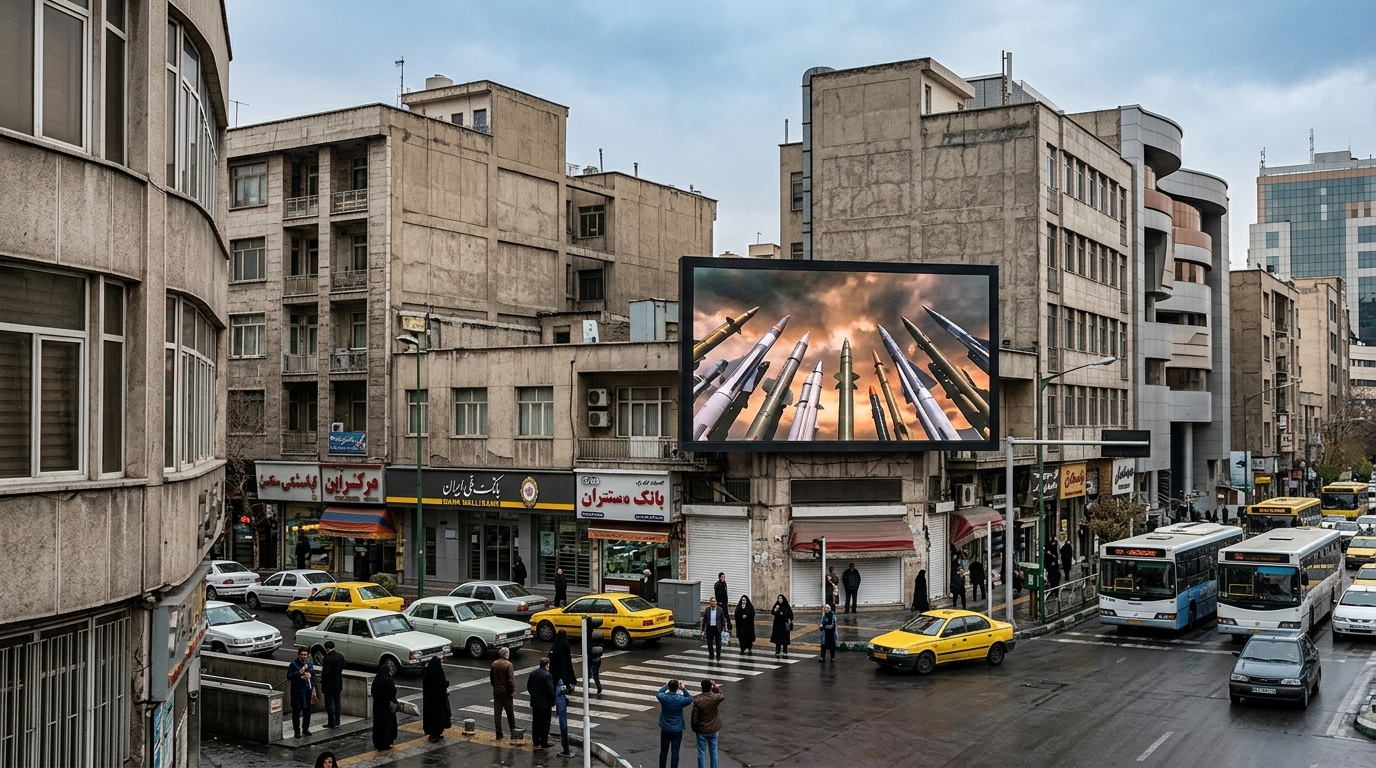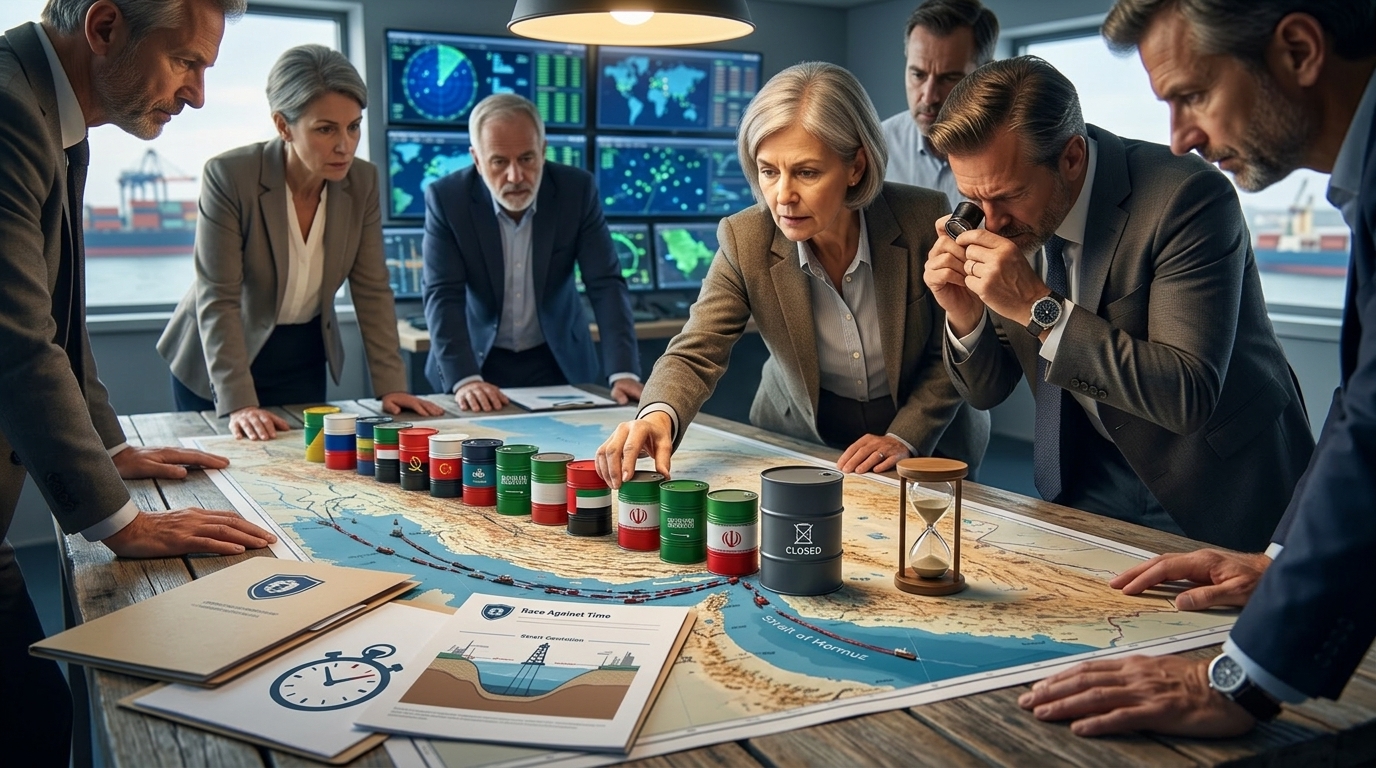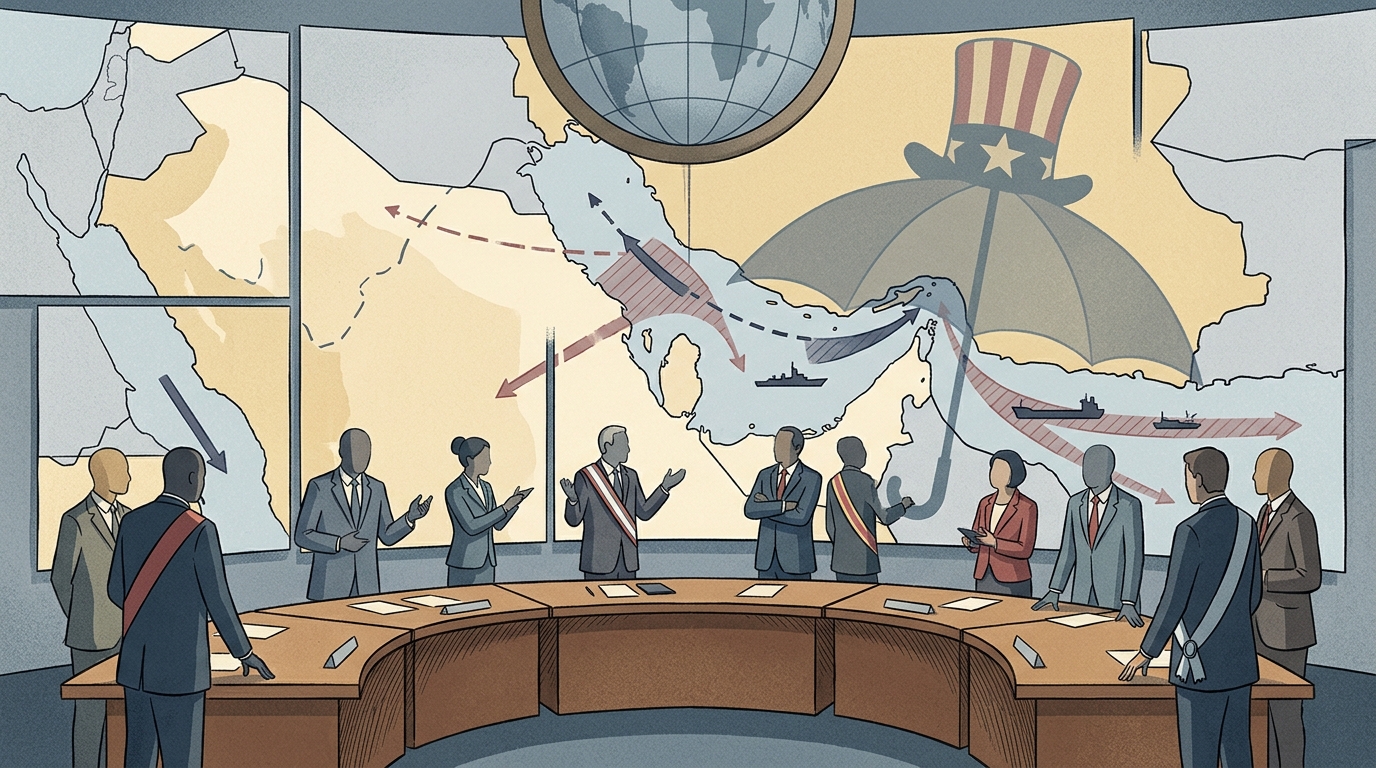
In the geopolitical chessboard of 2026, the Strait of Hormuz remains the planet's most critical 'artery.' The recent activation of 'Operation Freedom' by the US administration is not merely a routine military exercise, but a fundamental revision of the security doctrine in the Gulf region. With President Trump’s provocative yet clear statement, 'I have all the papers,' Washington is sending a loud message to both allies and adversaries: the American protective 'umbrella' is no longer a passive promise, but an active, technologically advanced intervention.
The Doctrine of 'Full Command' and the Key Phrase
Trump’s reference to 'the papers' is not accidental. According to analysts in Washington, it suggests the existence of new executive orders and declassified engagement protocols that allow US forces to act preemptively against threats. 'Operation Freedom' aims to ensure unhindered navigation in a passage through which 20% of global oil consumption flows. This strategy is based on 'deterrence through presence,' but with a defining difference: the integration of Artificial Intelligence into field decision-making.
The legal cover cited by the American leadership is grounded in an expanded interpretation of the international law of the sea, arguing that any harassment of commercial vessels in the Strait constitutes a direct threat to US national security. This 'zero tolerance' approach has provoked strong reactions in Tehran, which sees its vital space being restricted by an iron fence of American destroyers and autonomous surface vessels.
Technological Superiority: Drones and AI on the Front Line
'Operation Freedom' does not rely solely on firepower, but on the precision of information. Task Force 59, the pioneering autonomous systems unit of the Fifth Fleet, now holds the central role. Hundreds of surface drones and unmanned underwater vehicles (UUVs) form an invisible surveillance net covering every square mile of the Strait. These systems are powered by machine learning algorithms that can identify suspicious movements of fast boats before they even approach tankers.
- Autonomous Surveillance: Reducing risk to personnel and providing 24/7 coverage.
- Predictive Analytics: Using AI to predict potential ambush points.
- Ally Interconnectivity: Data is shared in real-time with Saudi Arabia and the UAE, strengthening regional cohesion.
This technological 'umbrella' acts as a power multiplier. It allows the US to maintain control with fewer manned ships, reducing the political cost in the event of escalation, while increasing operational efficiency. It is a 'digital siege' that renders Iran's traditional methods of asymmetric warfare increasingly ineffective.
Geopolitical Tremors and the Stance of Allies
The implementation of the operation has divided the international community. While Gulf nations welcome the enhanced protection, the European Union remains cautious, fearing that Trump’s aggressive rhetoric could lead to an uncontrollable conflict. China, on the other hand, is watching closely, as its energy security depends directly on the region's stability. Beijing finds itself in a difficult position: on one hand, it benefits from the security provided by the US; on the other, it is unsettled by American hegemony in such a critical zone.
"The freedom of the seas is non-negotiable. Whoever controls Hormuz controls the pulse of the global economy," a senior Pentagon official stated.
The 'Freedom' strategy is part of a broader framework to contain Iranian influence, linking maritime security with sanctions and nuclear diplomacy. Washington is using Hormuz as leverage, proving it can 'open' or 'close' the region's tap at will, using the 'papers' the President claims to possess.
Conclusion: A Fragile Balance
'Operation Freedom' marks the return of hard power to the heart of the Middle East. Although US technological superiority offers a sense of security to the markets, the risk of an accident or misinterpretation remains high. The 'umbrella' may protect from the rain, but in such a charged region, lightning strikes are frequent. The question is not whether the US can enforce order, but whether the cost of that order will be a new, widespread conflict that upends everything.