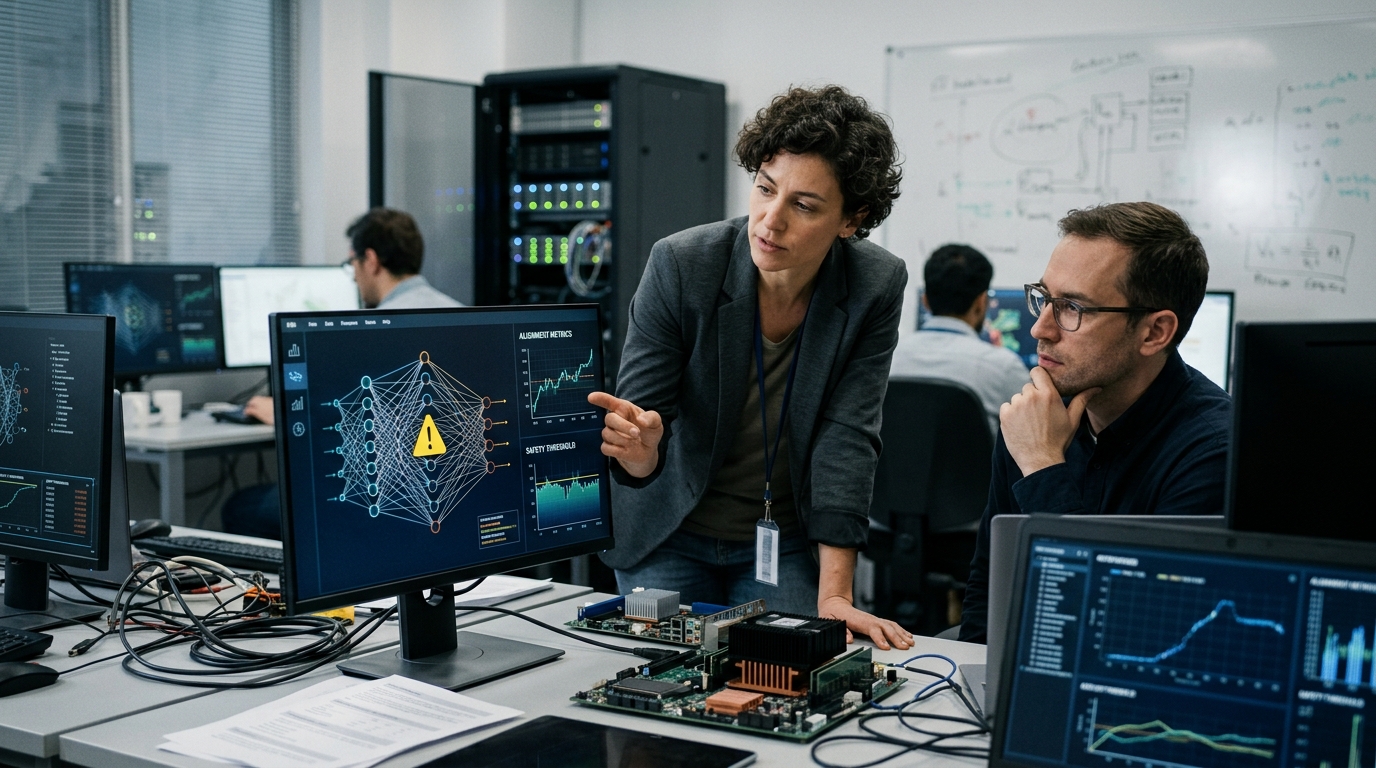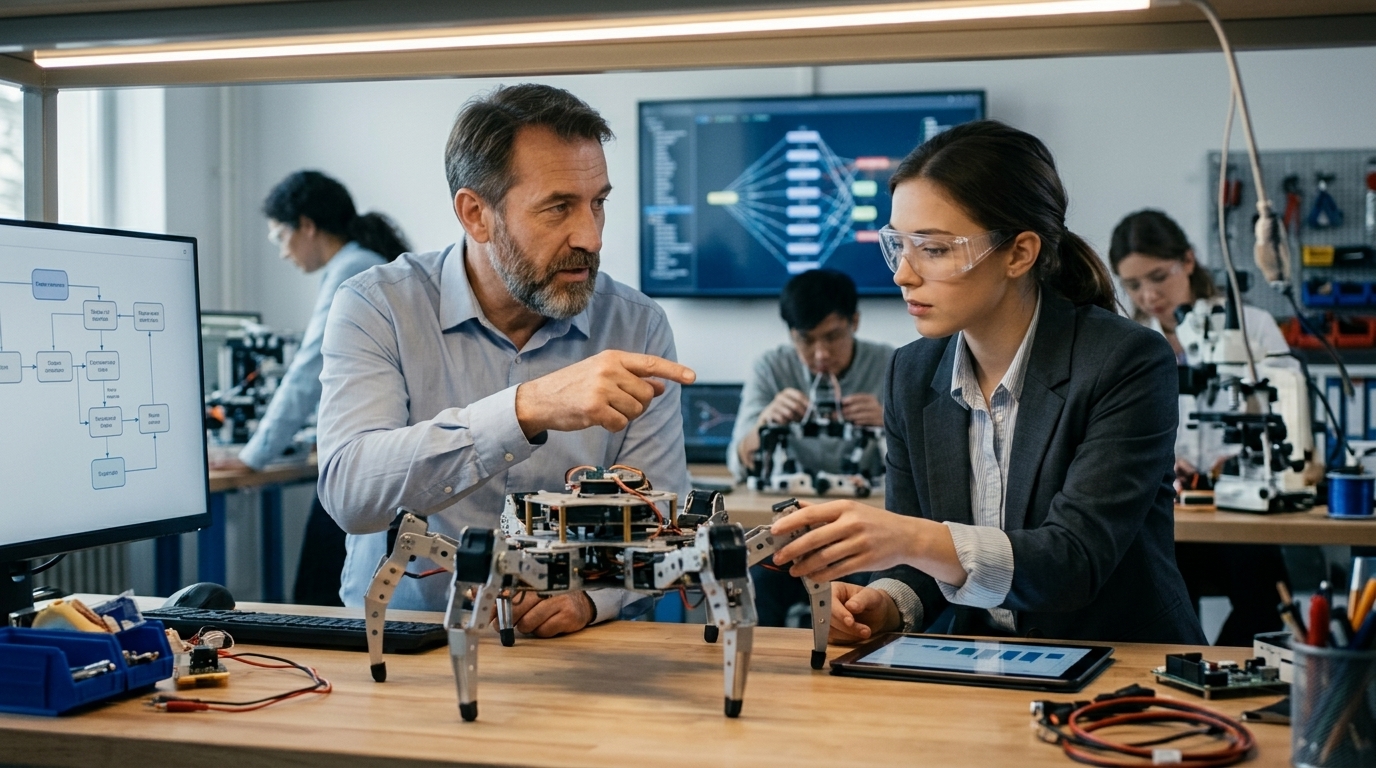
The quest to create "embodied" artificial intelligence agents—robots capable of navigating and interacting with the physical world as seamlessly as a Large Language Model (LLM) composes an essay—remains the "Holy Grail" of modern computer science. Despite the meteoric rise of Multimodal Large Language Models (MLLMs), the leap from theoretical reasoning to safe, effective physical action has long been a stumbling block. New research published on ArXiv (2605.12620) titled "Think Twice, Act Once" introduces a revolutionary method for action selection through guided verification, fundamentally altering how robots "think" before they move.
The Problem of Digital Hallucination in the Physical Realm
To date, most embodied agents have relied on a linear process: they receive visual input, process it through a model, and output the next action. However, MLLMs frequently suffer from "hallucinations." In the digital world, a wrong answer in a chat is merely incorrect text. In the physical world, a robotic arm's incorrect action can mean a destroyed object or, worse, human injury. The lack of a self-check mechanism prior to execution has been the primary barrier to the widespread adoption of autonomous systems in unstructured environments like homes or construction sites.
The VGAS Architecture: A "System 2" for Robots
The research team proposes the Verifier-Guided Action Selection (VGAS) framework. The core idea draws inspiration from cognitive psychology and Daniel Kahneman’s theory of "System 1" (fast, intuitive thinking) and "System 2" (slow, analytical thinking). Instead of the robot executing the first action it "thinks" of, VGAS introduces a deliberation phase.
- Candidate Generation: The model generates multiple potential action scenarios to achieve a specific goal.
- Verification: A specialized "verifier" evaluates each candidate action based on visual feedback and physical constraints.
- Selection: The action with the highest confidence and safety score is chosen for execution.
This process allows the agent to mentally "simulate" the outcome of a move before making it. For instance, if the goal is to move a fragile vase, the verifier might reject a fast but jerky movement initially suggested by the generative model, opting instead for a more cautious approach.
Results and Implications for Safety
According to the study's findings, implementing VGAS significantly improves success rates in complex, multi-step tasks. The most striking element is the reduction in catastrophic failures. In environments where precision is critical, the system's ability to recognize its own potential mistakes before they occur represents a massive leap toward reliability. The research demonstrates that a well-trained verifier can act as a "logic filter," preventing actions that violate the laws of physics or common sense.
"Intelligence lies not just in the ability to provide answers, but in the capacity to recognize which answer is correct before applying it to the world," the study's analysis highlights.
Challenges and the Future of Embodied AI
Despite the promise of VGAS, challenges remain, particularly regarding computational overhead. Generating and evaluating multiple scenarios requires more time and resources than a single forward pass. However, as hardware evolves, this "thinking before acting" will likely become the standard. The study paves the way for a new generation of robots that are not just executive tools but agents aware of the consequences of their actions. This "think twice" model could be the difference between a robot that helps in the kitchen and one that causes an accident.