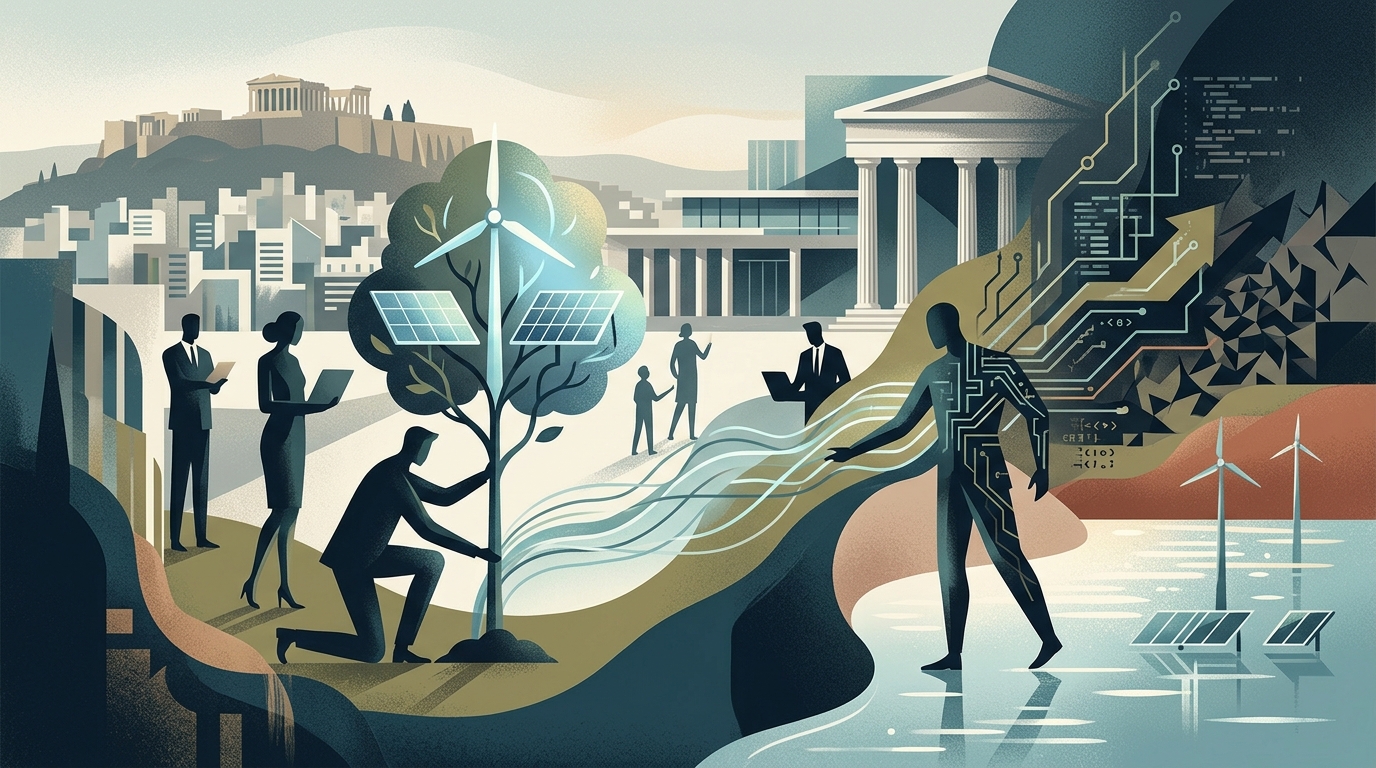
The energy transition is no longer a simple exercise of replacing coal with wind turbines and solar panels. It is a radical transformation of how we produce, distribute, and consume energy. As highlighted at the recent Energy Transition Summit in Athens, the "brain" of this new era is Artificial Intelligence (AI). The discussions centered on how algorithms can catalyze a more efficient grid, while simultaneously addressing the irony that AI itself is becoming one of history's most energy-intensive consumers.
The Challenge of Volatility and the Role of AI
One of the primary issues discussed by delegates was the inherent instability of Renewable Energy Sources (RES). Unlike traditional thermal plants, energy production from sun and wind is weather-dependent, making grid management an incredibly complex equation. This is where AI steps in as the ultimate regulator. Through advanced forecasting models, AI can estimate RES production with second-by-second accuracy and adjust energy demand or storage accordingly.
Representatives from ADMIE (IPTO) and DEDDIE (HEDNO) emphasized that integrating AI tools into national grids allows for "smart" load management. This means the grid can "predict" demand peaks and activate demand response mechanisms, reducing the need for expensive and polluting baseload plants. AI's ability to process vast amounts of data from millions of smart meters transforms the passive grid of the past into a dynamic, living ecosystem.
Predictive Maintenance as a Cost-Saving Tool
Beyond flow management, AI is revolutionizing infrastructure maintenance. "Predictive maintenance" allows energy companies to identify potential failures in transformers or cables before they occur. By using IoT sensors and machine learning algorithms, operators can analyze temperature and vibration patterns, saving millions of euros in unplanned power outages and extending the lifespan of critical infrastructure.
- Reduction of operational costs by up to 20% through AI-driven maintenance.
- Optimization of new RES park siting using geospatial data and AI analysis.
- Automated detection of energy theft and technical losses in distribution networks.
The Paradox of Data Center Energy Demand
However, the Summit was not purely celebratory. A shadow side was revealed: the massive energy thirst of Generative AI systems. Data centers hosting models like GPT-4 or Gemini consume amounts of energy comparable to entire nations. In Greece, the ambition to become a regional technological hub—with significant data center investments from giants like Microsoft and Google—poses a new challenge for the national energy system.
"Artificial Intelligence is the key to climate salvation, but if we are not careful, its own consumption could cancel out the benefits it provides," noted a senior energy sector executive during a panel discussion.
The proposed solution involves directly linking data centers with dedicated RES units and utilizing AI itself to optimize cooling and energy efficiency within these facilities. The concept of "green computing" is now becoming an urgent necessity rather than just a corporate social responsibility trend.
Geopolitics and Energy Security
Finally, the Summit touched upon the critical issue of cybersecurity. In a world where the grid is increasingly controlled by algorithms, protecting against cyberattacks is synonymous with national security. AI is being used both as a weapon by malicious actors and as a shield by defenders. Developing domestic expertise and fortifying critical infrastructure with real-time threat detection systems is a top priority for the European Union and Greece specifically, given its sensitive geopolitical position.
In conclusion, Artificial Intelligence is no longer a future promise for the energy sector; it is the present reality. The success of the energy transition will be judged by our ability to integrate this technology in a way that promotes sustainability without overburdening the very environment it seeks to save. The path forward requires a delicate balance between computational power and ecological responsibility.