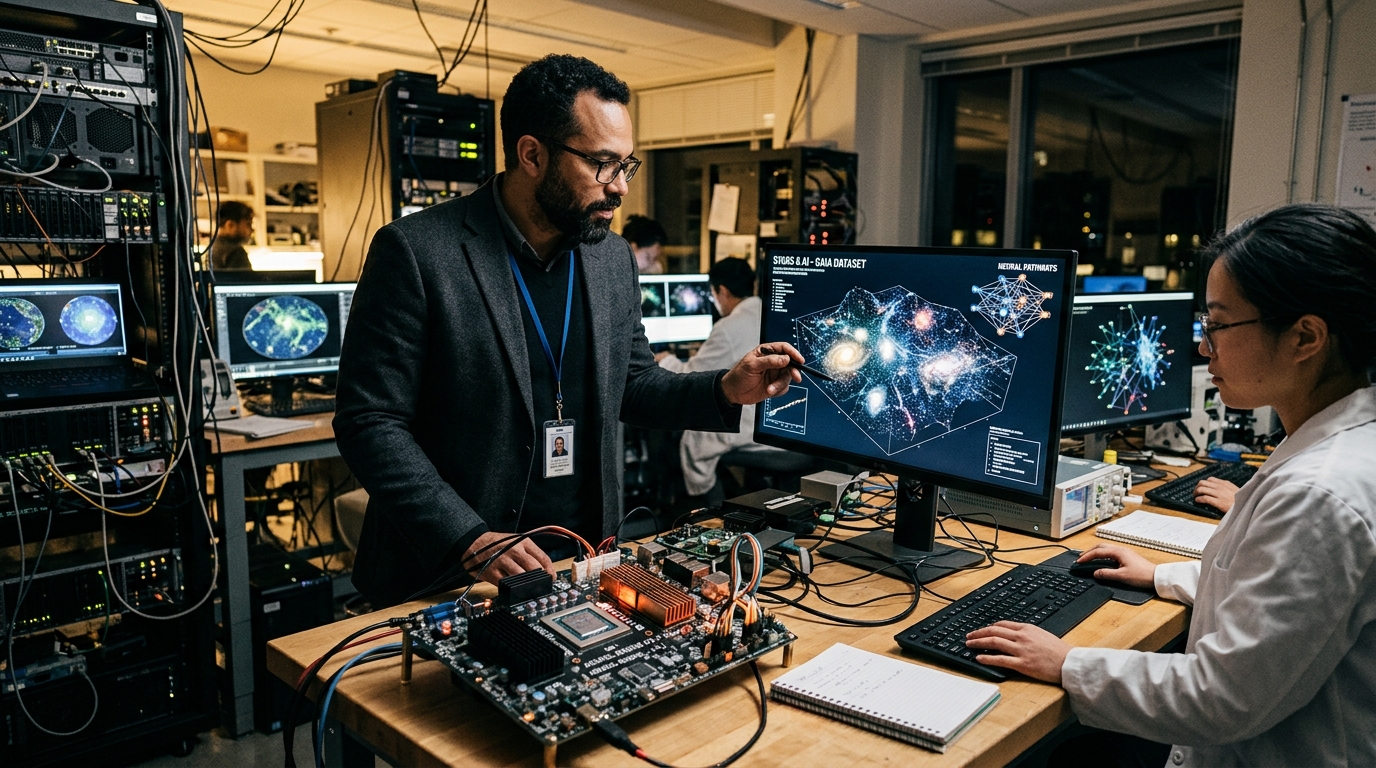
In a move that marks a historic turning point for higher education in the American South, Louisiana State University (LSU) has announced the launch of its first Bachelor of Science degree program dedicated exclusively to Artificial Intelligence. Scheduled to begin in the fall of 2026, the program responds to an urgent global demand for a specialized workforce capable of navigating a world fundamentally reshaped by algorithms and machine learning.
The Strategic Importance of Academic Specialization
For decades, Artificial Intelligence existed as a sub-field of Computer Science, often accessible only at the graduate level or through niche research initiatives. However, the velocity at which Generative AI and Large Language Models (LLMs) have permeated daily life and corporate strategy has rendered the traditional academic approach insufficient. Recognizing this shift, LSU has designed a curriculum that moves beyond mere coding to provide a deep understanding of neural network architecture, data science, and robotics from day one.
Housed within the College of Engineering, the program offers students an interdisciplinary experience. According to university leadership, the goal is not just to produce programmers, but to cultivate "solution architects" who can apply AI to critical sectors such as healthcare, precision agriculture, and cybersecurity. This move aligns with a broader national trend in the United States, where top-tier institutions are restructuring their departments to ensure they remain competitive alongside the rapid innovations of Silicon Valley.
The 'Silicon Bayou' and Economic Diversification
Louisiana, a state traditionally anchored by the oil and gas industries, is leveraging LSU’s academic prowess to diversify its economic foundation. The creation of this AI degree is a cornerstone of a strategy to build what many are calling the "Silicon Bayou"—a technological hub in the South designed to attract high-tech investment and retain top-tier talent. By offering a specialized AI bachelor's, LSU hopes to prevent the "brain drain" that often sees its brightest graduates migrate to the West Coast or the Northeast.
"We are not just preparing students for the jobs of today, but for careers that haven't even been invented yet," a university spokesperson remarked during the announcement.
The curriculum is rigorous, covering everything from game theory and Deep Learning to Natural Language Processing (NLP). Furthermore, there is a heavy emphasis on experiential learning through partnerships with tech giants, allowing students to tackle real-world problems and gain industry exposure long before they receive their diplomas.
Ethics and Social Responsibility as a Core Pillar
Perhaps the most significant aspect of the new degree is the mandatory integration of AI Ethics into the core curriculum. At a time when concerns regarding algorithmic bias, data privacy, and the automation of the workforce are at an all-time high, LSU has chosen to train scientists with a clear social conscience. Students will be required to analyze the societal implications of their work, ensuring that technological advancement serves human interests rather than undermining them.
This human-centric approach is vital. As AI becomes the "operating system" of modern society, the individuals designing it must possess more than just technical brilliance; they must have the critical thinking skills to navigate complex ethical dilemmas. By placing the humanities at the heart of a high-tech degree, LSU is setting a standard for how modern engineers should be educated in the 21st century.
Conclusion: The Future of Education is Here
LSU's announcement is more than a local milestone; it is a reflection of the global shift in educational priorities. Offering a dedicated bachelor’s degree in AI is a formal recognition that the field has become so vast and complex that it can no longer be treated as an elective or a secondary specialization. For prospective students, this represents a unique opportunity to lead the next technological frontier. For the academic world, it serves as a clarion call: the pace of change is exponential, and the institutions that thrive will be those that adapt with courage and foresight.