The intense odor that blanketed the Attica basin on Tuesday, May 19, 2026, was not a trick of nature or a rare oceanographic phenomenon. With a clear and scientifically substantiated announcement, the Hellenic Centre for Marine Research (HCMR) has put an end to theories pointing to the Saronikos Gulf as the source of the problem, effectively identifying human activity as the sole culprit. This development brings back to the forefront the discussion on environmental policing and the safety of industrial infrastructure in one of Europe’s most densely populated areas.
The phenomenon, which became noticeable from the early morning hours in areas such as Piraeus, Faliro, Kallithea, and central Athens, caused significant distress and dozens of calls to the Fire Service and Civil Protection. The smell, described by many as "rotten eggs" or "sulfur," suggested a release of hydrogen sulfide—a gas often associated with either biological processes in the sea or industrial accidents and sewage leaks.
The Scientific Verdict: Why Saronikos is Not to Blame
HCMR scientists, utilizing data from the "Poseidon" station network and analyzing current oceanographic conditions, concluded that there was no evidence of water mass turnover or gas release from the seabed. In similar past instances, bad odors had been attributed to anoxic conditions (lack of oxygen) leading to the production of hydrogen sulfide from decomposing organic matter. However, measurements on May 19 showed that oxygen levels in the Saronikos were within normal limits, and water temperatures did not justify such a sudden release.
Furthermore, wind direction and atmospheric circulation on that day reinforce the view that the source was on land. "If the source were marine, the dispersion would have had different characteristics and would have been accompanied by visual evidence on the water surface, such as color changes or the presence of dead organisms, which was not observed," the Center's report states. With the Saronikos ruled out, the question remains: Who or what is responsible for Attica’s "asphyxiation"?
Anthropogenic Causes and the "Silence" of Industrial Zones
The HCMR announcement now directs the authorities' attention toward the industrial zones of the Thriasio Plain and Elefsina, as well as the sewage network and wastewater treatment plants. Foul odors are often the result of incomplete combustion, refinery leaks, or illegal dumping of chemicals into the sewage system. Attica, despite technological progress, remains vulnerable to these types of "invisible" pollution that degrade the quality of life for millions of citizens.
According to environmental analysts, the problem is exacerbated by the phenomenon of temperature inversion, which traps pollutants near the ground, preventing their dispersion. In this specific case, weather conditions acted as a "lid," keeping the odor trapped over the city for hours. The fact that no industrial facility reported a malfunction or accident raises questions about the effectiveness of self-monitoring systems and the frequency of state inspections.
The Need for a Modern Monitoring Network
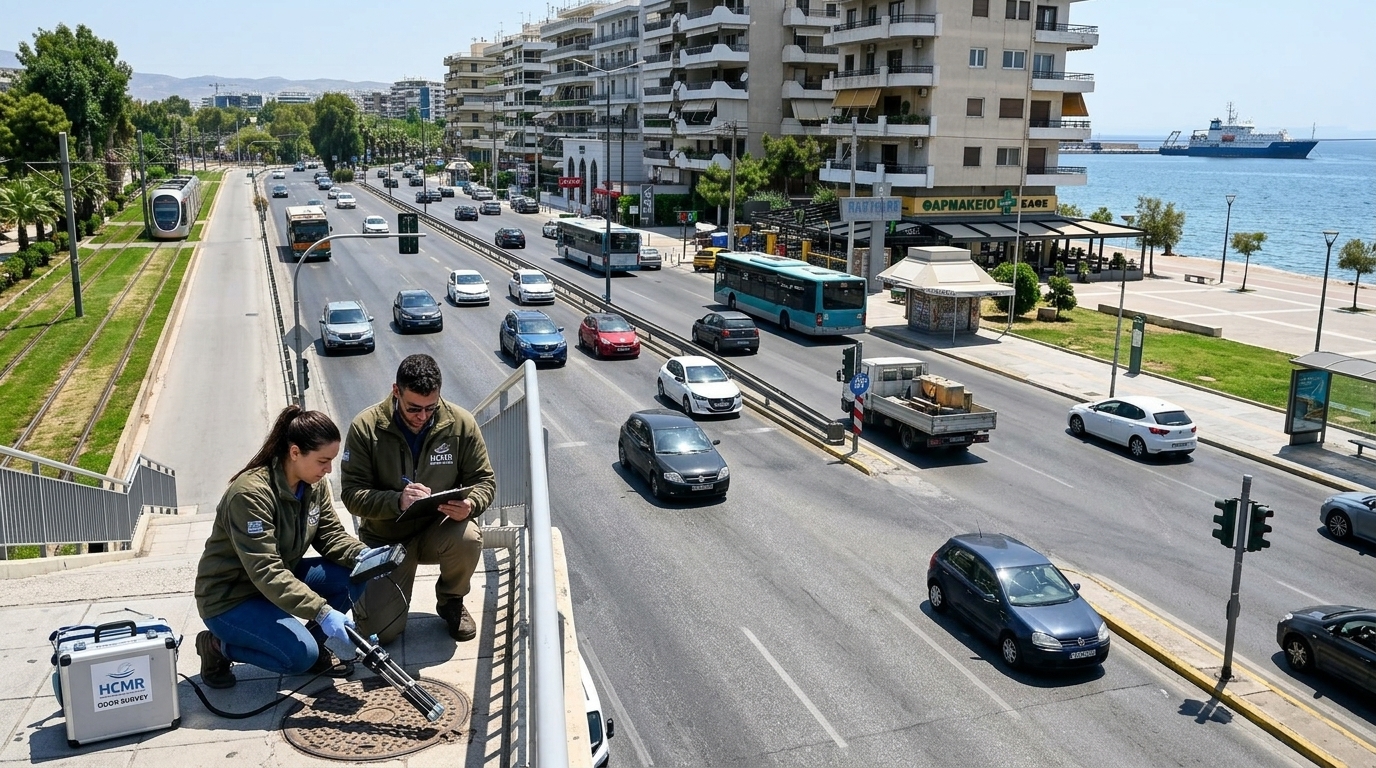
The crisis of May 19 highlighted once again a significant gap: the lack of a dense, public, real-time network of sensors for odors and volatile organic compounds (VOCs). While monitoring stations exist for particulate matter (PM2.5) and nitrogen dioxide, the tracking of malodorous pollutants remains in an embryonic stage, relying primarily on citizen complaints.
- Installation of hydrogen sulfide and mercaptan sensors at strategic points in western Attica.
- Stricter frameworks for industrial emissions during nighttime hours.
- Creation of a digital platform where citizens can report odors in real-time, allowing scientists to triangulate the source.
In conclusion, the case of the Attica odor is not merely a matter of aesthetics or temporary annoyance. It is a matter of public health and transparency. Science has done its duty by excluding the sea. Now, the baton passes to the regulatory mechanisms to identify the "anthropogenic" sources and ensure that Athens does not experience similar moments of environmental uncertainty again.