In the history of medicine, breakthroughs have often been the result of serendipity or decades of grueling laboratory labor. From Fleming’s penicillin to the mRNA vaccines of the recent pandemic, the human factor and the "trial and error" method have been the protagonists. Today, June 6, 2026, we stand before a radical paradigm shift. The announcement of the successful development and the first positive clinical results of the world's first vaccine designed entirely by Artificial Intelligence marks the end of the era of "discovery" and the beginning of the era of "design."
The news, originating from research hubs in collaboration with Vietnam and Australia, concerns a vaccine targeting seasonal influenza, but with a critical difference: the algorithm did not merely suggest improvements; it created an entirely new adjuvant. This component trains the human immune system to recognize the virus with unprecedented precision. This development is not just a technical victory; it is a philosophical shift in how we perceive biology as an information system.
The Technology Behind the SAM Algorithm
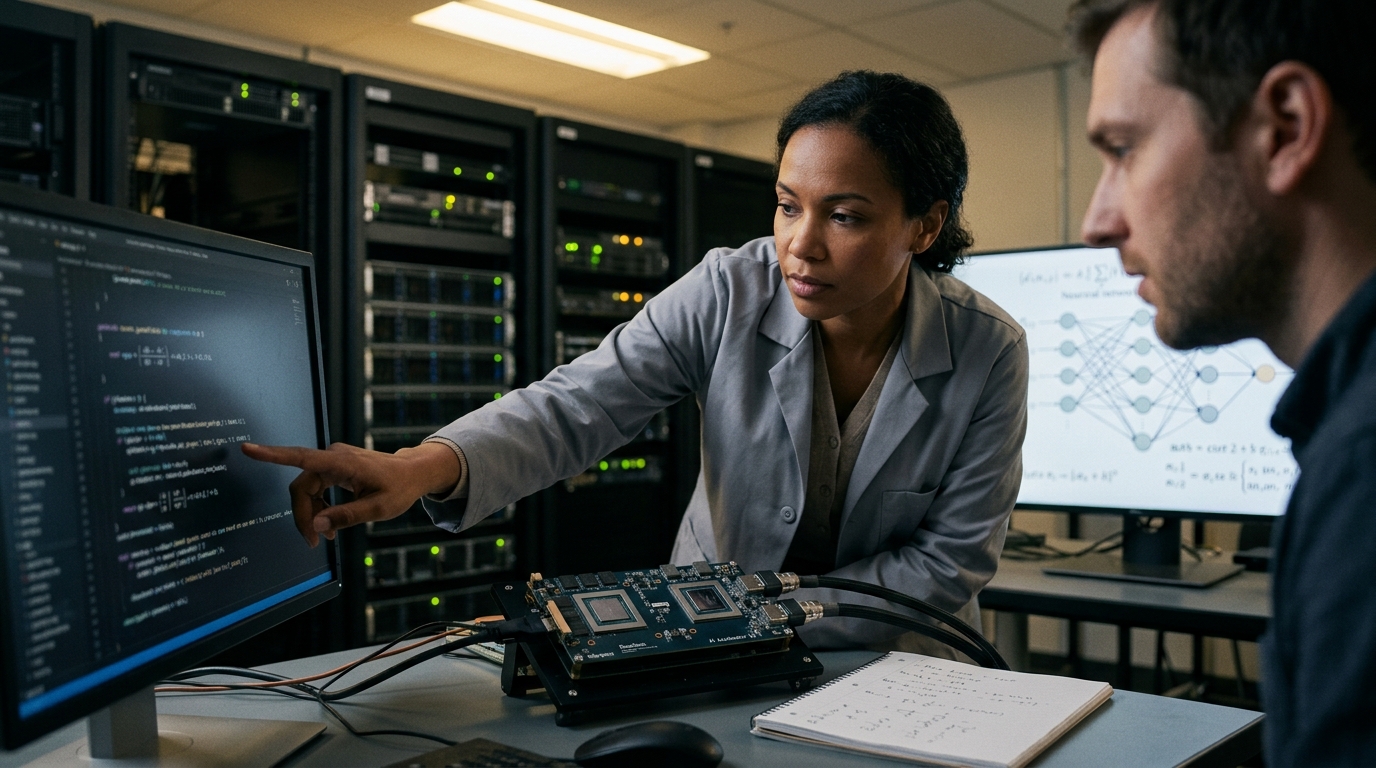
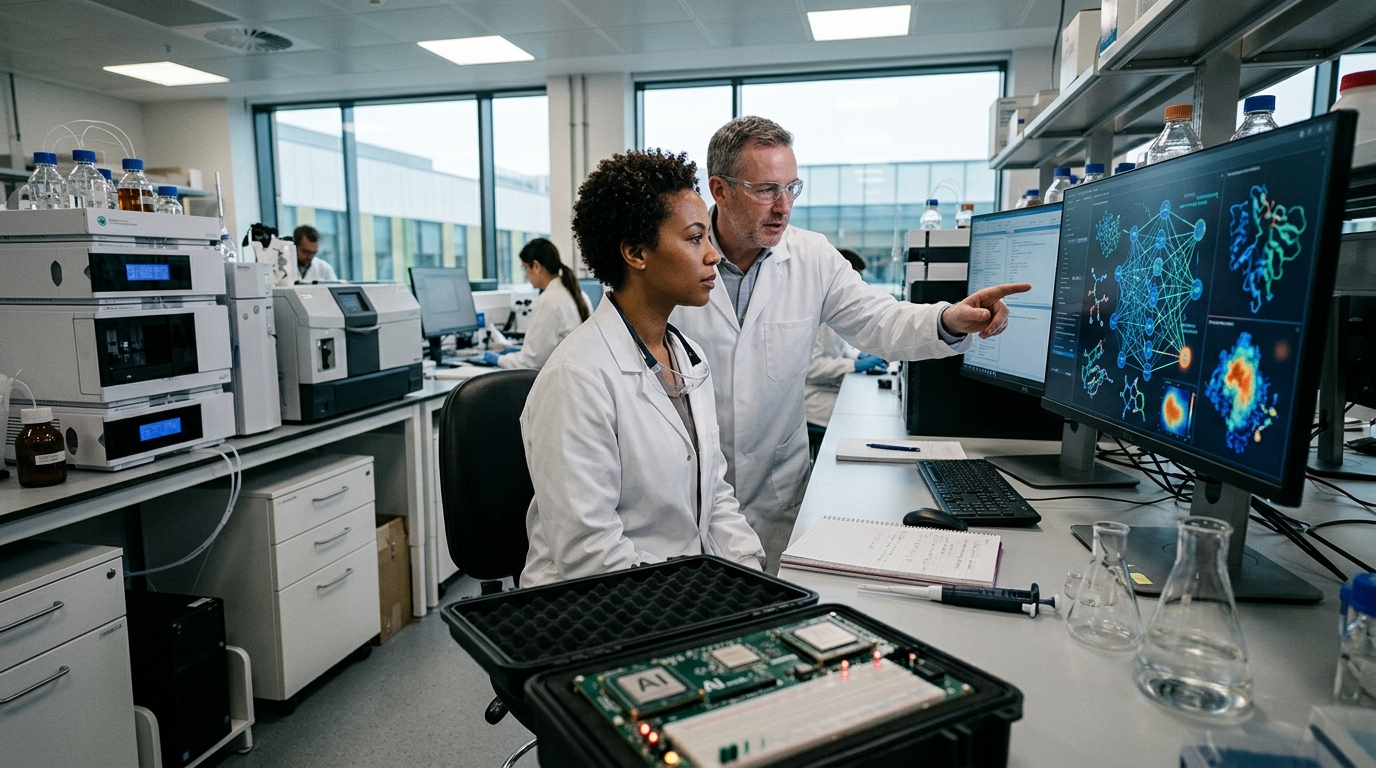
At the heart of this revolution lies an algorithm known as SAM (Search Algorithm for Ligands). Unlike traditional methods, where scientists test thousands of chemical compounds hoping to find one that triggers the desired response, SAM worked in reverse. Researchers "taught" it which compounds activate the human immune system and which do not. Subsequently, the AI began to "imagine" billions of potential combinations, arriving at a structure never before observed in nature.
The result was a vaccine that is not only more potent but also more stable. The AI’s ability to simulate molecular dynamics in fractions of a second allows scientists to bypass years of wet-lab work. "It’s like trying to find a needle in a haystack, but instead of searching by hand, you have a magnet that pulls the needle out instantly," said one of the lead researchers. This success in Vietnam also demonstrates the decentralization of high technology, as countries traditionally seen as drug "consumers" are now leading the charge in innovation.
"We are not just designing a drug; we are encoding the body's response to a threat. AI is the architect of a new biological security."
From Theory to Practice: Implications for Public Health
The speed at which this vaccine was developed is perhaps its most staggering feature. While traditional vaccine development requires 10 to 15 years and billions of dollars, the AI-driven approach can shrink this timeline to mere months. In a world constantly threatened by "Disease X"—the hypothetical next pandemic—the ability to produce vaccines in near real-time is our ultimate defense.
Furthermore, the AI-designed vaccine offers a solution to the problem of personalized medicine. Algorithms can tailor formulations for specific population groups or even to counter mutations that have not yet emerged by predicting the evolutionary trajectory of viruses. The use of AI in biotechnology is transforming medicine from a reactive science into a proactive force.
Ethical Questions and the Future of Patents
However, this success brings a host of challenges. Who owns the intellectual property of a vaccine designed by a machine? Current patent laws require a human inventor. If AI is the creator, the legal framework must be radically overhauled. There is also the fear of the "black box": if an algorithm proposes a formulation that works, but scientists cannot fully understand *why* it works, how can we guarantee absolute long-term safety?
Regulatory bodies like the FDA and EMA are under pressure to create new evaluation protocols for AI-derived drugs. The transparency of the algorithm's training data is now becoming as important as the results of clinical trials. Despite the risks, the path has been set. The convergence of computer science and biology is now irreversible, and the vaccine developed in Vietnam is just the tip of the iceberg.
In conclusion, this success is not just about the flu. It is about our ability as a species to use the tools we created to overcome our biological limitations. Artificial Intelligence, often viewed with suspicion, is proving here its role as the ultimate ally of life.