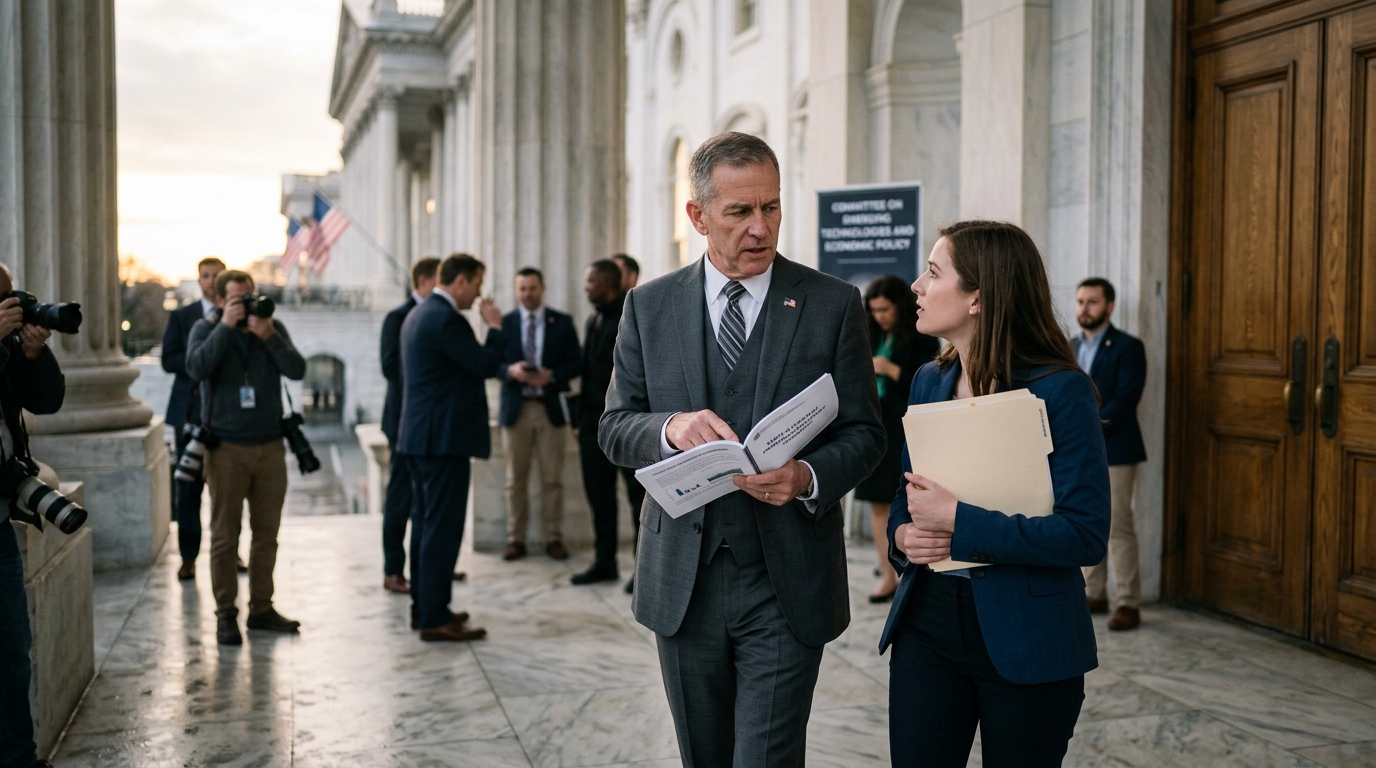
In a historic turning point for the global technology scene, the discussion surrounding potential U.S. government participation in OpenAI—the organization that sparked a revolution with ChatGPT—is no longer a science fiction scenario, but a strategic option under serious consideration. As we stand in June 2026, the convergence between Silicon Valley and the Pentagon appears to be reaching completion, transforming Artificial Intelligence from a commercial product into a critical national resource, comparable to nuclear energy or strategic petroleum reserves.
The Metamorphosis of OpenAI: From Non-profit Ideal to State Oversight
OpenAI began its journey with the promise of "open" and "safe" artificial intelligence for the benefit of humanity. However, its recent full transition into a for-profit benefit corporation has opened the door for investment structures that transcend the traditional boundaries of Venture Capital. The U.S. government, concerned about the pace of development of Artificial General Intelligence (AGI), appears to be seeking a "golden share" or some form of direct participation that would allow it a seat at the table for security decisions and technology exports.
This move is justified by Washington as necessary for the protection of national security. If OpenAI succeeds in developing intelligence that surpasses human capabilities, the question is no longer whether it will be profitable, but who will control the "switch." State participation could provide the company with necessary protection from hostile takeovers, as well as unlimited access to computing power through subsidized energy grids and data centers now considered "critical infrastructure."
Geopolitical Competition and the 21st Century 'Manhattan Project'
It is no secret that competition with China has entered a high-tech cold war phase. Beijing has already integrated its own AI companies (such as Baidu and Alibaba) into its state strategic plan. For the US, leaving OpenAI exclusively in the hands of private investors—some of whom have ties to Middle Eastern funds—is now seen as a risk. Potential state participation would act as a guarantee that American supremacy remains intact.
- Strategic Autonomy: The ability of the US to develop AI models without dependence on global supply chains that may be controlled by adversaries.
- Ethics and Alignment: Enforcing "democratic values" within algorithms to prevent AI from being used for authoritarian purposes, at least according to the American narrative.
- Mammoth Funding: The cost for the next generation of models (GPT-6 and beyond) is estimated in the hundreds of billions of dollars, amounts that only states can guarantee in the long term.
The Risks of State Interventionism
Despite the advantages, the idea of a "nationalized" or even state-controlled OpenAI is sending shivers through the free market. Innovation in Silicon Valley has always flourished due to a lack of bureaucracy and freedom of experimentation. State entry into equity may mean the imposition of censorship, the slowing of research due to excessive safety regulations, and the loss of top talent who do not wish to work for a "government contractor."
"If OpenAI becomes an arm of the Department of Defense, science will retreat in the face of strategy. We will have won the power war, but we will have lost the battle for creativity," says an MIT analyst.
Furthermore, there is the risk of unfair competition. If OpenAI enjoys state support, what will become of competitors like Anthropic, Google, or Meta? The market risks turning into a state-sponsored monopoly, stifling any other innovation effort that does not align with government priorities.
Conclusion: The New Reality
The potential for state participation in OpenAI is an admission that Artificial Intelligence is too powerful to be left to private individuals alone. As we approach the summer of 2026, the model of "free AI" seems to be dying, giving way to a state-directed capitalism of knowledge. Whether this leads to a safer humanity or a digital totalitarianism remains to be seen by the actions of lawmakers in Washington.