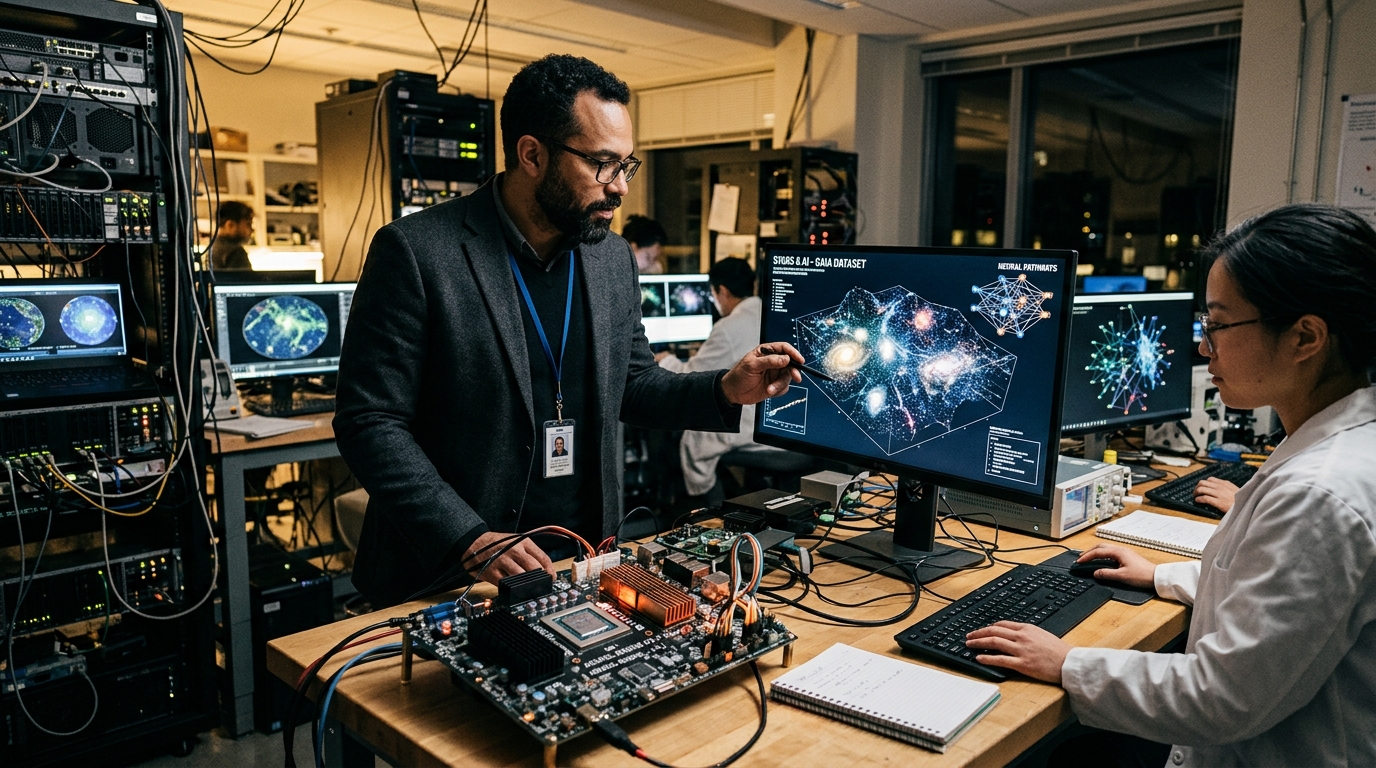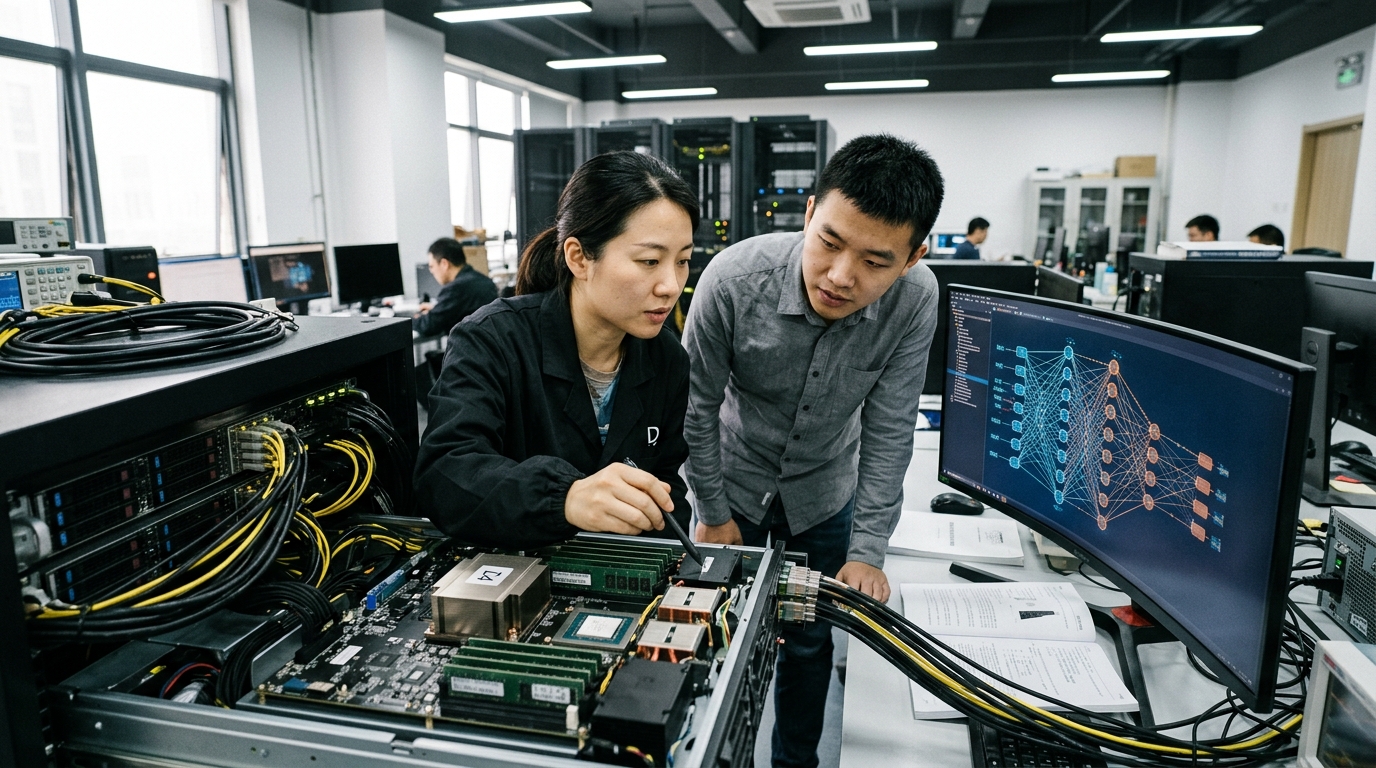
As May 2026 unfolds, the global artificial intelligence community finds itself facing a tectonic shift. DeepSeek, the China-based research lab that sent shockwaves through the industry in 2025, has returned with the release of DeepSeek V4. This is not merely an incremental update; it is a bold declaration that the era of Silicon Valley's closed-model dominance may be drawing to a close. V4 doesn't just offer state-of-the-art performance in reasoning and coding; it does so using an architecture that redefines the very meaning of computational efficiency.
The Architecture of Efficiency: Beyond Raw TFLOPS
DeepSeek V4 is built upon an advanced iteration of the Mixture-of-Experts (MoE) architecture, which the firm calls "Multi-Token Prediction 2.0." Unlike traditional dense models that activate billions of parameters for every token generated, V4 employs a dynamic routing system that engages only the necessary fraction of the network. This allows the model to maintain a total parameter count of 2 trillion while operating during inference with the resource footprint of a much smaller system.
This strategy is far from accidental. In an environment of international sanctions and restricted access to high-end semiconductors, DeepSeek was forced to innovate at the algorithmic level. V4 proves that clever mathematical approaches can overcome hardware scarcity. According to initial benchmarks, the model outperforms GPT-4o and Claude 3.5 Sonnet in mathematical reasoning and programming, while nipping at the heels of OpenAI’s latest closed frontiers in general intelligence.
The Geopolitical Chessboard and Open Weights
DeepSeek's decision to release the model weights represents a strategic move with profound political implications. While American giants move toward increasingly closed and guarded systems—citing safety and alignment—DeepSeek is handing the power of frontier AI to every developer and enterprise globally. This creates a fascinating paradox: a company from a highly regulated political environment has become the standard-bearer for the "democratization" of technology.
- Empowering on-premise hosting for maximum data privacy.
- Slashing AI application development costs by up to 70%.
- Enabling specialized fine-tuning for small and medium-sized enterprises.
- Challenging the monopoly of Silicon Valley APIs.
This move forces regulators in the US and EU to reconsider their stance. If "open" AI is being pioneered in the East, how will the West compete without sacrificing the open-source principles it once championed?
Impact on Data Science and Development
For data scientists, DeepSeek V4 is a "Swiss Army knife." Its ability to understand complex database schemas and write optimized code in languages like Rust and C++ makes it an indispensable co-pilot. Furthermore, V4 introduces "Native Multimodality," where image and video understanding are not bolted-on features but are integrated into the model's core from the first day of training.
"DeepSeek V4 isn't just a competitor; it’s a mirror showing that innovation knows no borders and that efficiency is the new currency in the AI economy," notes a senior analyst at Let's Data Science.
In conclusion, the launch of V4 marks a new phase in global competition. DeepSeek is no longer chasing the leaders; it is now setting the pace, forcing the entire industry to ask: Is the future of AI locked behind subscriptions, or is it free for everyone on a server they can control?