In the rapidly evolving landscape of global artificial intelligence, a new force from the East is reshaping the rules of engagement. DeepSeek, the Chinese AI lab that has garnered significant respect within the international open-source community, has announced the release of its latest models. These systems promise to bridge the gap between closed commercial giants and accessible, high-performance solutions. This new generation of models is not merely an incremental update; it is a strategic assault on the frontiers of reasoning and long-context data management.
The Architecture of Efficiency: MLA and MoE
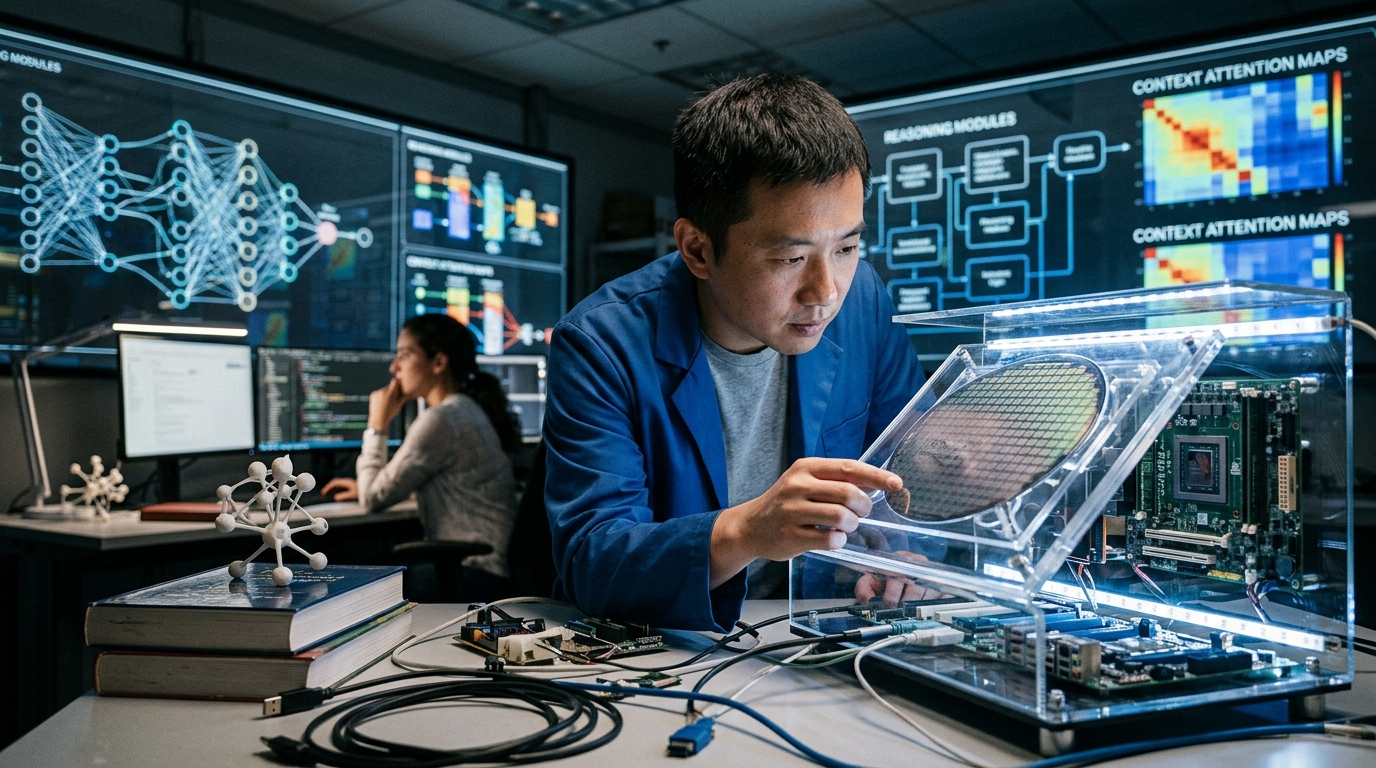
DeepSeek's success is not built solely on raw computational power but on architectural ingenuity. The new models utilize Multi-head Latent Attention (MLA) technology, which drastically reduces memory requirements during inference without sacrificing output quality. Combined with a Mixture-of-Experts (MoE) structure—where only a fraction of the parameters are activated for any given query—DeepSeek has managed to create models that are both exceptionally powerful and economically viable.
This approach allows the models to handle context windows reaching or exceeding 128,000 tokens, enabling the analysis of entire books or complex codebases in seconds. For developers and data analysts, this means AI can now "understand" the full depth of a multifaceted problem without losing coherence or hallucinating due to memory constraints. It represents a shift from simple chat interfaces to deep analytical engines.
The Reasoning Leap: DeepSeek-R1
The most striking element of the new announcement is the focus on "reasoning." Following in the footsteps of models like OpenAI’s o1, DeepSeek introduced DeepSeek-R1, a model specifically trained to "think before it speaks." Through the use of advanced Reinforcement Learning, the model learns to generate internal chains of thought, verifying its own logical steps before presenting a final answer.
In benchmarks covering mathematics, programming, and logical problem-solving, DeepSeek-R1 demonstrates performance that rivals the top-tier models from Silicon Valley. The difference lies in DeepSeek’s transparency; by publishing details about their methodology and offering access at prices that make the competition look overpriced, they are challenging the industry's status quo. The model's ability to self-correct during the generation process is a critical milestone toward Artificial General Intelligence (AGI).
Geopolitics and the Open-Source Strategy
The rise of DeepSeek is not just a technological achievement; it is a political statement. At a time when the U.S. imposes strict restrictions on the export of advanced chips (such as those from Nvidia) to China, Chinese researchers are responding with innovations at the software and architectural levels. DeepSeek proves that algorithmic optimization can, to an extent, compensate for a lack of access to the latest hardware.
Furthermore, the company’s strategy of releasing model weights (open weights) creates a new ecosystem. While OpenAI and Google entrench themselves behind closed APIs, DeepSeek offers its tools to the global community, earning the trust of developers who demand local deployment and full control over their data. This democratization of reasoning-capable models is shifting the balance of power in the tech industry, moving it away from a centralized model toward a more distributed one.
Conclusion and Future Outlook
DeepSeek's latest release marks the end of the era where American companies held a monopoly on model "intelligence." With expanded context support and enhanced reasoning capabilities, AI is becoming a tool for deeper analysis rather than just a probabilistic word-prediction machine. The question for businesses and organizations is no longer whether to use AI, but which model offers the best performance-to-cost ratio—and currently, the most compelling answer is coming from the East.
"Innovation is the only way to bypass the barriers of hardware scarcity. We are proving that intelligence is about how you think, not just how many chips you have."