In the high-stakes arena of artificial intelligence, where progress is measured in weeks rather than years, Chinese firm DeepSeek has sent a shockwave that is reverberating from Palo Alto to London. Their recent announcement supporting a 1-million-token context window, paired with an aggressively low pricing strategy, is far more than a technical patch. It is a strategic masterstroke that fundamentally redraws the economic roadmap for thousands of startups globally.
The Economic Disruption: From Luxury to Utility
Until recently, processing vast amounts of data in a single model "thought" was a privilege reserved for companies with deep pockets. Models from OpenAI and Anthropic, while exceptionally capable, maintain a price point that often makes complex applications—such as analyzing entire legal archives or processing massive codebases—prohibitively expensive for small and medium-sized enterprises. DeepSeek is changing this narrative by offering prices that are up to ten times lower than their Western counterparts.
This cost reduction does not just improve profit margins; it radically alters how developers architect their applications. When token costs cease to be the primary constraint, startups can experiment with more sophisticated prompting techniques, ingest entire books or technical manuals into the context, and offer services that were previously deemed economically unviable. The "democratization" of compute power is now seemingly flowing from the East, causing palpable anxiety in Silicon Valley.
Technological Efficiency: Moving Beyond Brute Force
DeepSeek’s success is not merely built on price subsidies but on profound architectural innovation. By utilizing Multi-head Latent Attention (MLA) and a Mixture-of-Experts (MoE) framework, their models operate with significantly higher efficiency. Unlike the "brute force" approach of simply throwing more GPUs at the problem, DeepSeek has optimized how the model retrieves information from its memory during inference.
The 1-million-token window allows startups to bypass Retrieval-Augmented Generation (RAG) in many scenarios. Instead of building complex infrastructures to chunk data and search for relevant snippets, developers can now feed the entire context directly to the model. This reduces development complexity and improves response accuracy, as the model maintains a holistic view of the data without the information loss inherent in traditional vector-search slicing.
Geopolitics and the New Balance of Power
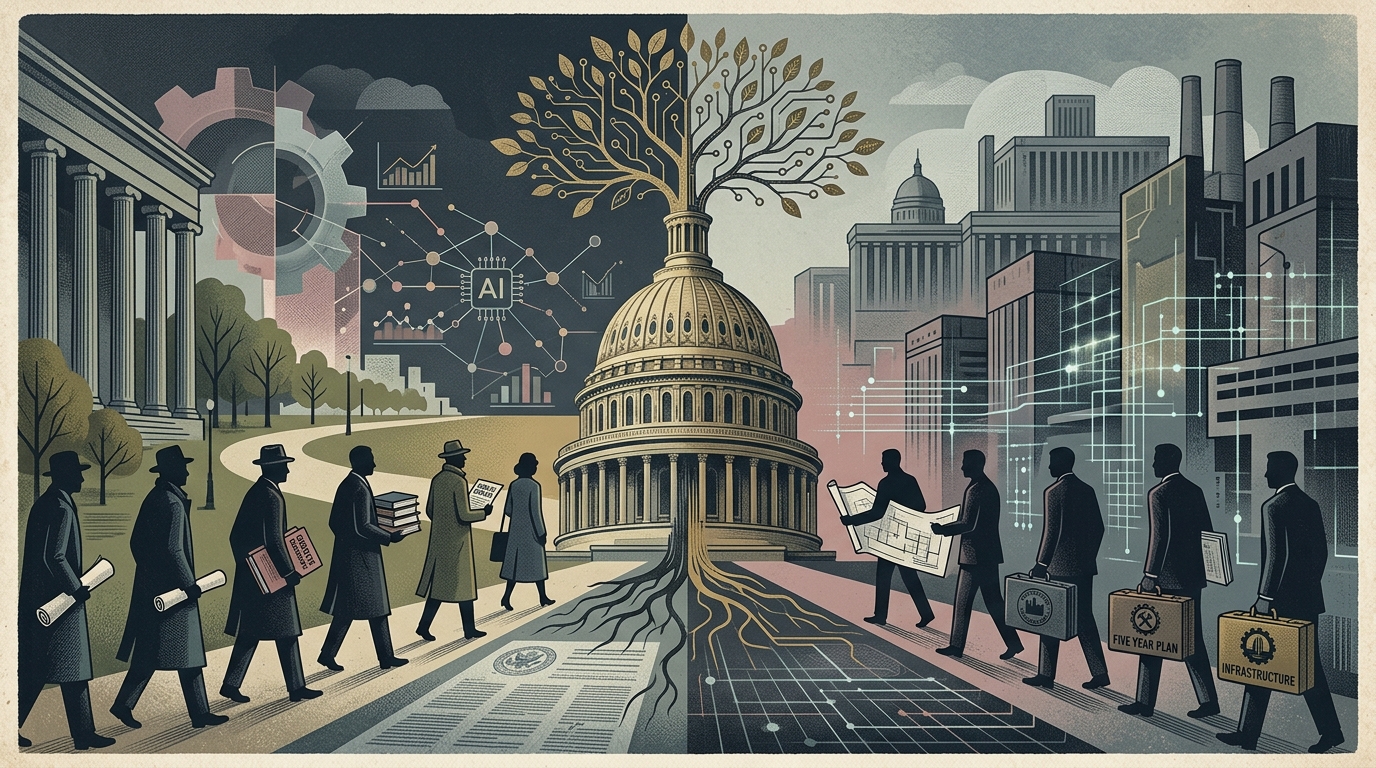
The rise of DeepSeek also highlights a significant power shift in the global AI landscape. While the U.S. imposes strict chip export bans on China, Chinese researchers are responding with extreme software optimization. DeepSeek’s ability to deliver top-tier performance at a fraction of the operating cost represents a direct challenge to the American monopoly on high-end AI services.
For European startups, this "gift" from China presents both a golden opportunity and a strategic dilemma. On one hand, access to cheap, powerful AI enables rapid product development. On the other, reliance on Chinese infrastructure raises valid questions regarding data security and future geopolitical stability. However, in a free market, cost remains the kingmaker, and currently, DeepSeek is winning the war of the balance sheet.
The Future: The Commoditization of Intelligence
As we move into the latter half of the decade, the trend is undeniable: artificial intelligence is transforming from a rare luxury into a common utility, much like electricity or cloud storage. DeepSeek’s move accelerates this commoditization. Companies that built their business models solely on being "AI wrappers" will find themselves in a precarious position, as value shifts from model access toward specialized application and proprietary data integration.
In conclusion, the AI cost curve is not just declining; it is cratering. For a startup in Athens or Berlin, this means the distance between a concept and a world-class product has shrunk dramatically. The question is no longer whether we have the resources to build with AI, but whether we have the creative vision to utilize 1 million tokens in a way that provides genuine human value.