In the high-stakes theater of global artificial intelligence, the transition from digital screens to the physical world represents the final frontier. Alibaba, through its prolific Qwen team, has officially entered the arena of Embodied AI with the unveiling of Qwen-VLA (Vision-Language-Action). This move is far more than a technical iteration; it is a strategic maneuver in the escalating race between Silicon Valley and Hangzhou to provide a physical manifestation for machine intelligence.
The Architecture of Agency: Understanding Qwen-VLA
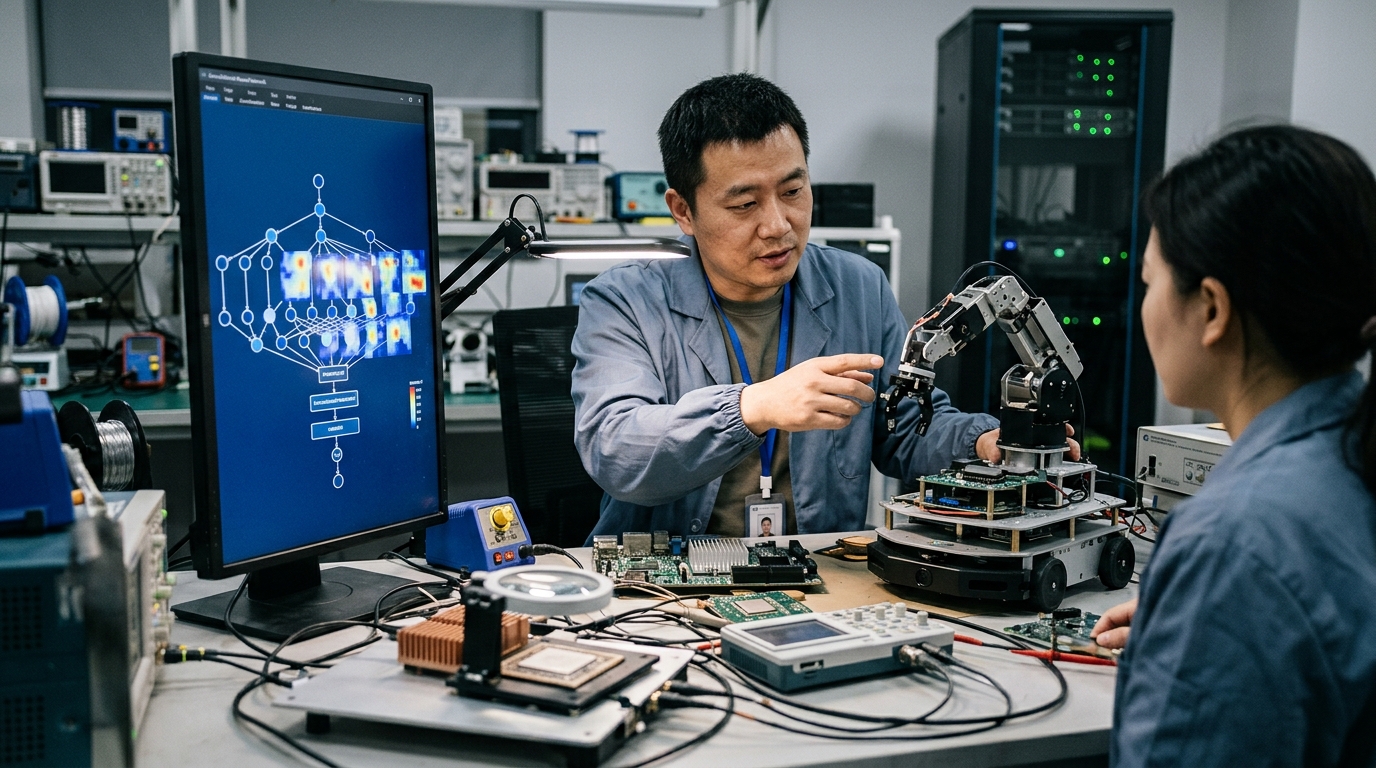
Qwen-VLA represents a significant leap from traditional Multimodal Large Language Models (MLLMs). While its predecessor, Qwen-VL, excelled at visual perception—describing images or identifying objects—the addition of the 'A' for Action changes the fundamental utility of the model. Qwen-VLA is engineered to bridge the gap between perception and execution, translating visual inputs and natural language instructions into precise motor commands for robotic systems.
Technical documentation suggests that Qwen-VLA utilizes a sophisticated alignment mechanism that maps visual features directly to action tokens. This allows the model to perceive spatial hierarchies with millimeter precision. For instance, if a user commands, "Pick up the glass and place it to the left of the keyboard," the model does not merely recognize the objects; it calculates the 3D coordinates and torque requirements necessary for a robotic arm to execute the task in a dynamic environment.
- Integration of vision, language, and robotic control within a unified neural framework.
- Enhanced capability for navigation in unstructured environments like homes or busy warehouses.
- Precise spatial grounding using bounding boxes and point-based localization.
The Geopolitics of Robotics: China’s 'New Quality Productive Forces'
Alibaba’s foray into Embodied AI is perfectly synchronized with Beijing’s national directive to develop "New Quality Productive Forces." The Chinese government has set ambitious goals for the mass production of humanoid robots by 2025, and models like Qwen-VLA serve as the essential 'cerebral cortex' for this emerging hardware. While American research often leans toward consumer convenience and creative tools, China’s focus is sharply calibrated toward industrial automation and the resilience of the supply chain.
"Embodied AI is where the digital economy meets the material reality. We are no longer talking about chatbots; we are talking about productivity in its most physical sense," notes a senior analyst covering the Hangzhou tech corridor.
Alibaba’s internal ecosystem provides an unparalleled sandbox for Qwen-VLA. Through its logistics arm, Cainiao, the company operates some of the world's most advanced automated warehouses. Implementing Qwen-VLA could allow robots to handle complex sorting tasks that previously required human intervention, potentially slashing operational costs by up to 40% within the next five years. This vertical integration—from the AI model to the logistics floor—gives Alibaba a distinct advantage over pure-play software firms.
Challenges and the Open-Source Gambit
One of the most compelling aspects of the Qwen team’s strategy is its commitment to open-source principles. While OpenAI and Google have increasingly moved toward proprietary, closed-door models, Alibaba has gained significant traction by releasing its model weights to the global developer community. If Qwen-VLA follows this path, it could become the default operating system for a new generation of affordable, versatile robots worldwide.
However, the journey from the laboratory to the living room is fraught with challenges. Safety remains the paramount concern. A hallucination in a text-based LLM might result in a factual error, but a 'hallucination' in a VLA model could result in physical damage or human injury. Alibaba must demonstrate that Qwen-VLA incorporates robust safety guardrails and real-time error correction to operate safely in human-centric environments.
Conclusion: The Dawn of the Physical AI Era
The announcement of Qwen-VLA marks the beginning of the end for 'static' AI. As Alibaba bolsters its model's capabilities, the competition with Tesla’s Optimus and startups like Figure AI is reaching a fever pitch. The battle for AI supremacy has moved from the data center to the factory floor and the domestic kitchen. The question is no longer whether AI will inhabit a physical form, but which model will successfully navigate the complexities of the real world to become the standard for robotic intelligence.