The discovery of new drugs has historically been a process fraught with uncertainty, astronomical costs, and high failure rates. According to a comprehensive analysis published in Nature, the integration of Artificial Intelligence (AI) into target identification and assessment represents more than just a technological upgrade; it is a fundamental paradigm shift in biomedical research. Identifying the right "target"—the molecule or protein responsible for a disease—is the most critical step, as a wrong choice at this stage inevitably leads to clinical trial failures years down the line.
The Challenge of Biological Complexity
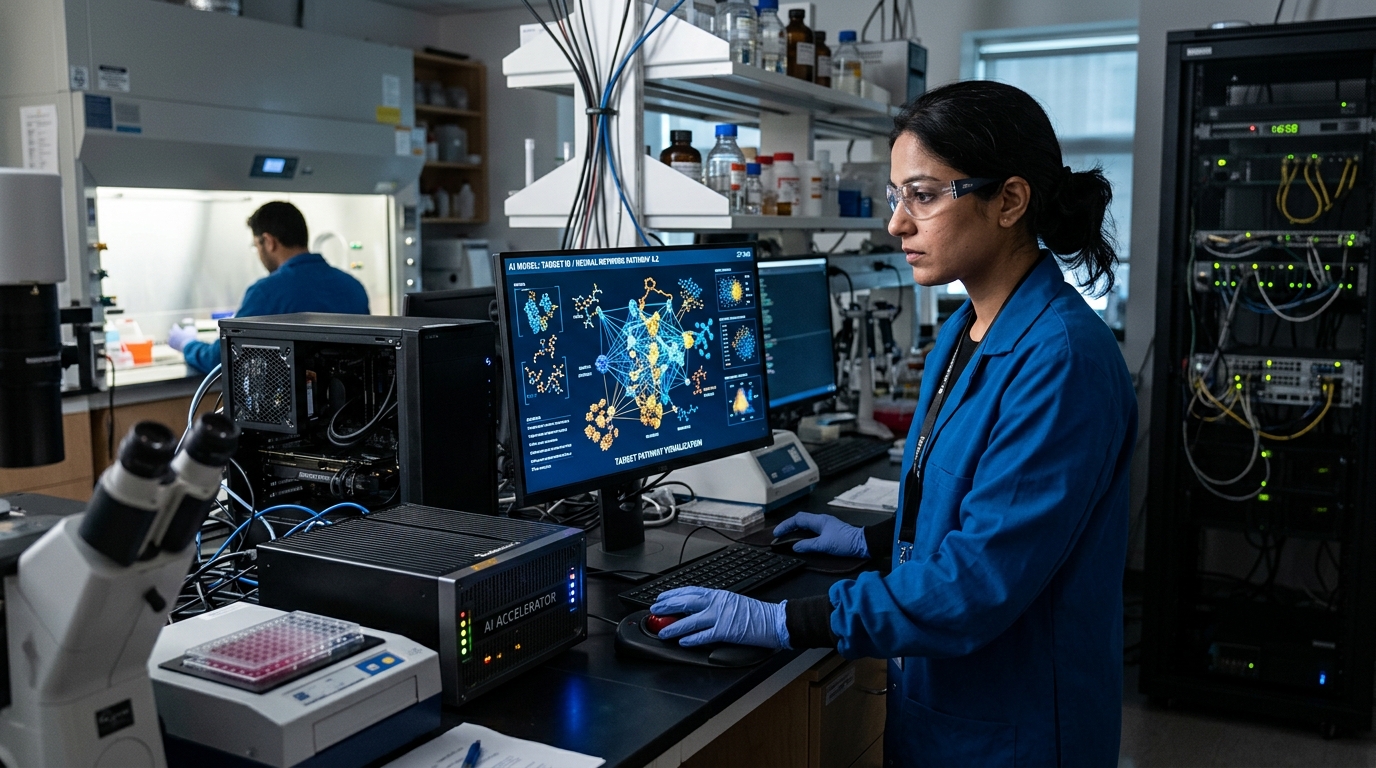
Traditional methods of target identification relied heavily on literature reviews and limited experimental data. However, human biology is exquisitely complex, characterized by thousands of interactions between genes, proteins, and metabolites. AI, particularly Machine Learning (ML), possesses the unique ability to analyze vast volumes of "omics" data (genomics, proteomics, metabolomics) to identify patterns invisible to the human eye. As highlighted in Nature, AI models can now predict which targets have the highest probability of being "druggable," drastically reducing the search time and increasing the success rate of early-stage research.
- Multi-omics data analysis to reveal novel biological pathways.
- Predictive modeling of toxicity and side effects prior to clinical trials.
- Drug repurposing by identifying new indications for existing compounds.
AlphaFold and the Structural Revolution
One of the most significant pillars of this new era is protein structure prediction. The emergence of tools like DeepMind's AlphaFold has been a game-changer, allowing scientists to access the 3D shapes of nearly every protein in the human body. Understanding structure is essential for designing molecules that fit perfectly into a target. AI goes beyond mere prediction; it utilizes this structural data to simulate how a potential drug will interact with its target, enabling the digital screening of thousands of candidate compounds in a fraction of the time it would take in a physical lab.
"AI does not replace the biologist; rather, it provides a powerful lens to see through the darkness of molecular complexity," the study notes.
From Bench to Bedside: The Validation Hurdle
Despite this progress, the ultimate challenge remains validation. A target may appear perfect in a computational model, but biological reality often holds surprises. Nature emphasizes the necessity of "closed-loop" systems, where laboratory data feeds into AI models, and the AI, in turn, directs the next set of experiments. This synergy significantly reduces development costs, which currently hover around billions of dollars per drug. Furthermore, AI enables precision medicine by identifying targets specific to certain patient subgroups, ensuring that treatments are effective for an individual's unique genetic makeup.
Ethical Considerations and the Road Ahead
The use of AI in pharmaceutical research also raises questions regarding intellectual property and access to care. If a drug is discovered entirely by an algorithm, who holds the patent? Additionally, there is a risk that algorithms trained on biased datasets—lacking global genetic diversity—could lead to treatments that only work for specific populations. The scientific community must ensure that the AI revolution in healthcare is both equitable and inclusive. What is certain is that we are at the dawn of an era where diseases once deemed incurable may finally meet their match through algorithmic precision.