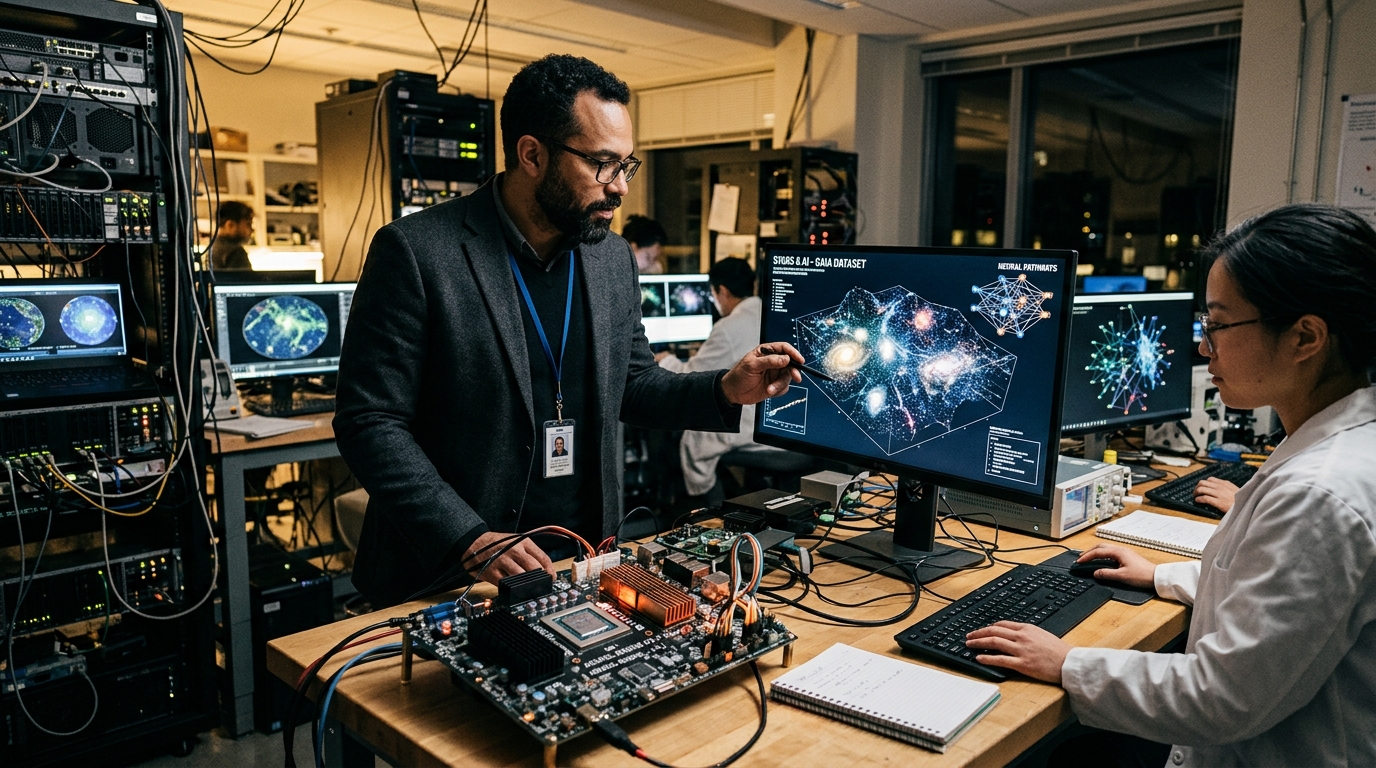
In an era where Artificial Intelligence (AI) has transitioned from science fiction to daily utility, the necessity for a profound understanding of its limitations has become imperative. The eighth installment of the review series by mindmatters.ai sheds light on the gray areas often overlooked by market hype. This is not merely a technical assessment; it is an ontological investigation into what 'intelligence' truly signifies in the 21st century.
The Ghost in the Machine: Computation vs. Understanding
A central pillar of recent research is the distinction between information processing and genuine understanding. Large Language Models (LLMs) have demonstrated a staggering ability to synthesize text, solve complex coding problems, and simulate human dialogue. However, as the review points out, this capability remains trapped at the level of syntax, never quite reaching semantics. The machine does not 'know' what it is saying; it simply predicts the next probable token in a data chain.
The analysis draws heavily on the foundations of computer science, referencing Alan Turing's Halting Problem and Kurt Gödel's Incompleteness Theorems. These mathematical bedrocks suggest that there are truths and processes that pure logic and computation cannot attain. In the context of AI, this means that creativity and intuition—often rooted in non-algorithmic processes—remain the exclusive domain of the human spirit.
The Reductionist Trap and Human Exceptionalism
We often hear the claim that the human brain is merely a 'biological computer.' The mindmatters.ai review vigorously challenges this reductionism. If the brain were indeed a computer, it would be subject to the same fundamental limits described by Turing. Yet, human experience encompasses subjectivity (qualia)—the 'what it is like' to experience something. An AI can describe the chemical composition of a rose, but it cannot experience its scent.
- AI operates based on predefined rules, even when those rules evolve through machine learning.
- Human agency possesses a spontaneous creativity that cannot be fully encoded.
- Ethical judgment requires empathy, something the silicon base of processors lacks.
This 'human exceptionalism' is not a cry of technophobia but a reminder of our uniqueness. The research emphasizes that attempting to replace humans with machines in fields requiring deep judgment and moral responsibility is not only dangerous but philosophically flawed.
Ethical Implications and the Future of Agency
As algorithms assume more responsibilities, the question of accountability becomes critical. If an AI errs in a medical diagnosis or a judicial ruling, who bears the responsibility? The lack of consciousness implies a lack of moral agency. The review suggests that AI should be treated as a sophisticated tool—augmented intelligence—rather than a substitute for human action.
"Technology is a mirror reflecting our own capabilities, but we must not mistake it for the face looking into it."
In conclusion, Part 8 of this series invites us to re-evaluate our relationship with technology. Instead of fearing a future 'super-intelligence' that might enslave us, perhaps we should worry about the erosion of our own critical thinking as we lean more heavily on automated systems. True progress lies not in building machines that think like humans, but in empowering humans to use machines to solve the grand challenges of humanity.