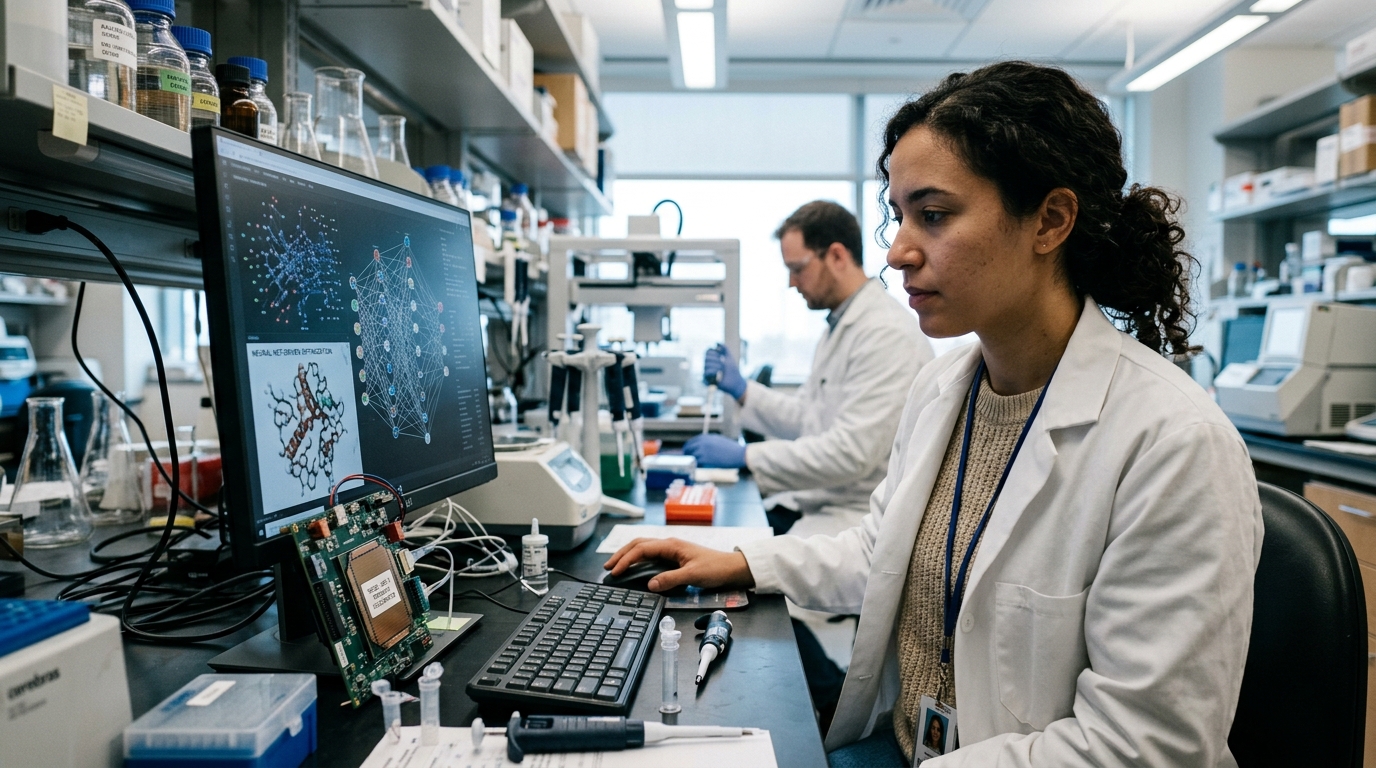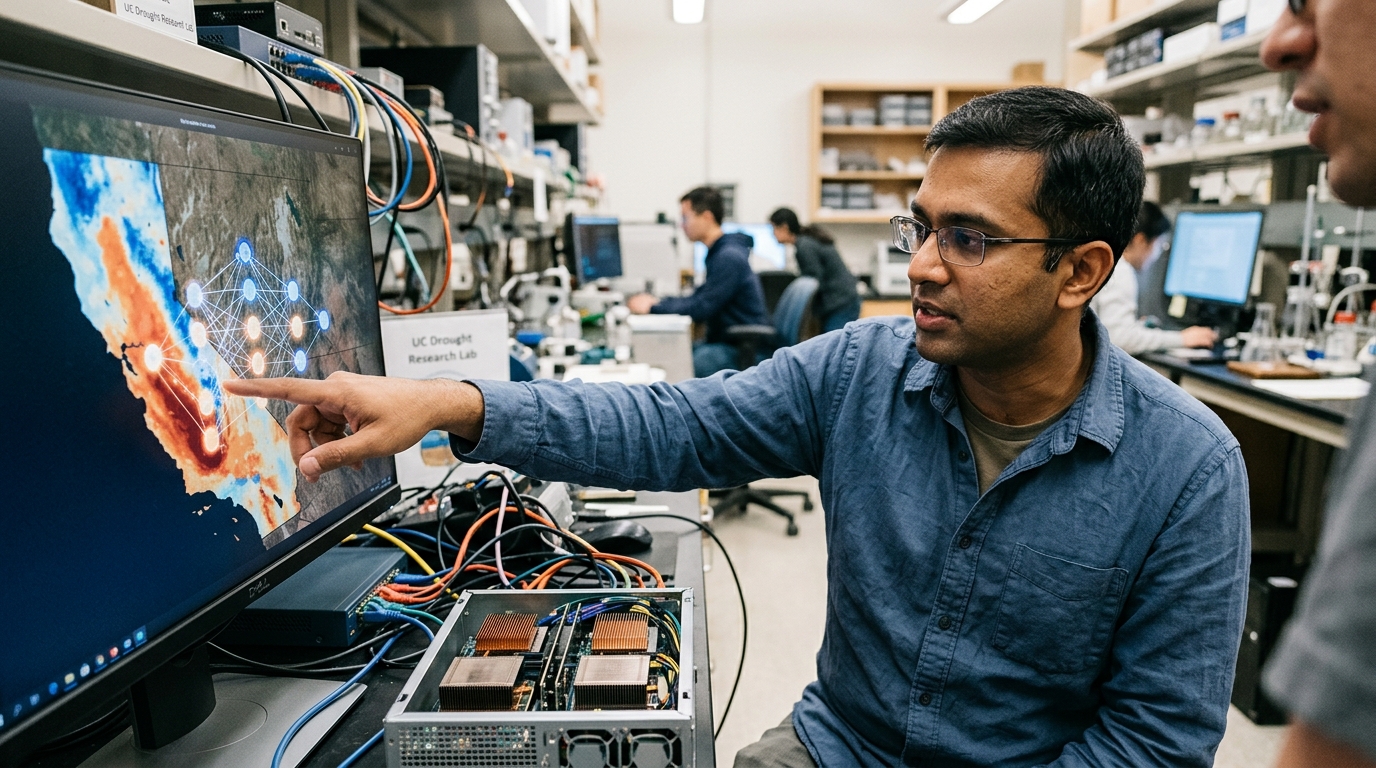
In a rapidly warming world, drought is no longer a rare event but a permanent threat to global food security and social stability. The University of California (UC), situated at the forefront of a state historically plagued by water scarcity, has recently unveiled research highlighting Artificial Intelligence (AI) as a critical tool for predicting and managing these extreme phenomena. This research transcends simple weather forecasting, aiming for a profound understanding of the complex interactions between soil, atmosphere, and human intervention.
The Data Revolution in Hydrology
Traditionally, drought prediction relied on physical models simulating the hydrological cycle. However, these models often struggle to capture the non-linear complexities of climate change. UC researchers are now leveraging Deep Learning neural networks to analyze vast datasets from satellites, such as NASA’s GRACE mission, which measures changes in Earth’s gravity to detect groundwater fluctuations. AI’s ability to recognize patterns in seemingly disparate data allows scientists to predict drought periods months, or even years, earlier than previously possible.
Particular focus is placed on "flash droughts"—phenomena where soil moisture evaporates rapidly due to extreme temperatures, causing massive crop damage within weeks. The AI models developed at UC can now identify early warning signs of these events by analyzing plant evapotranspiration and microclimatic shifts, providing farmers with the invaluable advantage of lead time.
From Prediction to Management: The Smart Water Grid
Prediction alone is insufficient; the real challenge lies in managing finite resources. UC’s research proposes the creation of "smart hydrological grids" where AI acts as the central manager. Through optimization algorithms, these systems can suggest the precise amount of water required for each crop, accounting for upcoming weather patterns and aquifer levels. This approach, known as precision agriculture, can reduce water waste by up to 40% while ensuring crop viability.
Furthermore, AI assists in complex political decision-making. During crises, authorities must choose between urban water supply, agriculture, or ecosystem preservation. UC’s models provide simulation scenarios that allow policymakers to understand the long-term consequences of each decision, potentially reducing social tensions and promoting a more equitable distribution of resources.
Challenges and the Human Element
Despite the promising outlook, integrating AI into drought management faces significant hurdles. A primary issue is global data quality and availability. While California boasts a dense sensor network, many regions in the developing world—often the hardest hit by drought—lack basic monitoring infrastructure. Researchers are developing "transfer learning" models, where knowledge gained in one region can be applied to another with sparse data.
Finally, there is the issue of trust. Farmers and water managers are often reluctant to rely on algorithmic "black boxes" for decisions affecting their livelihoods. UC’s research is now prioritizing "Explainable AI" (XAI), which provides not just a prediction but the reasoning behind it, thus bridging the gap between cutting-edge technology and traditional empirical knowledge.
Conclusion
Drought is a silent enemy, but with the aid of Artificial Intelligence, it is no longer an unpredictable one. The work being conducted at the University of California in 2026 stands as a beacon of hope. Technology cannot force the clouds to rain, but it can teach us how to live wisely with the water we have, turning a crisis into an opportunity for a radical reorganization of our relationship with the natural environment.