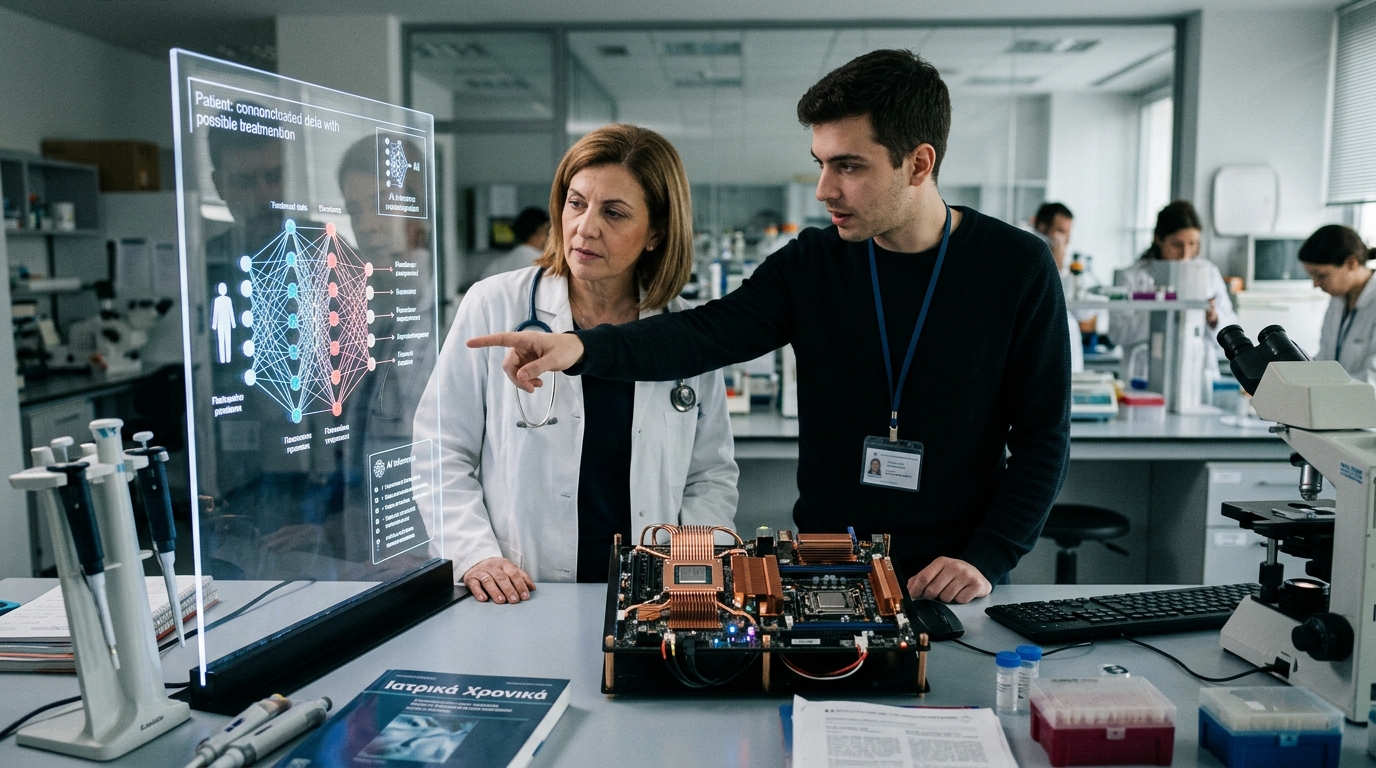
As we navigate through 2026, the medical community is witnessing a tectonic shift. The integration of Artificial Intelligence (AI) into clinical decision-making is no longer a futuristic concept but a daily reality reshaping the triangle between physician, patient, and technology. Recent research highlighting AI's role in the clinical synthesis of medical decisions underscores how algorithms are functioning as a "super-powered partner" alongside clinicians.
The primary challenge AI addresses in medicine is information overload. A modern physician must process thousands of pages of medical histories, imaging reports, genomic data, and a global body of literature that updates daily. Human capacity to synthesize these heterogeneous data points has reached its limit. This is precisely where AI steps in, capable of analyzing patterns within seconds that would escape the human eye, providing a holistic view of the patient's condition.
Multimodal Data and Diagnostic Precision
The power of contemporary AI lies in its ability to handle multimodal data. It doesn't just analyze text or images in isolation; it integrates X-rays with biochemical tests and family history. This clinical combination allows for the early diagnosis of diseases like cancer or neurodegenerative disorders at stages where symptoms are still imperceptible. The use of Large Language Models (LLMs) specifically trained on medical datasets now enables the generation of summaries that highlight critical risks tailored to each patient.
Furthermore, AI aids in reducing medical errors, which are often the result of physician fatigue or cognitive bias. By providing real-time "second opinions," Clinical Decision Support Systems (CDSS) act as a safety net, ensuring that no vital detail is overlooked during diagnosis or the formulation of a treatment strategy.
Personalized Treatment and the Ethics of Technology
Perhaps AI's most significant contribution is the transition from "average-based medicine" to "personalized medicine." Every organism reacts differently to medication. Algorithms can now predict a drug's efficacy based on a patient's genetic profile, minimizing side effects and increasing the likelihood of recovery. This clinical synthesis of decisions allows doctors to design treatment plans specifically tailored to the individual's needs.
However, the integration of AI raises serious ethical questions. Who bears responsibility in the event of an algorithmic error? How can the privacy of sensitive medical data be guaranteed? The European Union, through the AI Act, has established strict frameworks, insisting that humans must remain the ultimate arbiters (human-in-the-loop). AI does not replace the doctor; it enhances their judgment, allowing them to focus on human contact and empathy while delegating heavy computational tasks to machines.
The Future of Healthcare Systems
The adoption of these technologies is expected to alleviate the burden on strained healthcare systems worldwide. By reducing the time required for administrative management and data synthesis, doctors gain valuable time for patient interaction. In countries like Greece, ongoing efforts to digitize the central health system are creating the necessary foundation for implementing such tools, provided there is adequate investment in infrastructure and staff training.
"AI in medicine is not a simple software upgrade; it is a new philosophy of care, where the collective knowledge of humanity becomes accessible at the patient's bedside," industry experts note.
In conclusion, the clinical combination of medical decisions via AI promises a fairer, more accurate, and more effective form of medicine. The challenge for the coming years will be maintaining the balance between technological superiority and the human-centric approach that lies at the core of the Hippocratic Oath.