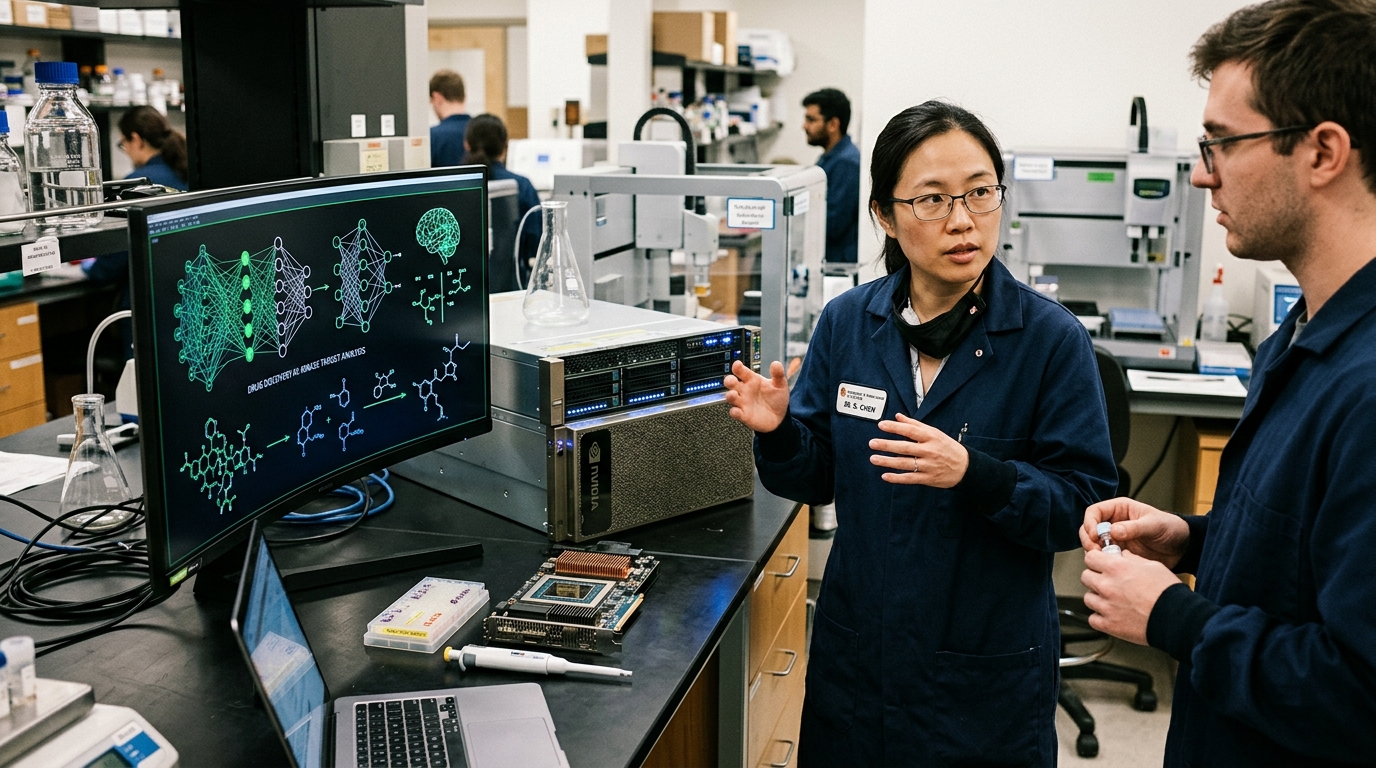
The drug development process has historically been a high-stakes marathon. Statistically, it takes over a decade and billions of dollars for a molecule to travel from initial discovery to FDA approval, with a staggering 90% failure rate in clinical trials. However, at the University of Maryland, Baltimore (UMB), pharmacists and researchers are no longer relying solely on traditional trial-and-error. Artificial Intelligence (AI) has become the new catalyst promising to overhaul the entire pharmaceutical landscape.
The Digital Renaissance of the School of Pharmacy
At UMB’s School of Pharmacy, the integration of AI is not merely a technological add-on; it is a structural shift in methodology. Researchers are employing advanced machine learning algorithms to predict how chemical compounds will interact with target proteins in the human body. This predictive capability allows scientists to discard thousands of unsuitable compounds in seconds—a process that previously required months of wet-lab experimentation.
The key lies in the data. By analyzing vast datasets from previous clinical studies, AI can identify patterns invisible to the human eye. For instance, it can discover that a drug originally designed for hypertension might have therapeutic effects on specific types of cancer, a process known as drug repurposing. This approach significantly mitigates the financial risks associated with developing entirely new molecules from scratch.
From Molecular Modeling to Personalized Medicine
One of the most compelling areas of research in Baltimore is the use of AI to create personalized therapeutic regimens. Moving away from the "one-size-fits-all" logic, algorithms can analyze a patient’s genetic profile and predict their response to specific substances. This drastically reduces adverse drug reactions and increases treatment efficacy.
- Cost Reduction: AI minimizes the need for expensive physical experiments in the early stages.
- Speed: The discovery phase is compressed from years into months.
- Precision: Enhanced understanding of molecular structures and binding affinities.
"We are not replacing the pharmacist; we are giving them a superpower to navigate biological complexity," UMB researchers emphasize.
Challenges and Ethical Dilemmas
Despite the optimism, the transition to AI-driven pharmacology faces significant hurdles. The quality of AI output is directly tethered to the quality of input data. If the data is biased or incomplete, the AI can lead to erroneous conclusions. Furthermore, there is the "black box" problem: scientists often know that an algorithm works, but they don't fully understand *why* it reached a specific prediction. This poses serious challenges for regulatory bodies like the FDA when validating AI-derived drugs.
At the University of Maryland, the curriculum for the next generation of pharmacists now includes the ethical use of AI. Students are taught to critically evaluate algorithmic outputs, ensuring that human judgment remains the ultimate safety net. The revolution is here, and Baltimore is at its epicenter, redefining the future of global healthcare.