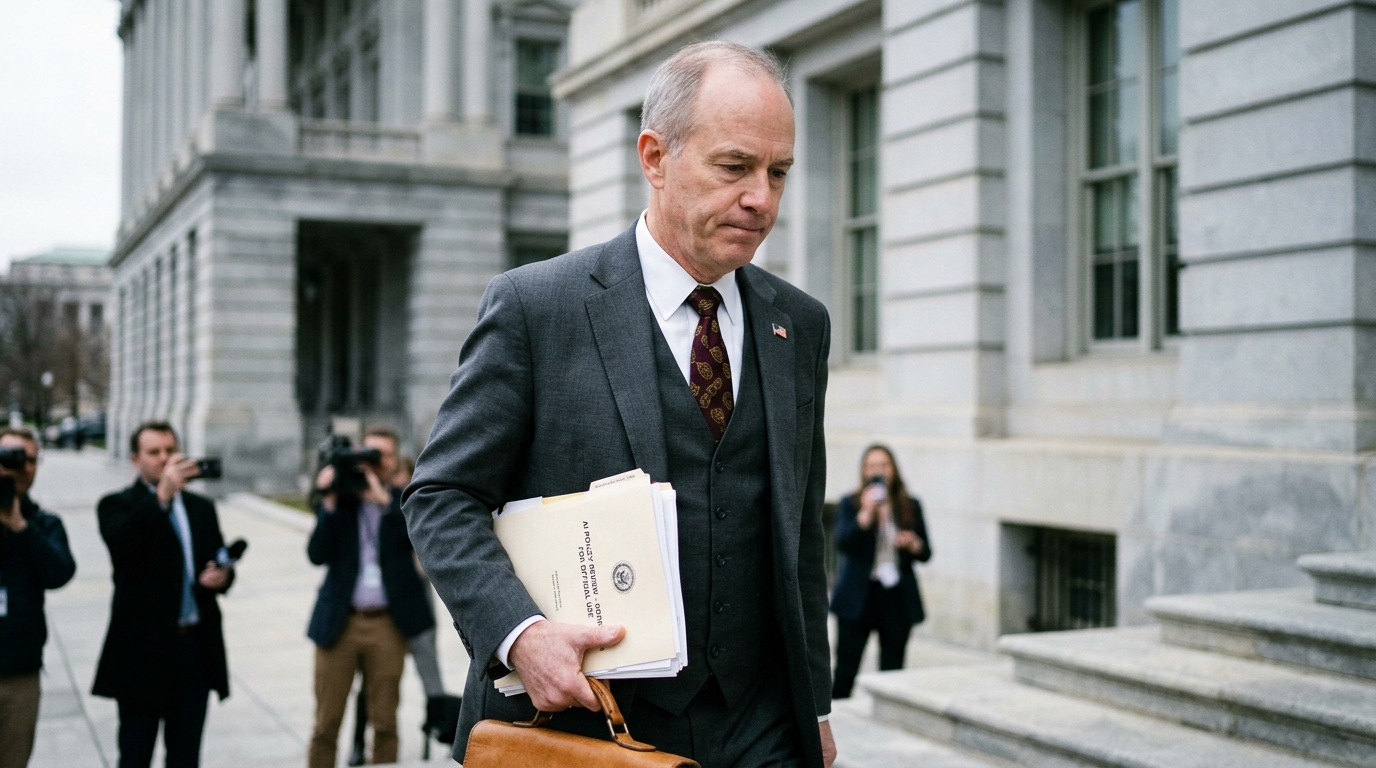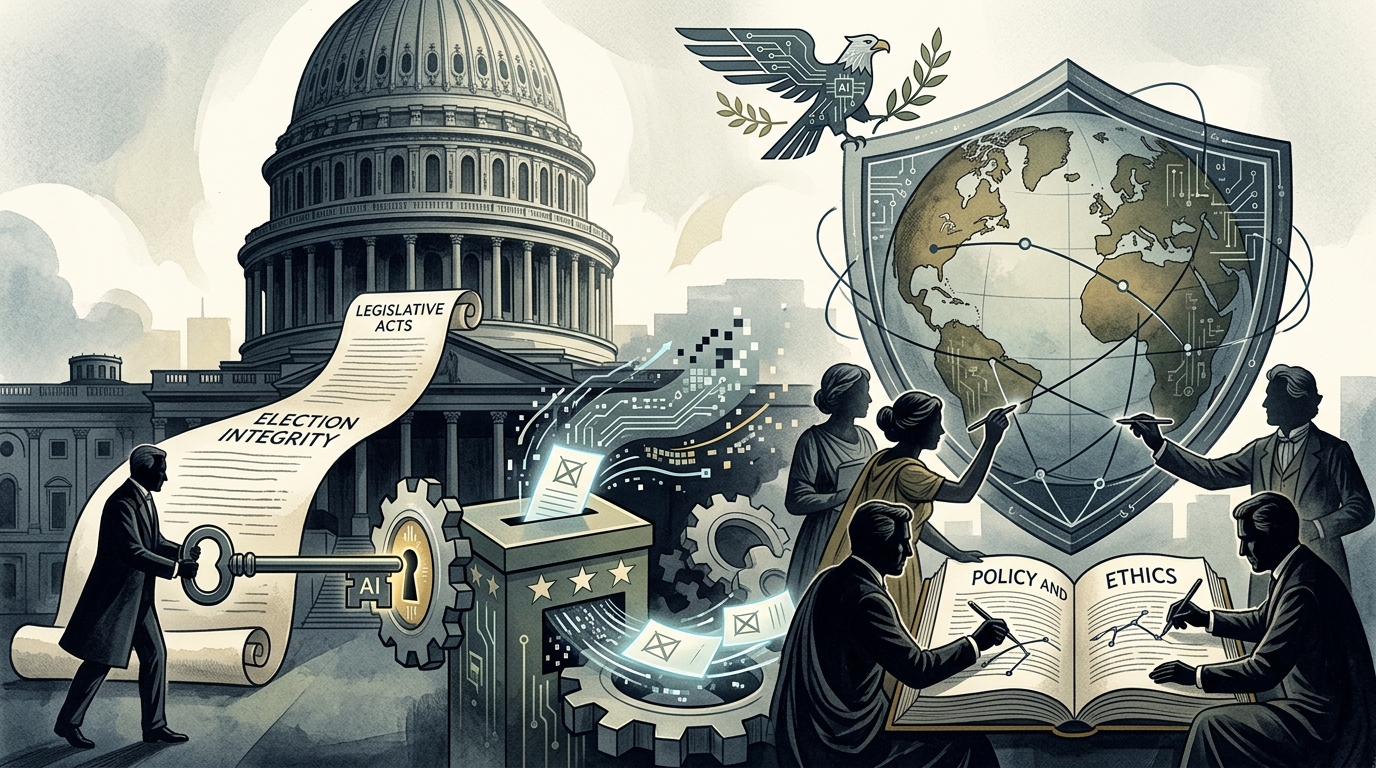
In the twilight of digital innocence, the United States legislative branch is attempting to lay the foundations for a new era of oversight over the unchecked proliferation of Artificial Intelligence (AI). The recent passage of a series of bills by the Senate Rules Committee is not merely a bureaucratic milestone, but an existential response to the challenges posed by AI-generated content to democratic processes. As disinformation acquires tools capable of mimicking human voice and imagery with terrifying precision, the need for an institutional bulwark has never been more pressing.
The Triple Shield of the Electoral Process
The legislative package moving forward focuses on three central pillars, each targeting a different facet of the digital threat. The first, and perhaps most critical, is the "Protecting Elections from Deceptive AI Act." This bill aims to prohibit the use of AI to generate substantially deceptive content depicting federal candidates in political advertisements. This move comes in response to numerous incidents where "deepfaked" videos and audio clips were used to distort the public image of political figures, often with the intent to mislead voters at the last minute.
The second pillar concerns transparency. The "AI Transparency in Elections Act" would require political campaigns to include a clear and conspicuous disclosure if their advertisements contain content that has been generated or substantially altered by AI. This is an effort to grant voters the right to know whether what they are viewing is a product of actual recording or algorithmic synthesis. Finally, the third bill focuses on supporting election administrators, providing them with guidelines and resources to combat the risks posed by AI at local polling stations and in administrative workflows.
Bipartisan Consensus as a Political Necessity
One of the most remarkable features of this development is the rare bipartisan consensus displayed. In a highly polarized political environment, cooperation between Democrats and Republicans on AI suggests that the threat to information integrity is recognized as a common danger. Sponsors of the bills emphasized that this is not an attempt to stifle free speech, but rather to protect truth in a marketplace of ideas increasingly flooded by synthetic falsehoods.
"Technology is evolving faster than our laws, but democracy cannot wait. We must ensure that voters make decisions based on facts, not on algorithmic illusions," stated a committee member during the hearings.
However, criticism is not absent. Some analysts argue that the definitions used in the bills are either too broad, risking a chilling effect on satire and political commentary, or too narrow, allowing sophisticated forms of AI to evade scrutiny. The challenge lies in finding the "Golden Mean" between fostering innovation and safeguarding public discourse from malicious manipulation.
From Theory to Practice: Implementation Challenges
Despite the optimism generated by the passage of these measures, their implementation remains a complex puzzle. Detecting AI-generated content is a technical challenge that often resembles a game of cat and mouse. As generative models become more sophisticated, detection tools frequently lag behind. Furthermore, enforcing fines or sanctions on digital campaigns operating across borders requires international cooperation that is currently in its nascent stages.
The comparison with the European Union's AI Act is inevitable. While the EU opted for a horizontal, risk-based approach, the US appears to favor more targeted, sectoral legislation, starting with the electoral process. This divergence reflects the different philosophies on both sides of the Atlantic regarding technology regulation and the protection of individual rights. The US approach focuses on specific harms, whereas the EU seeks to establish a comprehensive ethical framework.
The Future of Digital Sovereignty
The Senate's move marks the beginning of a long journey. Artificial Intelligence is no longer a futuristic concept but an active player on the political stage. This legislation represents an attempt to reclaim "digital sovereignty" for citizens over the information they consume. In the future, the success of these measures will be judged by their ability to adapt to rapid technological changes without strangling creativity or political expression. Democracy in the 21st century will largely depend on our ability to discern the human behind the code, ensuring that the voice of the people remains authentic and unmanipulated.