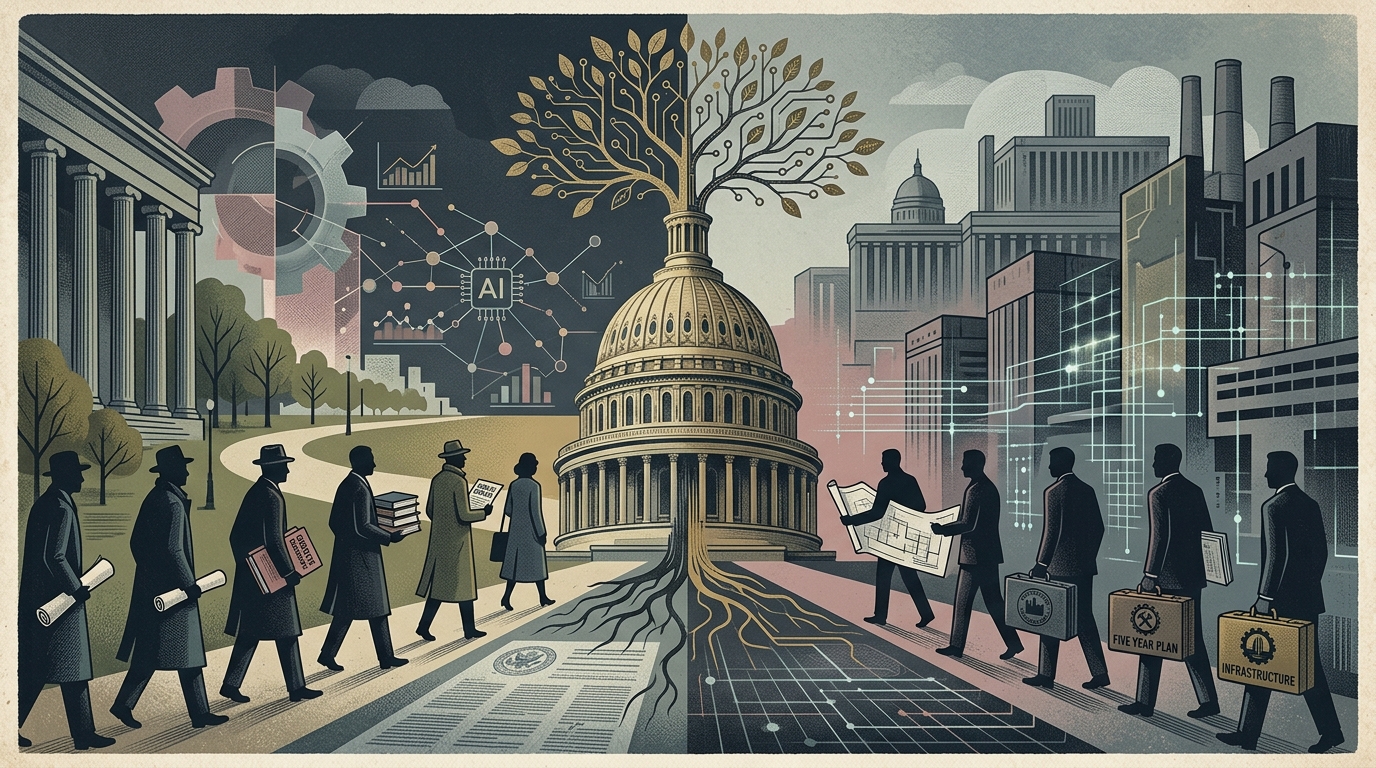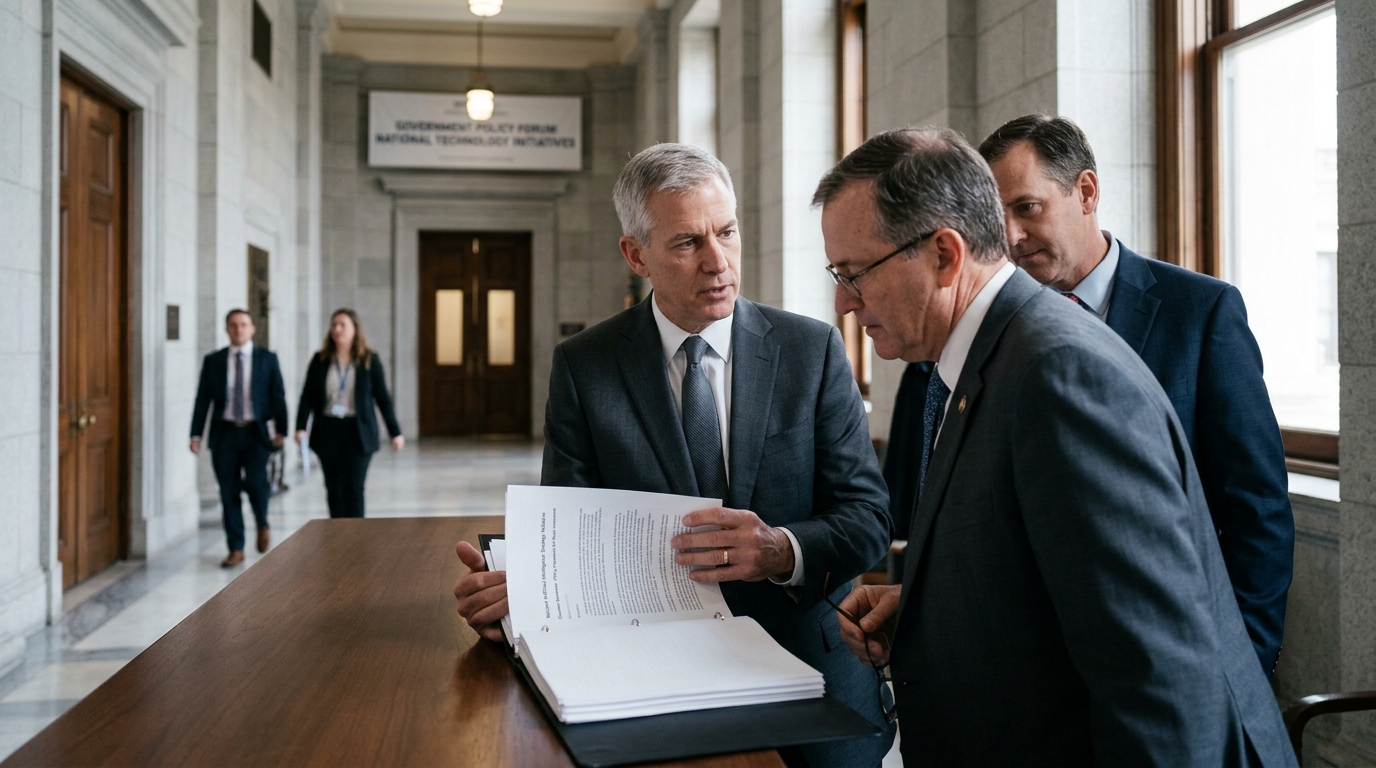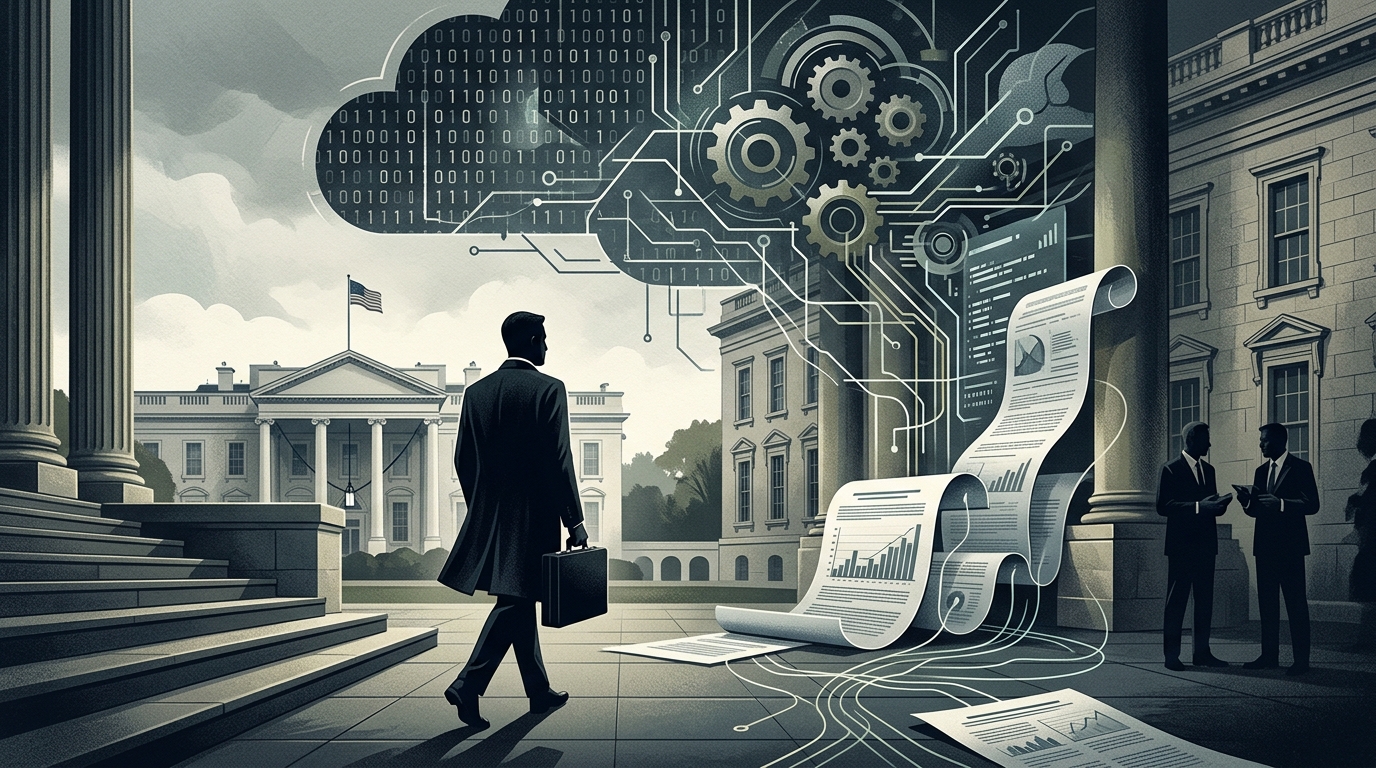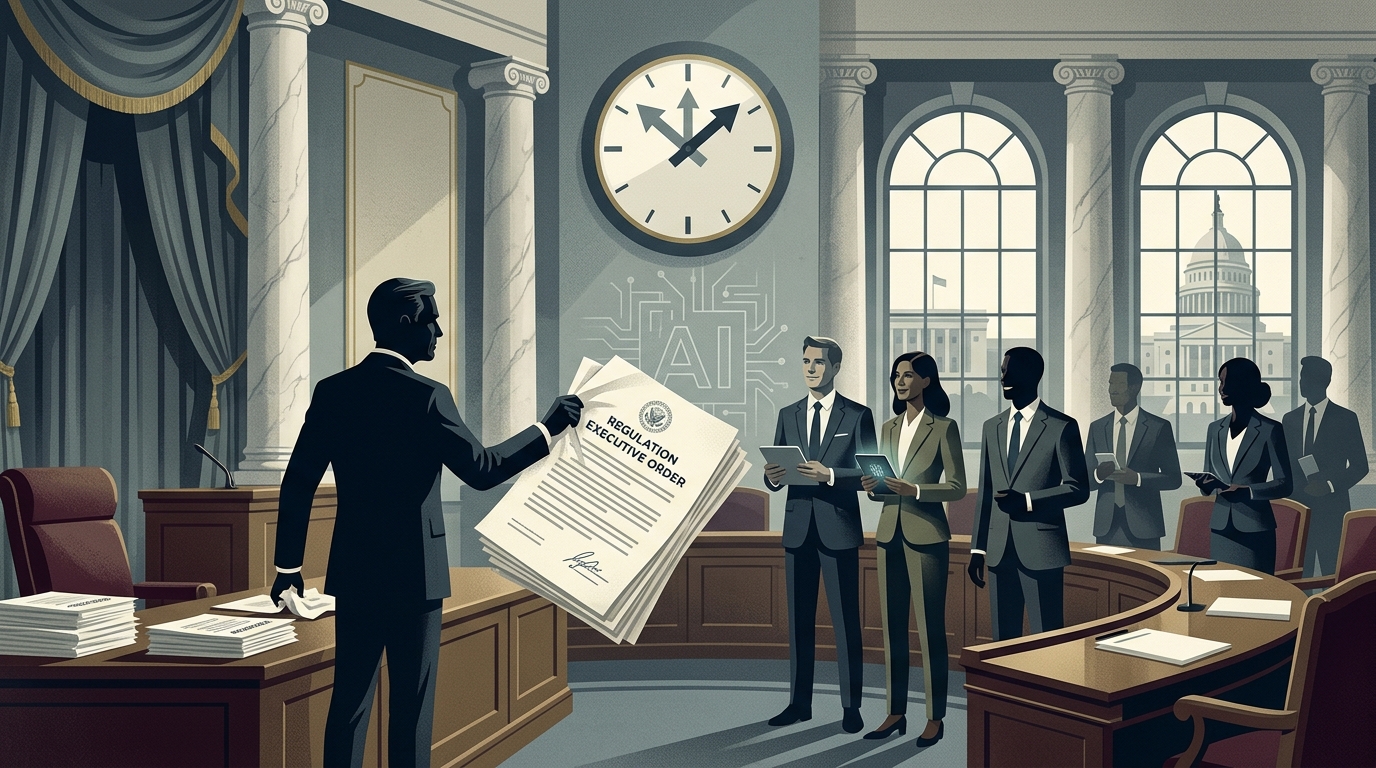
In a move that has reverberated through the halls of Washington and the boardrooms of Silicon Valley, President Donald Trump announced today, May 21, 2026, that he is officially calling off a widely anticipated executive order intended to impose strict regulations on Artificial Intelligence. This decision marks a radical departure from previous policy frameworks that prioritized safety and ethics, shifting the focus entirely toward unhindered technological growth and geopolitical dominance.
Speaking to reporters outside the White House, Trump was unequivocal about his motivations. “We’re leading China, we’re leading everybody, and I don’t want to do anything that’s going to get in the way of that lead,” he stated. His rhetoric reflects a growing consensus within his administration that regulatory hurdles are nothing more than “anchors” in a global race for AI supremacy—a field now viewed as the 21st-century equivalent of the nuclear arms race.
The Geopolitics of Compute
The cancellation of the order is not merely a bureaucratic shift but a strategic choice with profound geopolitical implications. The Trump administration appears to be fully embracing the doctrine of "Accelerationism," arguing that any delay in American innovation provides Beijing with precious time to close the gap. Analysts point out that China has invested billions in AI infrastructure, and Washington fears that rigorous safety checks—such as mandatory reporting for models exceeding certain compute thresholds—could act as a drag on American firms.
This "laissez-faire" approach stands in stark contrast to the European Union, which recently saw its AI Act enter full implementation. By making this move, Trump is effectively creating a "regulatory haven" in the United States, hoping to attract capital and talent that might be deterred by Brussels' more stringent framework. However, the lack of federal oversight raises urgent questions about how risks such as deepfakes, cyberattacks, and the potential use of AI in autonomous weaponry will be mitigated without human-in-the-loop safeguards.
Silicon Valley’s Relief and the Backlash
The reaction from the tech industry has been immediate, though polarized. On one hand, major tech conglomerates and venture capitalists have welcomed the news with open arms. They argue that the previous framework was overly intrusive and that government-mandated "red-teaming" was a form of state-sponsored censorship or industrial espionage.
- Unleashing Innovation: Proponents argue that companies must be free to experiment without the constant threat of regulatory fines.
- Reducing Compliance Costs: The absence of bureaucratic red tape is expected to accelerate product development cycles significantly.
- National Security: Linking AI progress directly to U.S. military might is the primary justification for this deregulation.
On the other hand, civil rights organizations and academic researchers are sounding the alarm. “Leaving AI completely unchecked is like allowing nuclear reactors to be built in garages without inspection,” said one prominent AI ethics expert. There is a palpable fear that the competition with China is being used as a convenient shield for corporations to avoid accountability for the societal impacts of their technologies, from algorithmic bias to job displacement.
The Future of Global AI Governance
This decision creates a significant fracture in international AI cooperation. While previous summits, such as the one at Bletchley Park, sought to establish common ground and safety guardrails, the current U.S. stance suggests that "techno-nationalism" has triumphed over internationalism. If the U.S. refuses to set rules, it is doubtful whether other nations—outside of the EU—will have the incentive to do so, fearing they will be left behind economically.
In conclusion, Donald Trump has chosen the path of maximum speed over maximum caution. History will judge whether this gamble solidifies American dominance or leads to an uncontrollable technological crisis that could have been averted. For now, Silicon Valley has a green light to move as fast as possible, with the hope that China remains firmly in the rearview mirror.