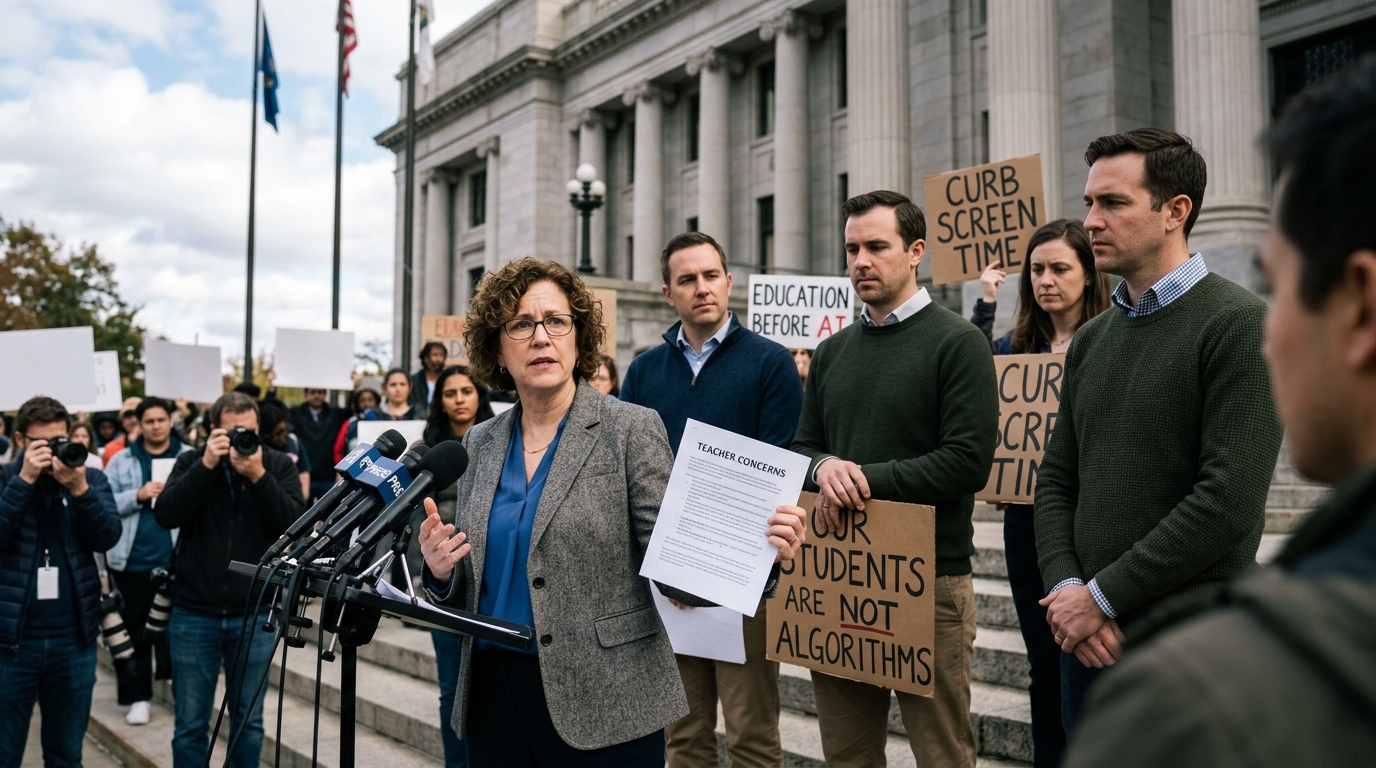
In an era where Silicon Valley promises an educational utopia powered by Artificial Intelligence, the largest teachers' unions in the United States are launching what many describe as a "digital resistance." In a comprehensive report released recently, the American Federation of Teachers (AFT) has urged schools to drastically curb the use of AI chatbots and overall screen time for students, raising profound questions about the future of learning in the age of automation.
The Pedagogy of Attention Under Siege
The primary concern for educators is not technology itself, but how it erodes the capacity for sustained concentration and critical inquiry. The report emphasizes that instant access to answers via tools like ChatGPT or Claude transforms the learning process from a rigorous yet rewarding intellectual journey into a mere exercise in "copy and paste." Teachers report that students are losing the ability to construct complex arguments, as they increasingly rely on algorithms that generate text without any semblance of true understanding.
Furthermore, the issue of "screen time" has returned to the forefront of the educational debate. Following the pandemic, the digitalization of classrooms was seen as an inevitable and necessary evolution. However, by 2026, the educational community is experiencing a profound sense of digital fatigue. Constant exposure to digital environments is being linked to rising rates of anxiety, depression, and social isolation among adolescents. Unions argue that schools must remain sanctuaries of physical interaction rather than extensions of the digital grind.
Privacy and the Corporate Incursion
Another critical dimension of the unions' intervention concerns data sovereignty. Educators are warning that major tech corporations are effectively using students as "guinea pigs" to train and refine their large language models. Every prompt a student enters, every essay analyzed by an AI, feeds into massive databases owned by private entities. The lack of transparency regarding the ultimate destination of this data—and how it might be used for future behavioral profiling—is causing significant alarm among parents and faculty alike.
"We cannot allow EdTech companies to dictate our pedagogical methods solely based on profit motives and data harvesting," the report states emphatically.
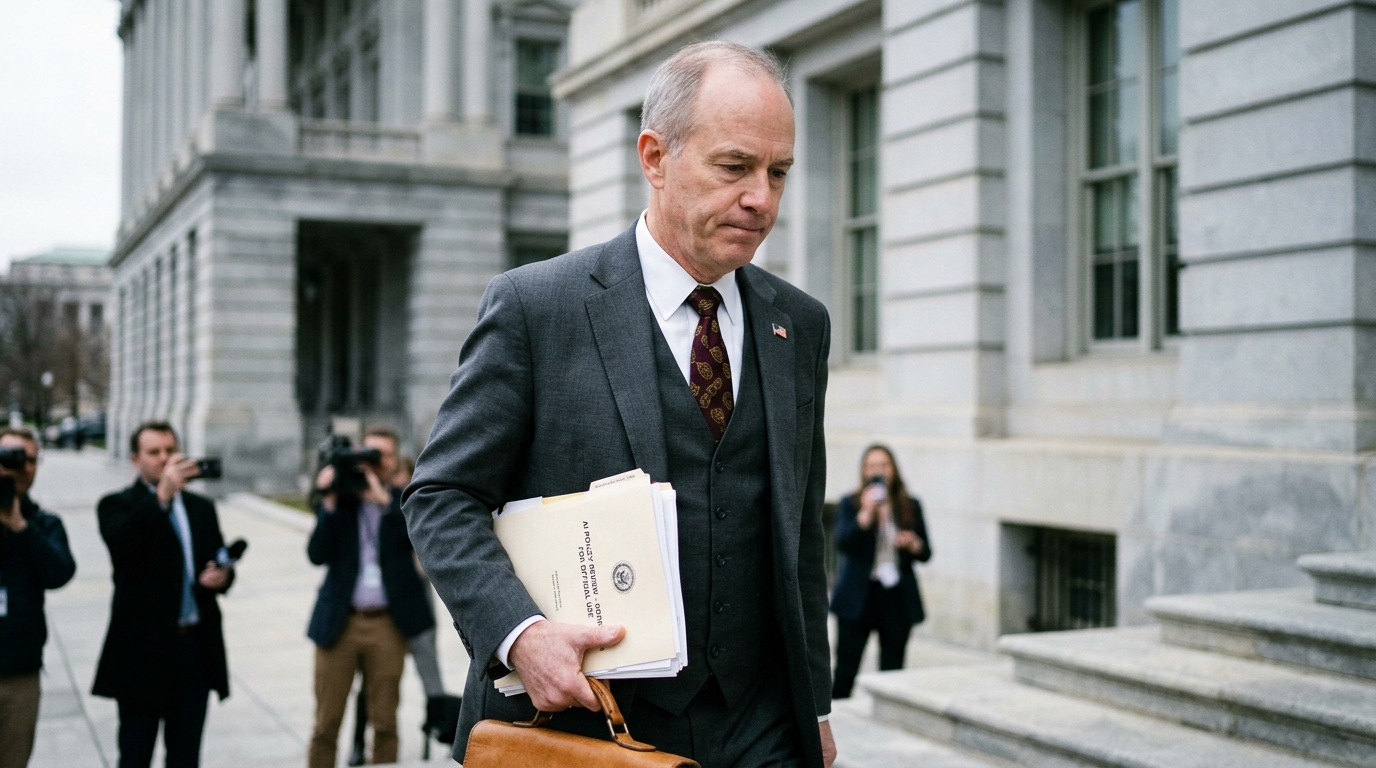
The unions are calling for the establishment of strict regulatory protocols before any new AI tool is introduced into the classroom. This includes a mandate for teacher involvement in procurement decisions and the requirement for independent longitudinal studies on the long-term effects of AI on student mental health and cognitive development.
A Return to Human-Centric Learning
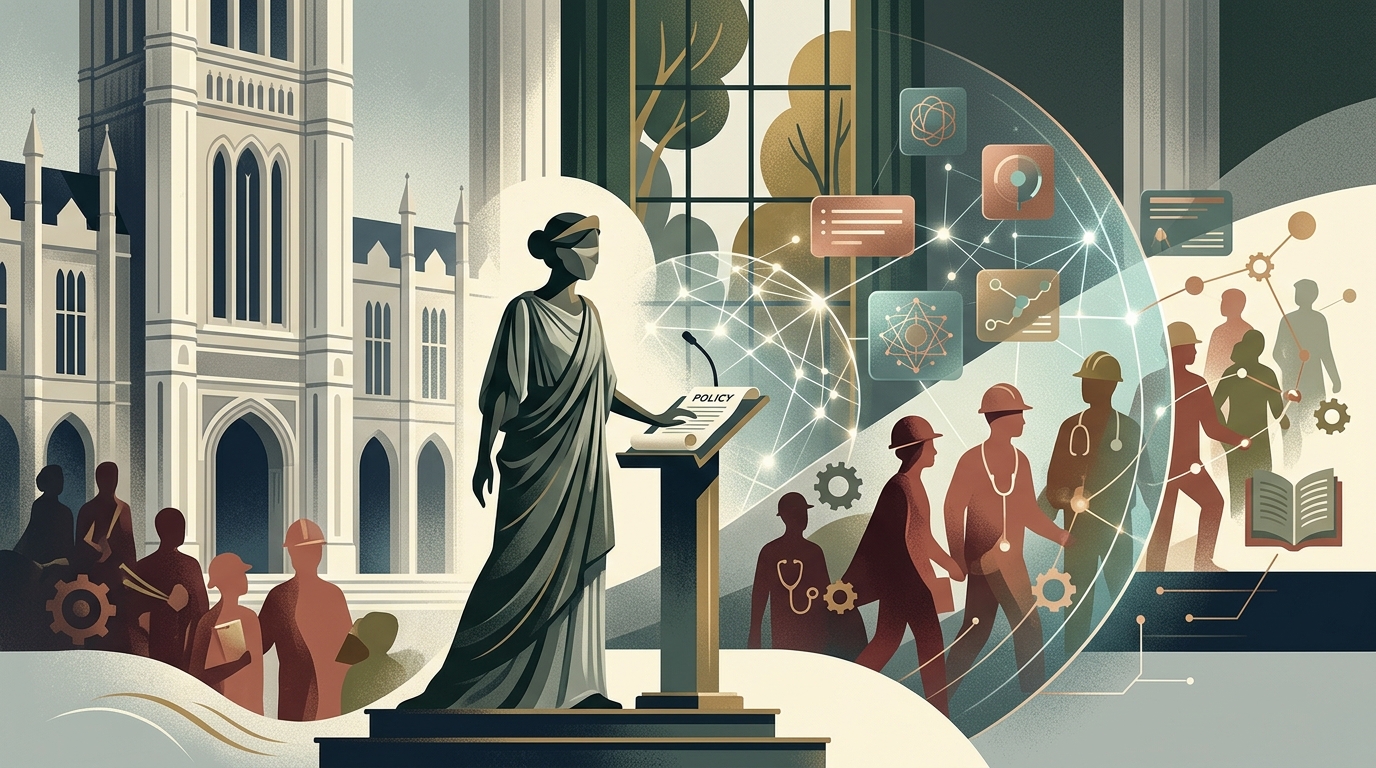
The educators' proposal is not a Luddite rejection of progress, but a call for a "human-centric digital transformation." They advocate for using AI exclusively as a supportive tool for teachers—to handle administrative tasks or provide supplemental resources—rather than as a substitute for direct instruction. The focus, they argue, must return to classroom discourse, handwritten assignments, and activities that require physical presence and collaborative problem-solving.
In several states, teachers have already begun implementing "AI-free zones," where students are required to work without the aid of digital assistants. Preliminary results suggest an improvement in the quality of dialogue and the authenticity of student expression. The stakes are clear: if education is fully surrendered to algorithms, we risk fostering a generation that knows how to retrieve information but lacks the fundamental ability to think for itself.
The Path Forward
The friction between teachers' unions and the tech industry is expected to intensify in the coming months. As governments attempt to strike a balance between fostering innovation and ensuring public protection, the voice of educators serves as a necessary counterweight. Education remains the final bastion of human intellectual cultivation; protecting it from algorithmic homogenization is perhaps the defining challenge of our decade.