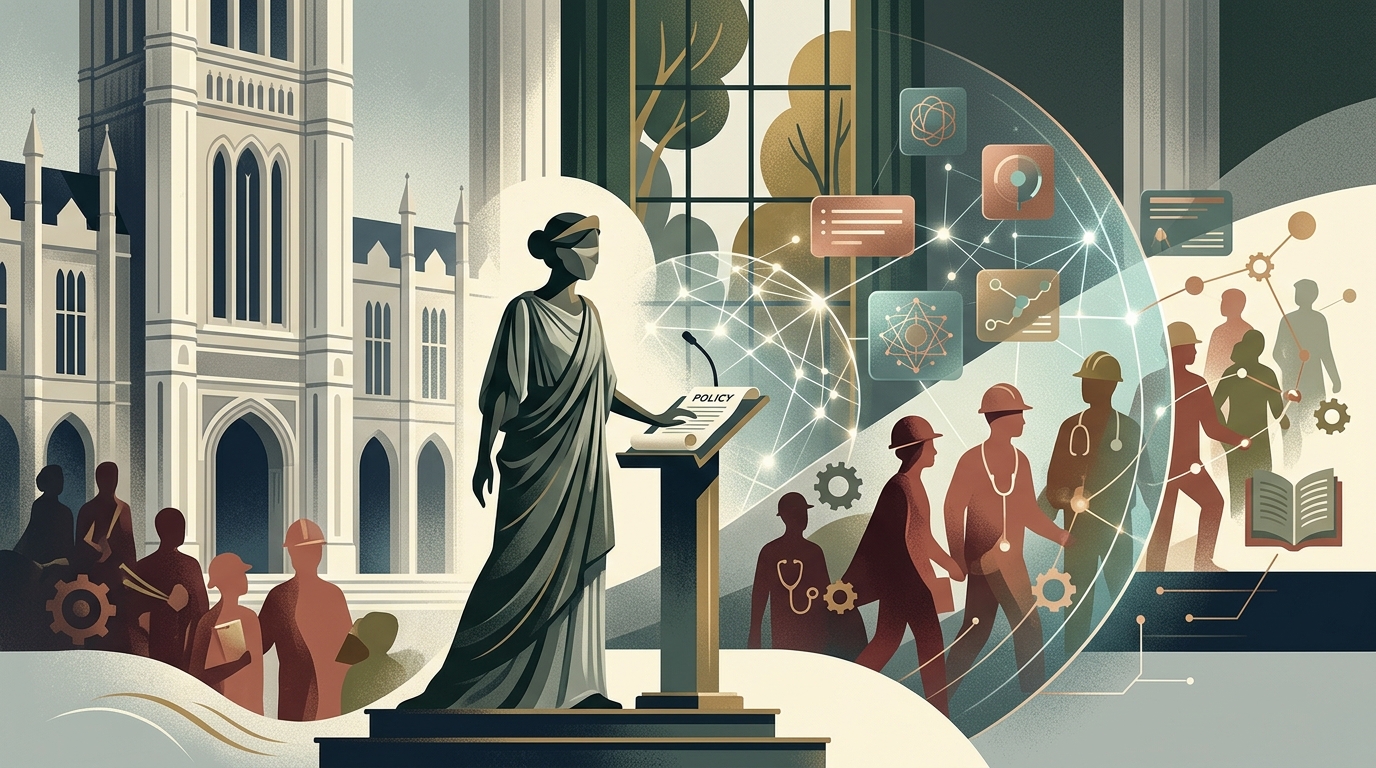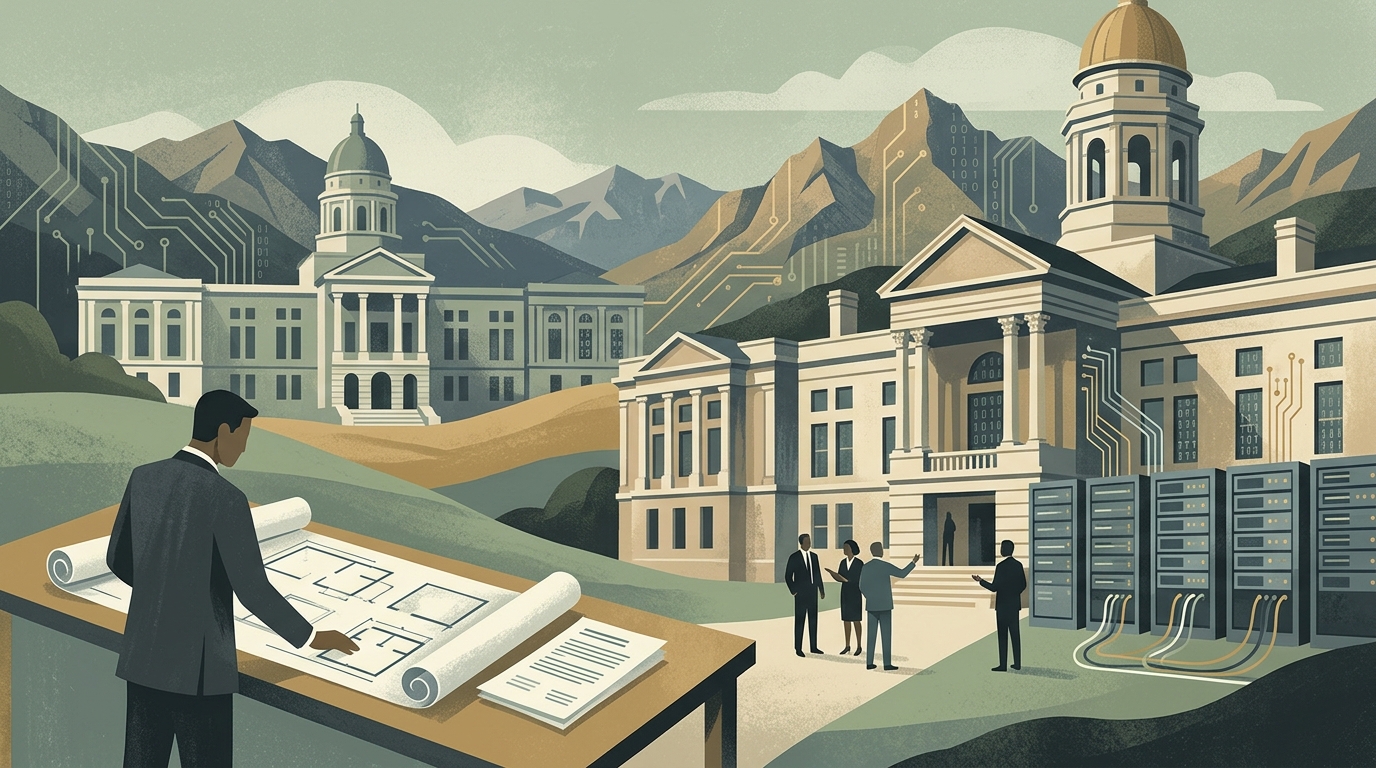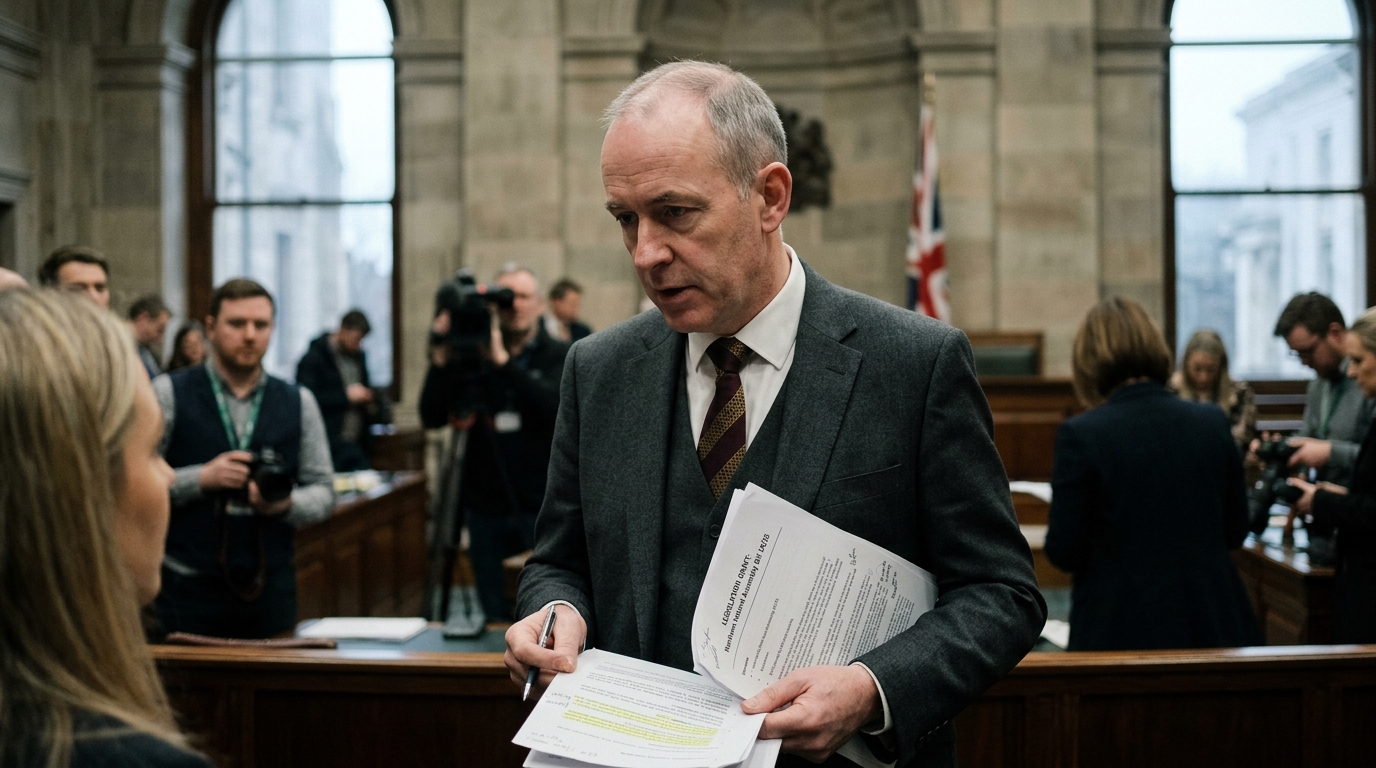
In an era where technology permeates every facet of daily life, the news that Stormont—the Northern Ireland Executive—has admitted to using Artificial Intelligence (AI) tools to assist in drafting legislation marks a definitive turning point. This admission, brought to light through official inquiries, is not merely a technical footnote; it is a revelation that touches the very core of democratic governance and legal accountability.
The use of AI in public administration is not entirely new, but its application in drafting the very rules that govern society raises profound questions. Who, ultimately, writes our laws? Is it the elected representative, the seasoned legal counsel, or an algorithm trained on billions of data parameters, often operating without transparency?
The Digital Quill of Power
According to information released to the public, several government departments in Belfast have begun experimenting with Large Language Models (LLMs) to accelerate the process of drafting bills and policy documents. The official line is that AI acts as an 'assistant,' capable of summarizing vast amounts of data, identifying contradictions in existing statutes, and suggesting phrasing that adheres to specific legal standards.
However, the thin line between 'assistance' and 'creation' is increasingly blurred. In jurisprudence, every word, every comma, and every conjunction can radically alter the interpretation of a law. The use of AI carries the risk of 'hallucination,' where the model generates legal arguments that sound persuasive but lack any actual basis in law. Furthermore, there is the issue of embedded bias: if the AI's training data contains historical injustices or systemic errors, these may be quietly encoded into new legislation without detection.
The Dilemma: Efficiency vs. Transparency
Proponents of this move within Stormont argue that the civil service is chronically understaffed and drowning in bureaucracy. AI can reduce the preparation time for a bill from months to weeks, allowing lawmakers to focus on the political substance rather than the minutiae of drafting. "It is a modernization tool," they claim, comparing it to the introduction of word processors decades ago.
On the other hand, critics warn of a 'democratic deficit.' If a law is produced by a 'black box' technology, how can the public understand the intent behind each provision? The legislative process requires moral judgment, an understanding of social context, and empathy—qualities that algorithms, no matter how sophisticated, do not possess. Accountability remains the most significant hurdle: if a law drafted by AI proves flawed or discriminatory, who bears the responsibility? The minister, the developer, or the technology corporation?
Global Context and the Future of 'Algorithmic Governance'
Northern Ireland's case is not an isolated incident. From the UK central government to Brazil and the European Union, parliaments are exploring how AI can enhance legislative output. The EU, with its landmark AI Act, is attempting to set boundaries, but the use of AI by states themselves to create laws remains a significant grey area.
The future appears to be moving toward a hybrid form of governance. The challenge for Stormont, and for any democratic institution, is to ensure that human oversight is not just a rubber stamp at the end of a page, but a substantive intervention. Transparency regarding when and how AI is used in drafting must be absolute to maintain public trust in institutions. Technology must serve democracy, not replace it.
Conclusion
The Stormont admission is a wake-up call. As we transition from manual to automated legislation, we must ask ourselves if we are ready to hand over the 'pen of the law' to machines. Efficiency is desirable, but justice and democratic accountability are non-negotiable. The challenge for Northern Ireland is to prove that it can innovate without sacrificing the values that form the bedrock of its society. The digital quill must be guided by human wisdom, or we risk a future where the law is no longer a reflection of the people, but a product of the processor.