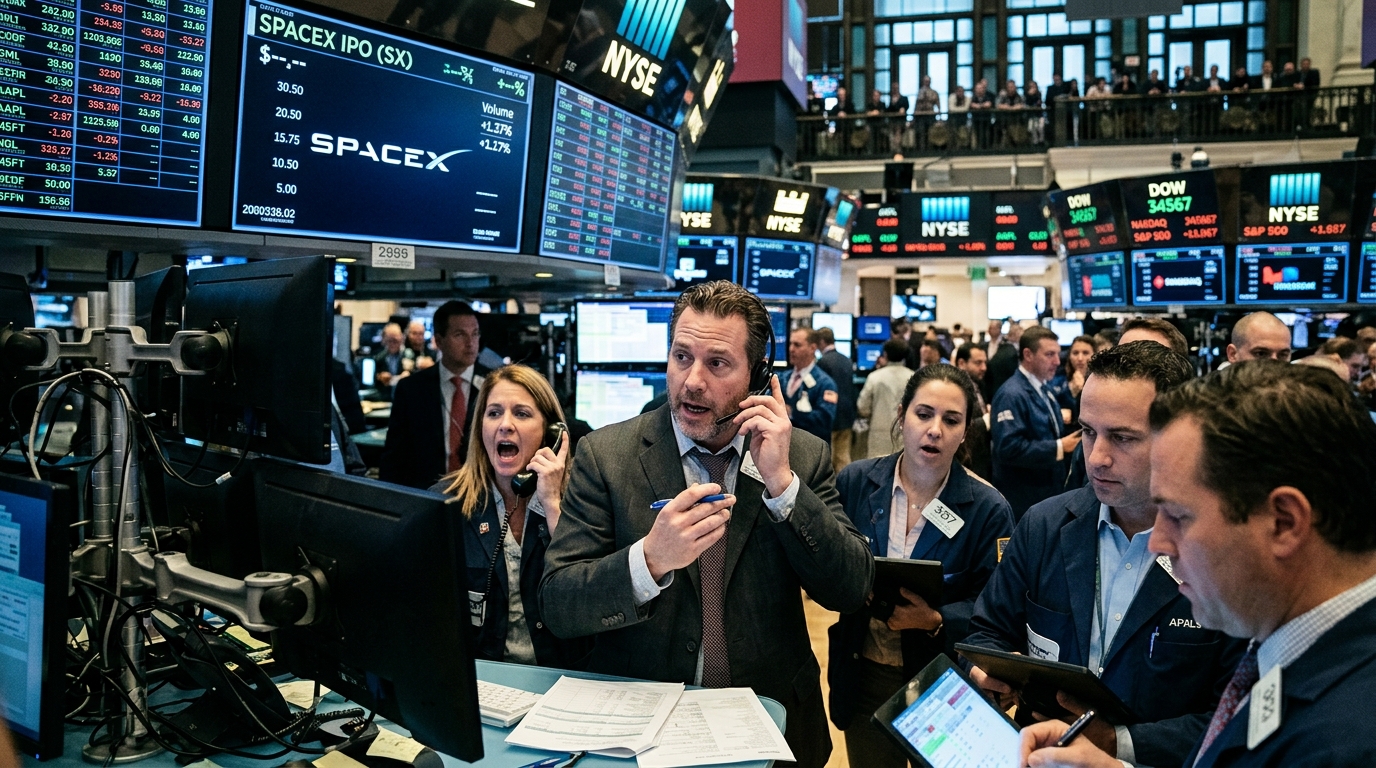
In an era where the boundaries between aerospace engineering, electric mobility, and artificial intelligence are increasingly blurred, Ray Wang, CEO of Constellation Research, has put forward a provocative thesis that is reverberating through financial markets. Speaking on Bloomberg Tech’s “The Close,” Wang suggested that a merger between SpaceX and Tesla is not only a possibility but perhaps a strategic necessity before the space giant ever hits the public markets. This analysis transcends simple corporate restructuring; it points toward the emergence of a new breed of technological conglomerate designed for 21st-century dominance.
The Strategic Logic of Vertical Integration
Wang’s central argument rests on the fundamental shift in Tesla’s identity. No longer can Tesla be viewed merely as an automaker; it has evolved into a robotics and AI powerhouse. With the deployment of Full Self-Driving (FSD) and the development of the Optimus humanoid robot, Tesla’s requirements for real-time data and massive computational throughput have skyrocketed. This is where SpaceX enters the frame—not as a rocket company, but as the provider of the world’s most robust connectivity infrastructure via Starlink.
According to Wang, the synergy between these two entities is organic and profound. “We are seeing a convergence where software, AI, and hardware come together in a unified ecosystem,” he noted. The ability for Tesla’s fleet to communicate via Starlink’s low-earth orbit satellites provides a connectivity moat that legacy automakers cannot replicate. Furthermore, the cross-pollination of materials science and high-precision manufacturing expertise between SpaceX and Tesla creates a feedback loop of innovation. A merger would allow Elon Musk to consolidate resources, streamline governance, and align long-term incentives across his vast empire.
The Software Renaissance and the xAI Factor
A pivotal element of Wang’s insight is the observation that software is poised for a significant comeback. While the past two years have been dominated by hardware narratives—specifically the scramble for Nvidia’s H100 GPUs—Wang argues that the market is reaching a baseline in terms of infrastructure. “The next piece to come back is software,” he stated. The value proposition is shifting from “who owns the chips” to “who can build the most effective AI applications and agents.”
In this context, xAI, Musk’s newest venture, serves as the connective tissue. If Tesla represents the physical body (robotics) and SpaceX the nervous system (connectivity), xAI is the burgeoning brain. A SpaceX-Tesla merger could potentially absorb or deeply integrate with xAI, creating a vertically integrated AI empire. This would facilitate the rapid training of models using diverse, real-world data streams—ranging from urban traffic patterns to orbital telemetry. This holistic approach to AI is what Wang believes will define the next cycle of tech investment.
Regulatory Hurdles and Fiduciary Duties
Despite the compelling strategic narrative, the path to a merger is fraught with complexity. Tesla is a high-profile public company, while SpaceX remains a private entity with a valuation nearing $200 billion. Any merger would require the approval of Tesla’s shareholders, many of whom may be wary of the capital-intensive and high-risk nature of space exploration. Moreover, regulatory bodies such as the SEC and FTC would likely subject such a massive consolidation of power to unprecedented scrutiny.
However, Wang points out that Musk has a history of defying traditional corporate structures. The eventual creation of an “X Holdings” umbrella—similar to Alphabet’s structure but with even more disparate parts—could be the ultimate goal. This would also solve potential liquidity issues for SpaceX’s ambitious Mars missions by leveraging Tesla’s cash flows and Starlink’s projected profitability. The question is no longer whether these companies collaborate, but whether their separation currently acts as a friction point against the speed of innovation Musk demands.
Conclusion: The Birth of a Civilization-Scale Enterprise
Ray Wang’s prediction highlights a broader trend in the global economy: the drive toward total verticalization. In the AI era, controlling the entire value chain—from the silicon and the software to the satellite link and the robotic end-product—is the key to enduring sovereignty. If SpaceX and Tesla were to merge, we would no longer be discussing a car company or a space company, but the world’s first true “Civilization Infrastructure” firm.
- Tesla is transforming into a robotics leader.
- SpaceX provides the essential global connectivity backbone.
- AI software is becoming the primary arena for competitive advantage.
- Consolidating Musk's ventures could redefine Wall Street valuations.
As we move toward 2026, the pressure to deliver on autonomous driving and multi-planetary expansion will only intensify. Wang’s analysis serves as a reminder that in the age of artificial intelligence, bold consolidation is not just an option—it may be the only way to sustain the momentum of the future.