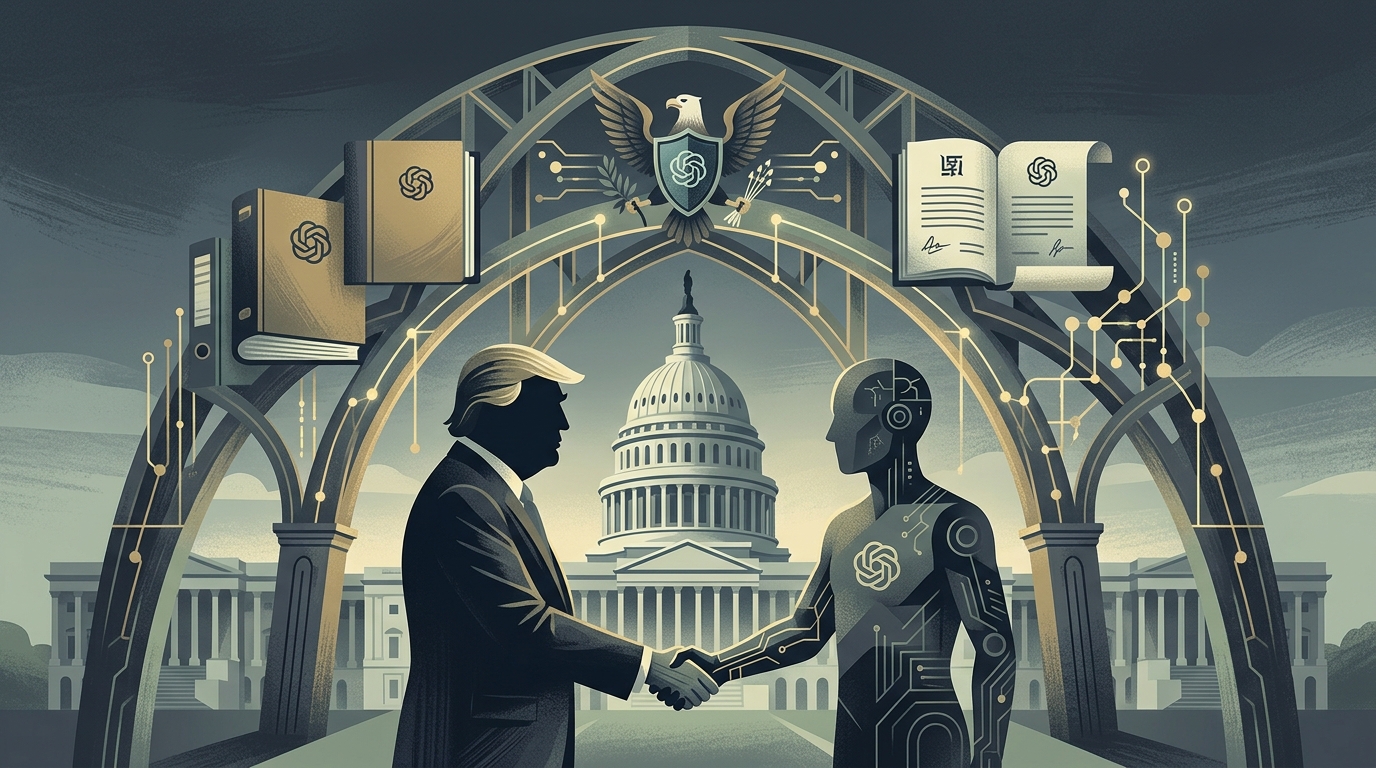
The relationship between the Pentagon and Silicon Valley has evolved through various stages: from deep-seated suspicion and employee walkouts to full, organic integration. Today, the U.S. Department of Defense (DoD) is taking its most significant leap yet, announcing a landmark agreement that allows seven leading Artificial Intelligence firms to deploy their models within the nation’s most classified networks. This move, coordinated by the Chief Digital and Artificial Intelligence Office (CDAO), marks a transition from experimental pilot programs to the full operational embedding of Large Language Models (LLMs) into the core of the American military apparatus.
The Architecture of the Deal: From Cloud to Combat
The agreement leverages the foundation of the Joint Warfighting Cloud Capability (JWCC), a $9 billion contract currently shared by Amazon (AWS), Google, Microsoft, and Oracle. However, the new development focuses on providing 'Model-as-a-Service' (MaaS) in Impact Level 6 (IL6) environments—networks designed specifically for Top Secret data. The seven companies selected include the four infrastructure giants mentioned above, joined by Anthropic, Meta, and the French-based Mistral AI, which stands as the most surprising inclusion on the list.
The inclusion of Mistral AI, headquartered in Paris, underscores the Pentagon’s strategic need for model diversity and the recognition that AI innovation is a global race. As long as these models meet stringent U.S. security protocols, the DoD is willing to look beyond domestic borders to maintain a technological edge. These models will be tasked with analyzing vast streams of intelligence from satellite imagery, simulating complex wargaming scenarios, and automating logistics in real-time. The ultimate goal is 'Information Dominance,' where the speed of the OODA loop (Observe, Orient, Decide, Act) is accelerated by algorithmic processing.
The Notable Absence and the Strategy of Exclusion
The question echoing through the corridors of Washington is: who was left out? Despite its market dominance, OpenAI, the creator of ChatGPT, does not appear to be a primary partner in this specific classified network phase—at least not as an independent provider. While OpenAI’s technology is accessible via Microsoft Azure, the lack of a direct agreement for classified environments suggests either a strategic choice by the company to maintain distance from 'lethal' applications or a Pentagon reservation regarding OpenAI’s governance structure and resource dependencies.
Furthermore, the DoD has shown a clear preference for companies offering 'open-weight' or highly flexible models, such as Meta’s Llama. The Pentagon requires the ability to fine-tune and run models in 'air-gapped' environments, ensuring that sensitive military data never leaks back to corporate servers for training. This requirement for absolute data sovereignty favored players who allow for localized, secure deployments rather than strictly proprietary, cloud-locked ecosystems.
Geopolitical Implications and the Ethics of Power
This pact does not exist in a vacuum. China is pouring billions into integrating AI into the People’s Liberation Army, aiming to surpass U.S. capabilities by 2030. The Pentagon realizes that the traditional bureaucracy of legacy defense contractors cannot match the iterative speed of Silicon Valley. Consequently, this agreement represents a de facto 'algorithmic mobilization' of the tech sector.
Yet, ethical risks loom large. The deployment of LLMs in military networks raises concerns about 'hallucinations' in high-stakes environments. What happens if a model misinterprets a troop movement as an imminent threat? While the Pentagon insists on keeping a 'human-in-the-loop,' the sheer velocity of AI-driven warfare may eventually render human oversight a mere formality. The next era of conflict will not be decided solely by who has the most powerful kinetic weapons, but by who possesses the most reliable and rapid intelligence processing units.