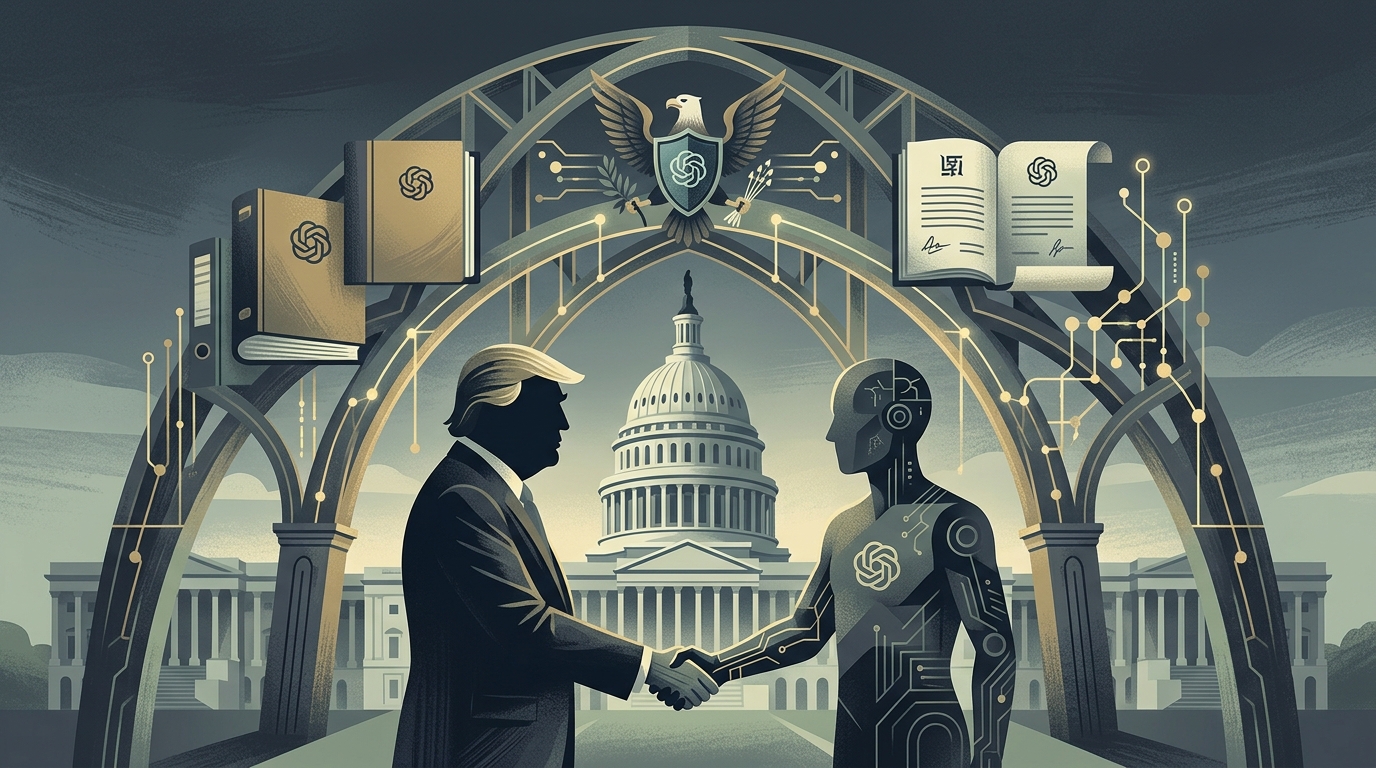
In a move that underscores the Trump administration's intent to fundamentally reshape the landscape of technological governance in the United States, the appointment of Pam Bondi to a leading role on the White House AI Committee is sending shockwaves through both Washington and Silicon Valley. Bondi, a former Florida Attorney General and a staunch ally of the President, does not hail from the tech sector, suggesting that the new administration's approach will be less technocratic and more legally and politically driven.
The Political Significance of the Choice
Pam Bondi's selection is far from accidental. As a legal expert with extensive experience in law enforcement and political strategy, Bondi is expected to serve as the enforcer of the "America First" agenda within the AI domain. The Trump administration has made it clear that it views Artificial Intelligence not merely as a tool for economic growth, but as a critical theater of geopolitical confrontation, primarily with China. Bondi’s appointment signals a desire for a White House that tightly controls the trajectory of tech development, ensuring American interests take precedence over international regulatory frameworks.
Unlike the previous administration, which emphasized "ethical AI" and safeguards against algorithmic bias, the committee under Bondi’s influence is expected to focus on accelerating innovation through deregulation. Trump's rhetoric regarding "free speech" in the digital sphere is also expected to translate into pressure on AI companies to avoid imposing "ideological filters" on their models—a stance Bondi has championed in other legal battles.
From Regulation to Deregulation: The End of the Biden Executive Order?
One of the first tasks of the new committee will be the evaluation—and likely the repeal—of the 2023 Executive Order on AI signed by Joe Biden. That order established rigorous safety standards and required companies to share test results with the government. For Trump supporters, these measures are seen as "bureaucratic hurdles" that stifle U.S. competitiveness.
Bondi, with her legal background, will be tasked with crafting a new framework that protects the intellectual property of American firms while simultaneously reducing their accountability obligations to the state. This shift toward a laissez-faire approach in tech is a double-edged sword: on one hand, it may lead to faster development of new models; on the other, it raises significant concerns regarding safety and the potential misuse of AI in areas like disinformation and privacy.
The Geopolitics of Tech and the Conflict with China
At the heart of Bondi's mission is the competition with Beijing. The committee is expected to recommend stricter export controls on AI technology and semiconductors, alongside incentives for reshoring the production of critical infrastructure. AI is no longer treated as a commercial product but as the "new nuclear weapon" of the digital age. The presence of Bondi—a figure who knows how to navigate the corridors of power and enforce presidential will—suggests that Washington will adopt a much more aggressive stance on the international stage.
- Removal of restrictions deemed "woke" in the training of AI models.
- Enhanced integration of AI in defense forces and border security.
- Preferential treatment for companies that align with U.S. national priorities.
In conclusion, Pam Bondi's appointment marks the full politicization of the technological agenda. AI is no longer an issue solely for developers and ethicists, but a central pillar of state power. The remaining question is whether this approach will usher in a new golden age for American technology or sacrifice global safety at the altar of national competition.