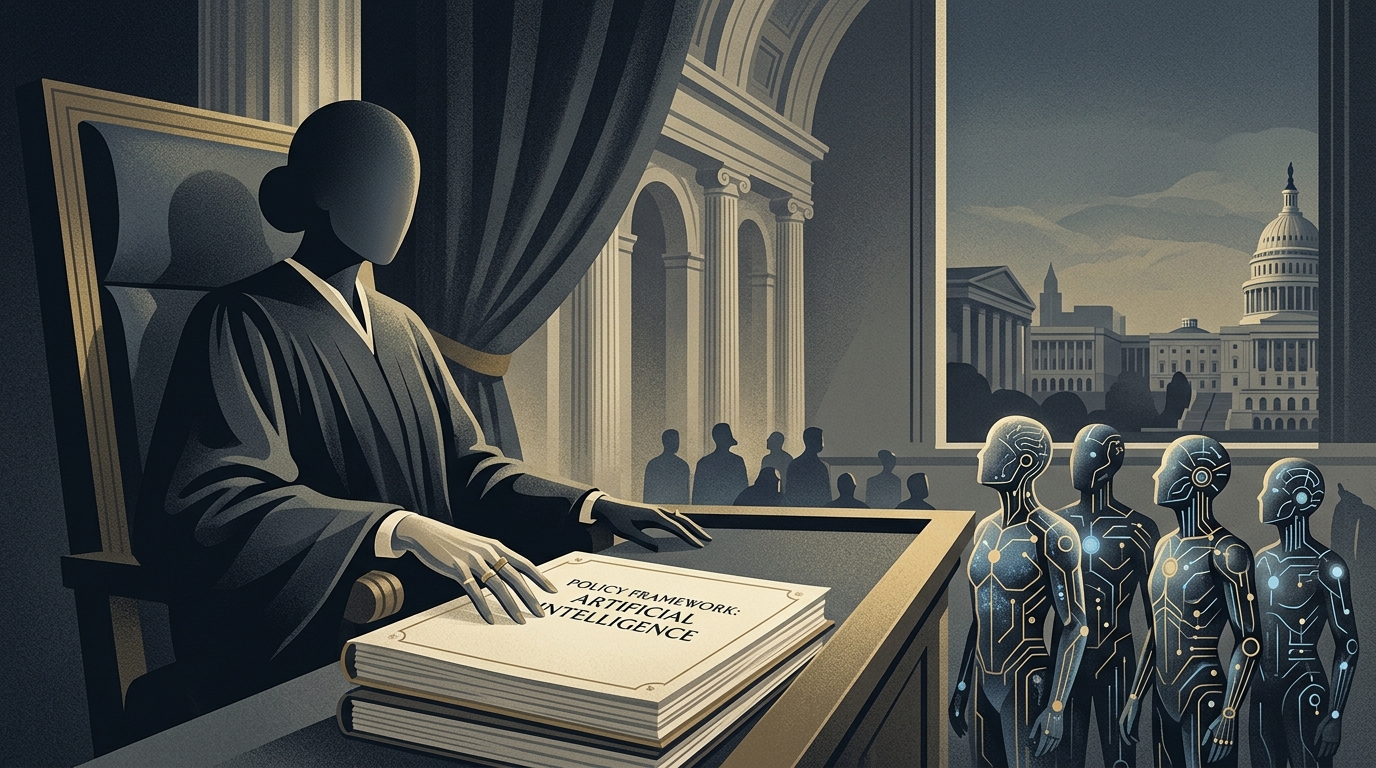
In an era where the digital revolution threatens to upend the foundations of the seventh art, the Academy of Motion Picture Arts and Sciences (AMPAS) has taken a bold step in reshaping the regulations for the 99th Academy Awards. The new guidelines, recently announced, are not merely a bureaucratic update but an existential statement on what constitutes "cinematic achievement" in the 21st century. At the heart of this reform are two pillars: the strict demarcation of Artificial Intelligence (AI) and the expansion of eligibility for international films, signaling a shift toward a more inclusive yet strictly "human-centric" cinema.
The Battle for Human Creativity
The most debated change concerns the use of Generative AI. According to the new rules, for a film to be eligible for major awards, the "creative leadership" must remain authentically human. The Academy clarified that while AI tools can be used as assistive means in the production process or visual effects, their use for generating scripts, performances, or core directorial decisions without substantial human intervention will lead to disqualification.
This decision comes as a response to intense concerns from actors' and writers' unions (SAG-AFTRA and WGA), who recently fought hard battles to protect their intellectual property and labor. The Academy appears to align with the view that an Oscar is a tribute to human experience and craft. "We don't award algorithms; we award the soul poured onto the screen," a board member noted during the briefing. This move effectively draws a line in the sand, ensuring that the "Best Actor" or "Best Screenplay" remains a testament to human endeavor rather than prompt engineering.
International Cinema: Beyond Hollywood's Borders
Simultaneously, the Academy is moving forward with a significant expansion of the rules for the International Feature Film category. Previously, restrictions regarding screening dates and countries of origin often excluded remarkable works that did not follow the traditional US distribution schedule. Under the new rules, the eligibility period has been widened, allowing films that premiered at international festivals or had limited distribution outside the US to compete more effectively for a spot in the final five.
Furthermore, the Academy now encourages countries to submit films reflecting multiculturalism, relaxing some of the rigid rules regarding language and the nationality of the crew. This is expected to particularly benefit co-productions, which are now the norm in European and Asian cinema but often fell into the "legal gaps" of previous regulations. By acknowledging the globalized nature of modern filmmaking, the Oscars are attempting to solidify their status as the world's premier film stage, not just an American one.
The Theatrical Challenge and Streaming
Another critical aspect of the new rules concerns the theatrical release requirement. The Academy continues to double down on the traditional theater experience, now requiring films aiming for Best Picture to have an expanded presence in more than 10 top US markets for a specific duration. This is a clear message to streaming giants like Netflix and Apple TV+ that the "theatrical experience" is non-negotiable.
- Strict distinction between AI as a tool and AI as a creator.
- Expansion of the eligibility window for foreign-language productions.
- Stricter theatrical release requirements to preserve the cinema-going experience.
- New technical award criteria that integrate digital innovation without replacing human skill.
In conclusion, the new Oscar rules reflect an Academy trying to balance modernization with the preservation of tradition. In a world increasingly flooded with synthetic content, the insistence on human creativity and the celebration of global cinematic language is perhaps the last line of defense for cinema as an art form. As we approach the centennial of the Oscars, these changes ensure that the golden statuette remains a symbol of human excellence in an increasingly automated world.