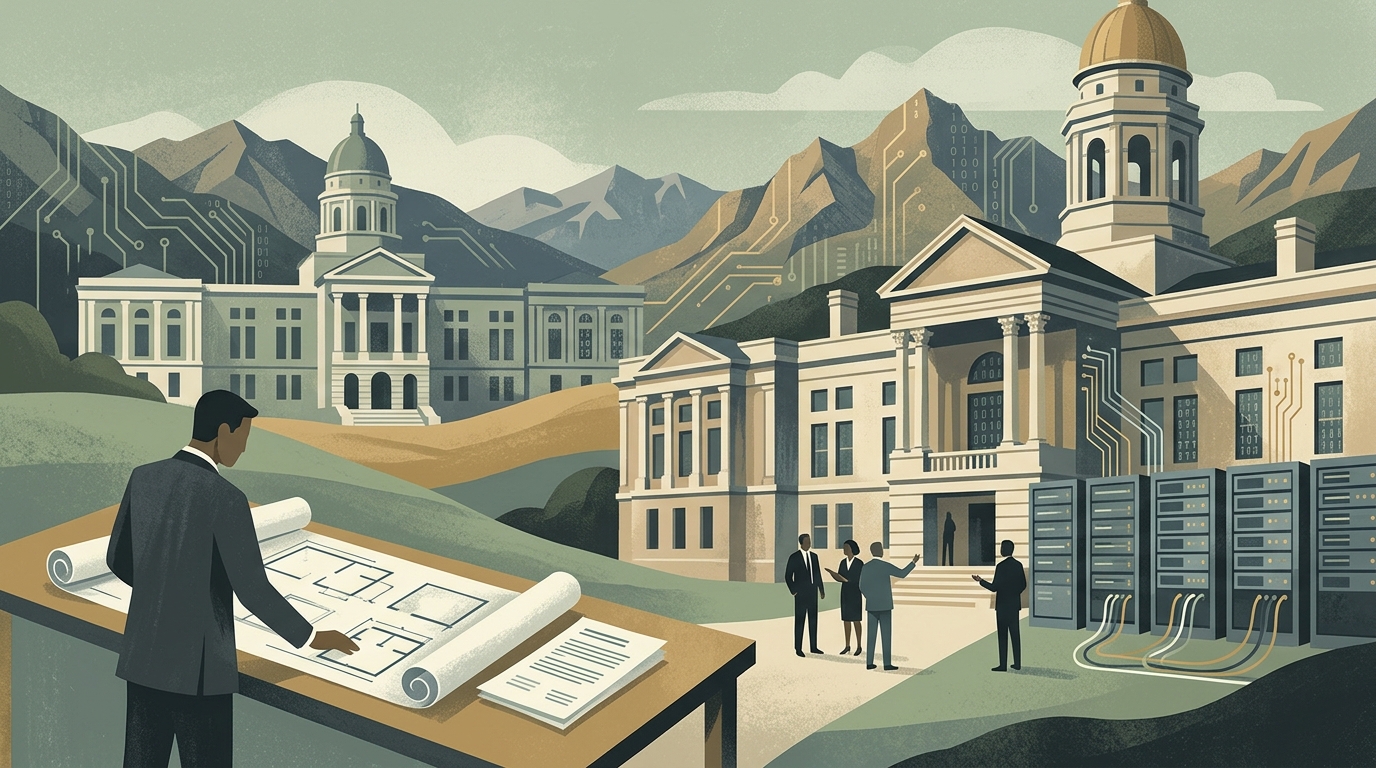
The state of New Jersey, traditionally known as the "Garden State," is facing a new challenge that threatens to fundamentally alter its landscape: the explosive rise of data centers. As the Artificial Intelligence (AI) revolution demands ever-increasing computational power, tech giants are scouring the region for space to house their servers. However, a broad coalition of environmental groups and local communities is pushing back, calling for an immediate moratorium on the construction of new facilities until their full impact can be assessed.
The Invisible Footprint of the Cloud
For the average user, the "cloud" is something ethereal and weightless. In reality, it consists of massive buildings filled with thousands of servers operating 24/7. These infrastructures consume vast amounts of electricity and require millions of gallons of water for cooling. In New Jersey, the proximity to New York City and the existing fiber-optic network make the state an ideal destination. But organizations like the Sierra Club and Clean Ocean Action warn that the price for the environment and residents might be too high to pay.
The primary concern centers on the strain exerted on the electrical grid. PJM Interconnection, the grid operator covering New Jersey, has already expressed concerns about the ability to meet surging demand. If data centers continue to expand at the current rate, there is a risk of significant hikes in household electricity bills or even brownouts during peak periods. Activists argue that the state does not yet have the regulatory framework to manage this "energy gluttony."
Water and Local Communities: A Difficult Equation
Beyond energy, the issue of water is equally critical. Data centers utilize cooling systems that evaporate enormous quantities of water, often drawn from local municipal supplies. In an era where climate change makes water resources less predictable, prioritizing machines over people is a political and ethical minefield. Furthermore, the construction of these facilities often involves clearing forested land or occupying space that could be used for housing or agriculture.
Proponents of data centers, on the other hand, highlight the economic benefits. They argue that these investments bring millions of dollars in tax revenue to local coffers, helping fund schools and infrastructure without burdening public services, as these centers don't require police protection or schools for servers. However, critics counter that the jobs created after the construction phase are minimal, as the facilities are largely automated and require only a skeleton crew of technicians.
The Need for Transparency and Strategic Planning
The call for a moratorium is not necessarily an attempt to ban technology but a plea for rational planning. Advocacy groups are urging Governor Phil Murphy’s administration to establish stricter criteria for energy efficiency and the use of renewable energy sources by data centers. Furthermore, they are demanding transparency regarding how much water and electricity each facility consumes—data that is often shielded as "trade secrets."
The situation in New Jersey is not unique. Similar conflicts are unfolding in Virginia and Maryland. The question being raised is global: How "green" can our digital economy truly be if its physical infrastructure undermines environmental goals? The state's decision on whether to impose a moratorium will set a precedent for how modern societies balance technological progress with the preservation of their natural capital.
Conclusion: Toward Sustainable Digital Growth
Artificial Intelligence promises to solve some of humanity's greatest problems, but the infrastructure powering it cannot ignore the laws of physics and ecology. New Jersey stands at a critical crossroads. Imposing a moratorium could provide the necessary time to create a development model that does not sacrifice the future of the next generation for the sake of processor speed. Technology must serve humanity and the environment, not the other way around.