The public debate regarding the structure and function of the Greek state often finds itself trapped in theoretical frameworks, overlooking the essence of implementation. In a recent intervention, Michalis Sallas, a figure synonymous with the transformation of the Greek banking system and the creation of major business groups, points directly to the heart of the matter. According to Mr. Sallas, Greece's problem does not lie in the concept of the 'Executive State' itself, but in the quality and criteria of its staffing.
Theory vs. Practice: The Implementation Gap
The 'Executive State,' introduced by Law 4622/2019, aimed to be the control center of a modern, efficient, and digitalized administration. The idea was to shift power from cumbersome ministerial bureaucratic mechanisms to a central structure that coordinates, monitors, and sets strategy. However, Michalis Sallas points out that this theoretical soundness clashes with an old pathology: staffing based on political loyalty rather than professional competence.
As he emphasizes, if the individuals called to operate this mechanism lack the necessary technocratic training, the system ends up being just another bureaucratic barrier. 'Executiveness' risks turning into a mechanism for the concentration of power without a corresponding benefit in the efficiency of public services for citizens and businesses.
The Lack of Institutional Criteria and Technocratic Continuity
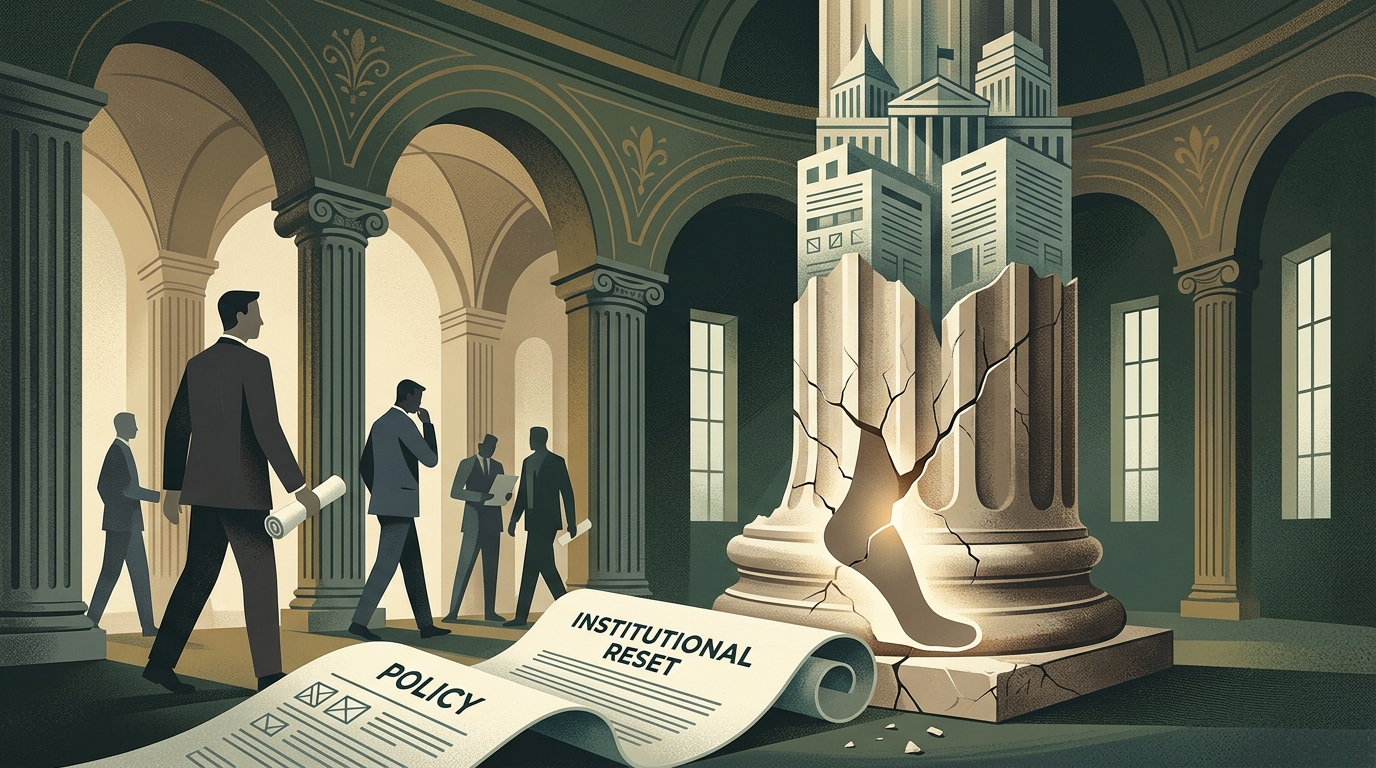
One of the most critical points in Mr. Sallas's analysis is the absence of institutional criteria that would ensure the continuity of the state. In Greece, a change in government—or even a change of a minister—is often accompanied by a complete 'reset' of the administrative pyramid. This phenomenon of 'political mobility' prevents the accumulation of experience and the implementation of long-term strategic plans.
- Meritocracy: The need for objective evaluation systems that remain unaffected by the political cycle.
- Specialization: Staffing critical positions with individuals who have proven experience in the market and administration.
- Continuity: Creating a body of senior civil servants who remain in their positions regardless of election results.
Michalis Sallas highlights that on an international level, the states that excel are those that have managed to 'shield' public administration from partisan interference. Technocratic continuity is not merely a luxury but a prerequisite for attracting investment and gaining the trust of international markets.
The Role of Technology and Artificial Intelligence
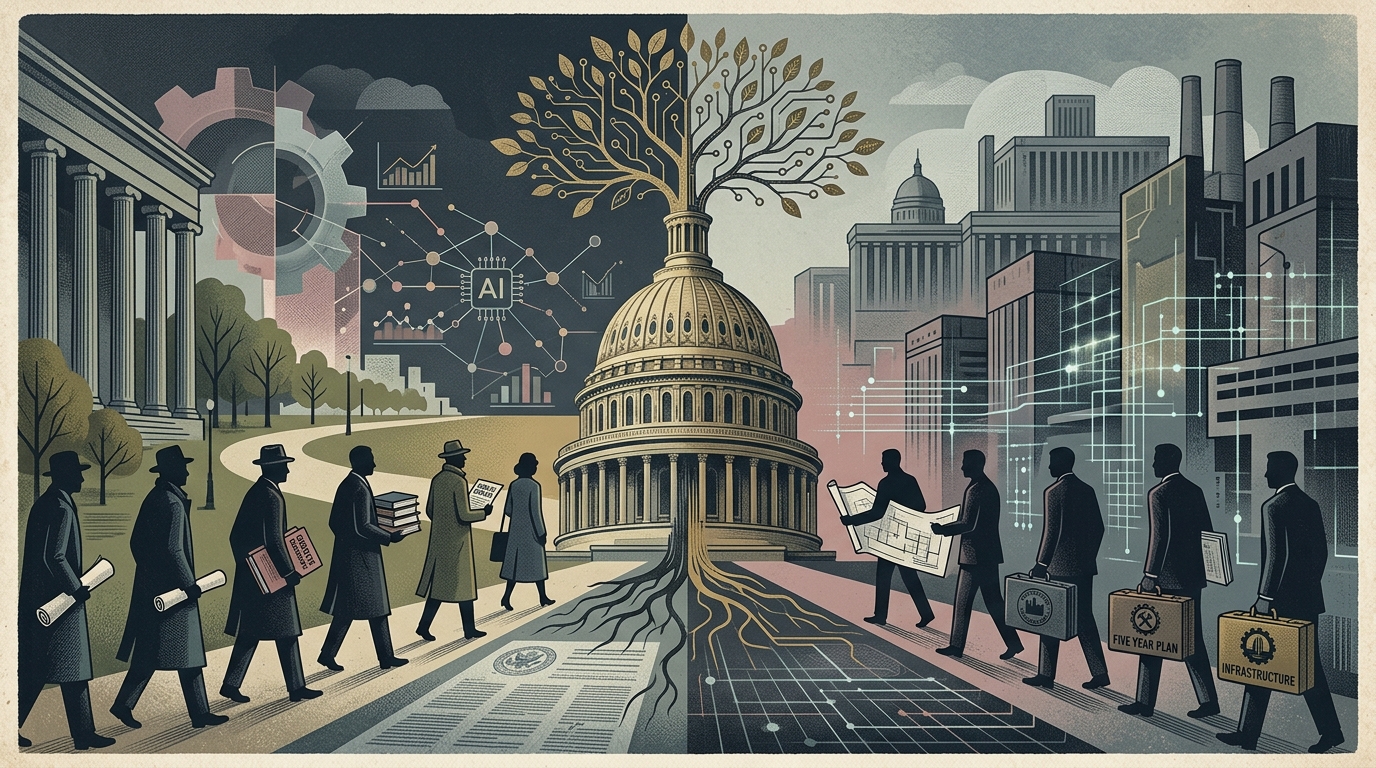
In the context of 2026, the discussion about the executive state cannot ignore the AI revolution. If the problem is 'human failure' in staffing, technology offers solutions that can limit subjectivity. The use of AI for performance data analysis, process automation, and objective skills-based hiring could provide the solution to the problem posed by Mr. Sallas.
"The state is not an ideology; it is management and results. When management is conducted in terms of the past, the result will always be inferior to the circumstances," the analysis notes.
The digitalization of the state, although significantly advanced, remains a shell if not accompanied by a change in culture among the people who manage it. The transition to a 'Data-Driven State' requires executives who understand technology and can make decisions based on real data rather than political balances.
Conclusions for the Future
Michalis Sallas's intervention serves as a reminder that reforms are not completed with the passing of a law. Real reform begins with implementation. Greece needs a state that acts as an accelerator of growth rather than a brake. For this to happen, the selection of the 'best and brightest' must cease to be a communication slogan and become an institutional reality, with strict criteria, transparency, and accountability. 'Who' governs is ultimately just as important as 'how' they govern.