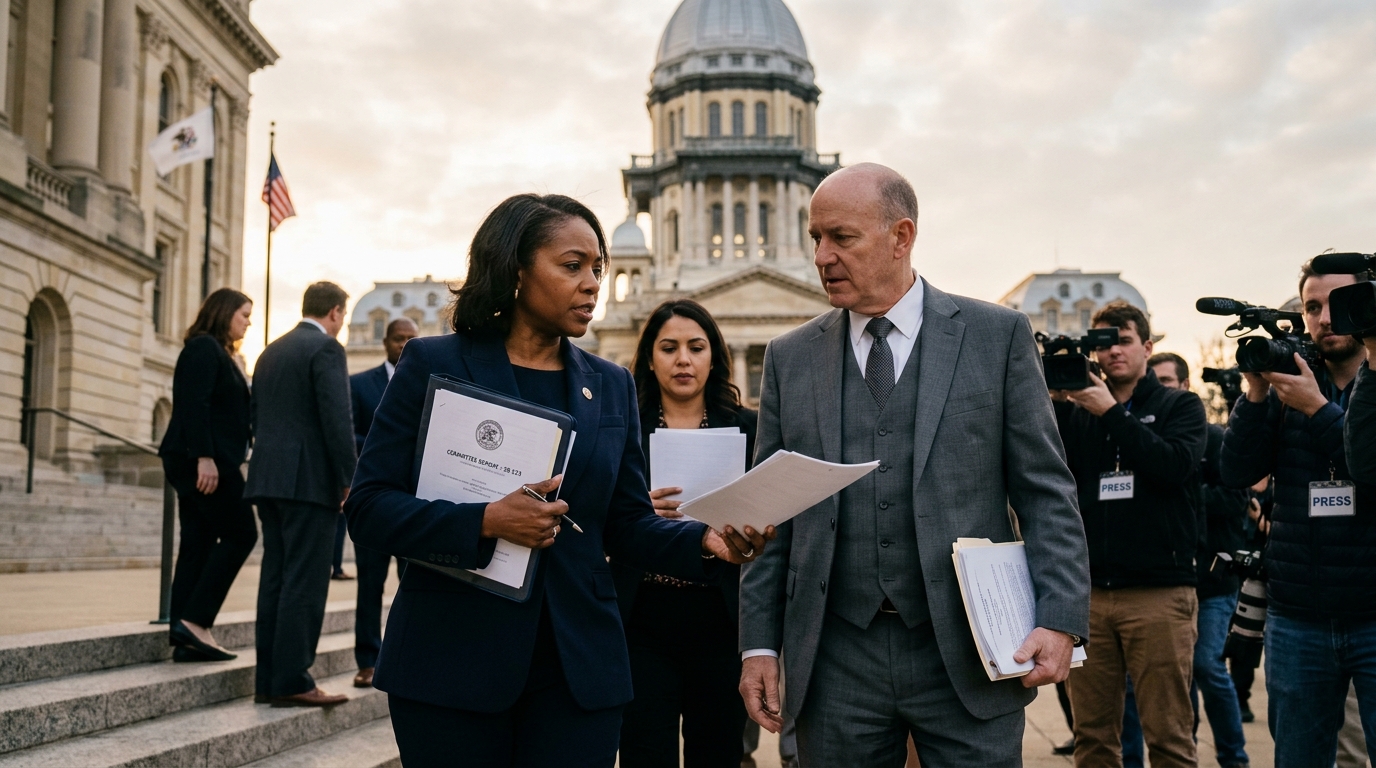
In a move poised to reshape the landscape of labor relations in the United States and serve as a global benchmark, the Illinois Department of Human Rights (IDHR) has issued final regulations governing the use of Artificial Intelligence (AI) in employment decisions. This development, arriving in mid-2026, marks the definitive end of the "black box" era in hiring, where algorithms dictated career trajectories without accountability or transparency.
These regulations provide the necessary regulatory framework for recent amendments to the Illinois Human Rights Act, which now explicitly recognizes that AI usage can lead to unlawful discrimination. Illinois, a state with a storied history of pioneering digital rights—most notably through its Biometric Information Privacy Act (BIPA)—is now targeting the algorithmic bias that often lurks beneath the surface of supposedly "objective" automated tools.
The Mandate for Disclosure and Transparency
At the heart of the new regulations is the principle of informed consent and transparency. Employers operating within Illinois are now legally required to provide clear and timely notice if they utilize AI tools for screening resumes, conducting interviews, or analyzing employee performance. This notice cannot be buried in fine print; it must explain in plain language which characteristics are being evaluated and how the system functions.
Furthermore, the regulations mandate that employers maintain rigorous records of decisions assisted by AI. If a candidate is rejected by an automated system, the employer must be capable of justifying that decision and demonstrating that the criteria used did not discriminate against protected classes, such as race, gender, age, or disability. This requirement for "Explainable AI" (XAI) represents a significant leap toward ensuring workplace equity in the digital age.
Combating Algorithmic Bias
One of the most complex issues addressed by the IDHR guidelines is "disparate impact." AI systems are frequently trained on historical data that mirrors past societal prejudices. For instance, if a company historically hired predominantly male engineers, an AI might "learn" that being male is a proxy for success, thereby systematically excluding qualified female candidates. The new rules clarify that utilizing such "tainted" data constitutes a violation of the law, regardless of the employer's intent.
Companies are now encouraged—and in many cases required—to conduct regular audits of their AI tools. These audits must look for statistical discrepancies in selection rates across different demographic groups. If a tool is found to have an adverse impact on a specific group, the employer must either recalibrate the algorithm or cease its use. The burden of proof is shifting; it is no longer just on the employee to prove discrimination, but on the employer to demonstrate fairness.
Market Implications and the Future of Work
The business community's reaction has been polarized. While many industry leaders acknowledge the necessity of ethical AI, there are significant concerns regarding the cost of compliance. Small and medium-sized enterprises (SMEs), in particular, may find the requirements for regular algorithmic audits and extensive record-keeping to be a heavy administrative burden. However, legal analysts argue that these regulations provide a much-needed "safe harbor," offering a clear compliance roadmap that could mitigate the risk of massive class-action lawsuits down the line.
Illinois is not an outlier in this regulatory push. New York City has already implemented similar legislation, and the European Union’s AI Act classifies employment-related AI as "high-risk." The Illinois regulations confirm that AI oversight is no longer a theoretical debate but an immediate legal reality. As technology continues to evolve, society is being forced to decide whether algorithms will govern unchecked or whether human values of equality and transparency will be hard-coded into the digital future of work.