The history of technological progress has always been a precarious balance between efficiency and human well-being. However, in July 2026, this debate has taken a dramatic turn. An international coalition of leading economists, including Nobel laureates and top-tier academics, has issued what many are calling a "Global SOS." Their message is unambiguous: Artificial Intelligence is not merely a productivity tool, but a potential catalyst for unprecedented social and economic destabilization if left without rigorous regulatory oversight.
Beyond Automation: The Erosion of Cognitive Labor
For decades, the prevailing economic consensus was that technology creates more jobs than it destroys. This new report, however, argues that the "AI generation" is fundamentally different from the steam engine or electricity. While previous industrial revolutions replaced physical labor, AI is targeting cognitive processing, judgment, and creativity—the very pillars of the middle class. Economists point out that by 2026, we are already seeing entire sectors, from legal support to software engineering and data analysis, shrinking at rates that the broader labor market simply cannot absorb.
The concern is not just the outright replacement of workers, but the degradation of work itself. "Algorithmic management" is increasingly turning professionals into mere machine supervisors, leading to wage stagnation and the loss of professional autonomy. The report warns that if this trend continues, we face a "two-tier society" where a tiny elite of technology owners captures the vast majority of wealth, while the rest of the population is relegated to a hyper-competitive, low-wage service economy.
Capital vs. Labor: The Widening Wealth Chasm
One of the most piercing aspects of the warning concerns the concentration of geopolitical and economic power. The economists argue that AI development requires massive resources—computational power and data—that only a handful of tech giants possess. This creates a landscape of "Techno-Feudalism," where governments and citizens become dependent on the infrastructure and algorithms of a few private entities. This lack of competition doesn't just hurt the economy; it threatens democracy itself, as decision-making shifts from public institutions to opaque, private systems.
- Monopolistic Dominance: The concentration of data within 3-4 global players makes it nearly impossible for new innovators to enter the market.
- Tax Base Erosion: As profits shift from labor-intensive activities to capital-intensive software, traditional tax systems are failing to capture value.
- The North-South Divide: Developing nations that relied on labor arbitrage for growth are losing their comparative advantage to automated systems in the West.
A New Global Architecture for AI Governance
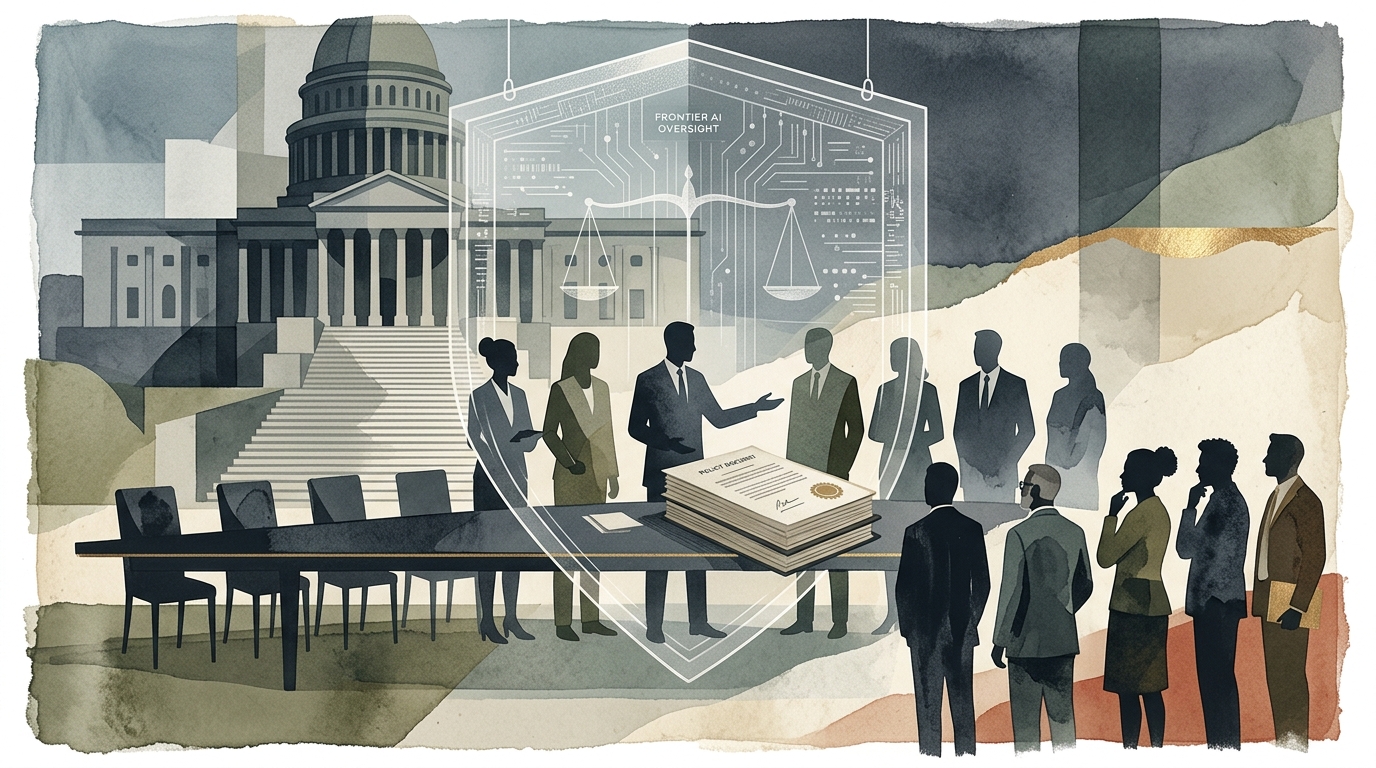
The report does not stop at diagnosis; it proposes radical shifts in policy. Among these is the implementation of an "AI Tax," the proceeds of which would fund worker transition programs and potentially a Universal Basic Income (UBI). Furthermore, there is a call for an international AI oversight body, modeled after the International Atomic Energy Agency (IAEA), to ensure that technology is developed for the public good rather than purely for shareholder returns.
"We cannot leave the future of humanity in the hands of algorithms that optimize only for profit. Artificial intelligence must be a tool for empowerment, not enslavement," the report states.
In conclusion, the economists emphasize that time is running out. The decisions made in the next 18 months will determine whether AI leads to a new era of global prosperity or a period of prolonged social unrest and economic decline. Political will is now the final arbiter in a game where the stakes are nothing less than the fabric of social cohesion itself.