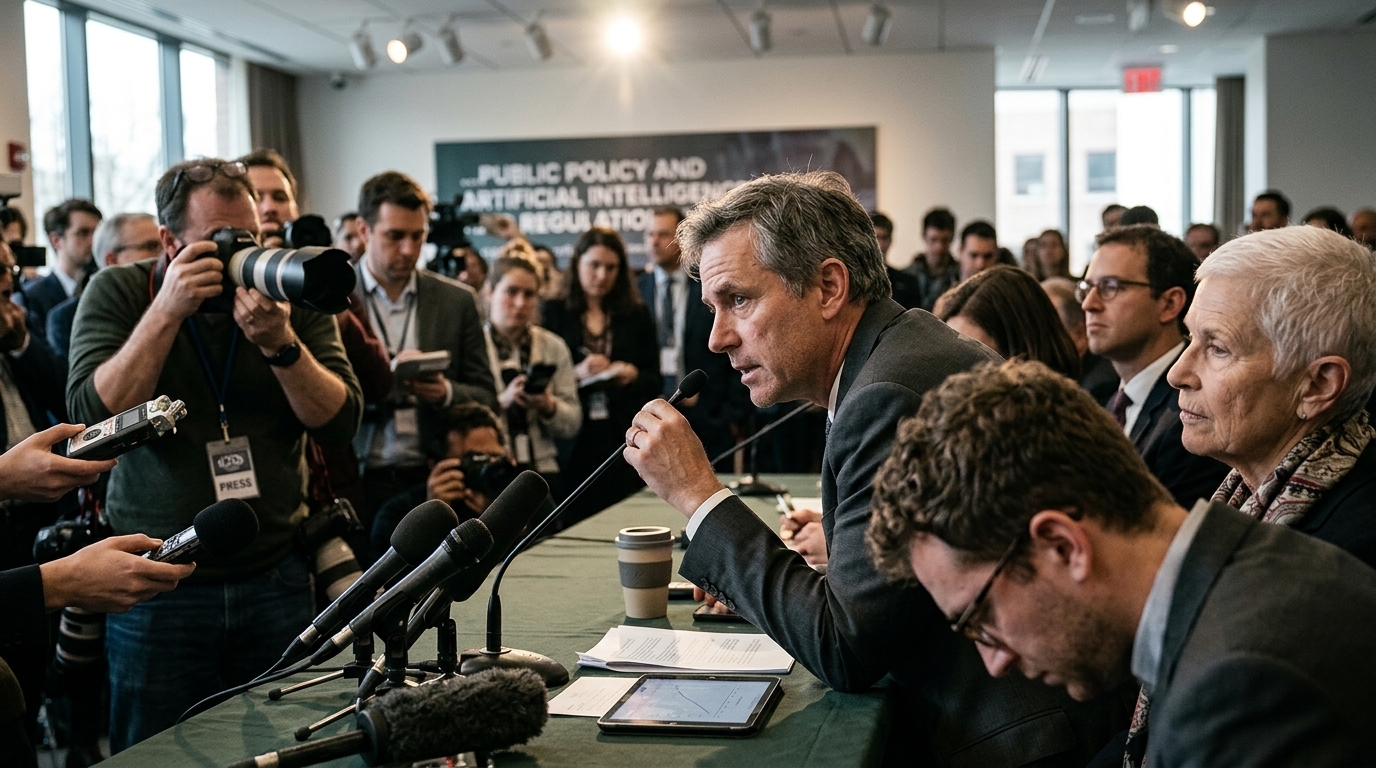
Sir Demis Hassabis, co-founder of Google DeepMind, has outlined a detailed plan for the regulation of advanced artificial intelligence, advocating for an independent body to audit the safety of the most powerful models before their release.
A FINRA-Style Regulatory Model
The proposal moves away from traditional government bureaucracy. Instead, Hassabis suggests a hybrid model inspired by the U.S. Financial Industry Regulatory Authority (FINRA). This would be a private, industry-funded self-regulatory organization operating with state-delegated enforcement powers.
Hassabis argues that conventional public structures may lack the agility and technical expertise required to keep pace with AI development. An independent body could attract top-tier scientists and engineers, providing a flexible framework that adapts alongside the technology.
Redefining 'Frontier AI'
A key element of the proposal is the criteria used to identify models requiring strict oversight. While previous frameworks in the US and EU focused on the computational power used during training, Hassabis proposes a capability-based approach.
- Models would be classified as "frontier" if they exceed predefined benchmarks in specific performance tests.
- This approach includes open-source and academic models, regardless of their business model, focusing solely on what the system can do.
- Labs developing these systems would be required to meet additional safety, transparency, and audit obligations.
Addressing Safety Testing Gaps
Hassabis notes that current evaluations primarily focus on commercial performance, such as coding or problem-solving. The proposed regulator would develop standardized tests for more critical risks, including:
- A model’s ability to hide its true capabilities.
- The tendency to ignore safety rules and instructions.
- Capacity for autonomous planning of complex cyberattacks or user manipulation.
While OpenAI’s Sam Altman has called for an immediate international effort, Hassabis believes it is more realistic for the U.S. to establish the mechanism first. He suggests that other nations, including China, would eventually align with these standards to maintain access to critical markets and advanced technologies.