In an era where Artificial Intelligence (AI) is no longer just a technological milestone but the new frontier of geopolitical rivalry, the recent remarks by Eric Schmidt, former CEO of Google, have sent shockwaves through Silicon Valley. Speaking to students at Stanford University, Schmidt posed a brutal question: Can the West outcompete China when its workforce prioritizes remote work and personal well-being over total office-bound dedication?
The Shadow of ‘996’ and the Chinese Threat
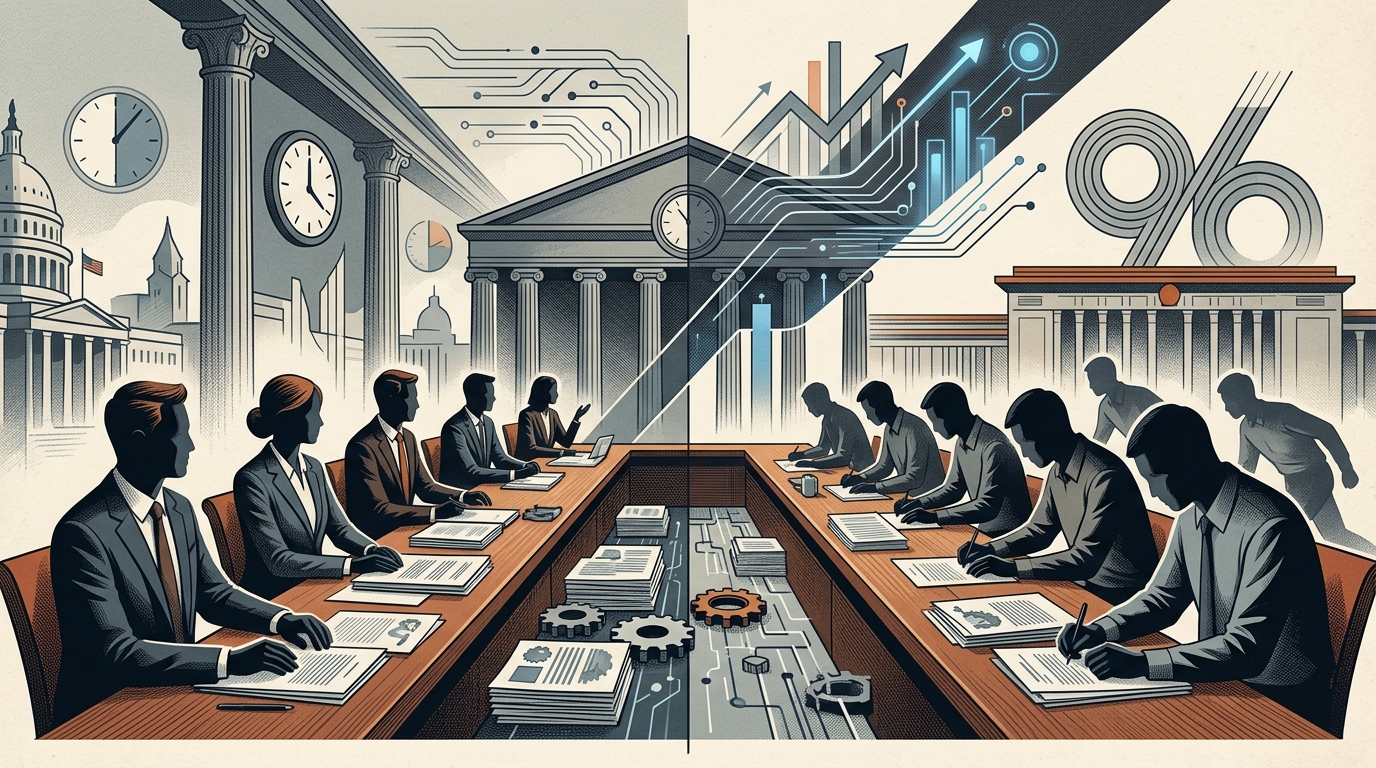
Schmidt’s reference to the Chinese ‘996’ model—working from 9 a.m. to 9 p.m., six days a week—was not a commendation of labor exploitation, but a cynical observation of productive reality. In China, AI development is treated as a matter of national survival. Developers at giants like Baidu, Alibaba, and Tencent often sleep in their offices, driven by a cocktail of state pressure and economic ambition. Conversely, in Silicon Valley, the post-pandemic era has solidified hybrid work and the demand for a better quality of life.
Schmidt argued that Google lost ground to agile competitors like OpenAI and Anthropic because it prioritized work-life balance and leaving the office on time over the 'wartime' readiness required for technological breakthroughs. Although he later requested the video of his talk be taken down, the core of his argument remains at the heart of the debate regarding the future of labor.
Remote Work as a Strategic Liability?
Schmidt’s critique of remote work touches a raw nerve. For many tech leaders, physical presence isn't just about surveillance; it's about 'serendipitous innovation'—the sparks that fly in a hallway or over a coffee. In the AI race, where breakthroughs happen weekly, Schmidt believes the perceived domesticity of home-based work deprives American firms of the reaction speed possessed by their Eastern counterparts.
- Loss of immediate collaboration slows down the pace of complex problem-solving.
- The startup culture requires sacrifices that large, established firms have seemingly forgotten.
- Geopolitical dominance in AI will dictate economic power for the next century.
However, this perspective overlooks the fact that creativity is not always proportional to hours logged. Burnout is a tangible risk that can lead to a mass exodus of talent—something the West can ill afford during a period of acute specialized labor shortages.
The Silicon Valley Social Contract Under Revision
The emerging question is whether the democratic West is willing to sacrifice its labor rights achievements to maintain its technological edge. Schmidt implies the answer is an inevitable 'yes' if we wish to avoid a world where AI norms are dictated by autocratic regimes.
“If you think you can compete with China by working from home one day a week, you are mistaken,”appears to be the stern message to the new generation of engineers.
This rhetoric aligns with other tech titans like Elon Musk, who enforced a 'hardcore' work model at X (formerly Twitter). The clash between the 'human-centric' approach of Europe and the U.S. and the 'mechanistic' approach of China will be the defining drama of the 2020s.
Conclusion: A Dangerous Equilibrium
Eric Schmidt’s warning serves as a reminder that technology does not evolve in a vacuum. It is a product of human labor and social structures. If the West chooses to adopt China’s methods to defeat it, it risks losing the very identity that makes it a magnet for global talent. The challenge for political leaders and CEOs is to find a third way: 'smart' productivity that doesn't require the exhaustion of the worker, but their meaningful empowerment through the very AI they are striving to build.