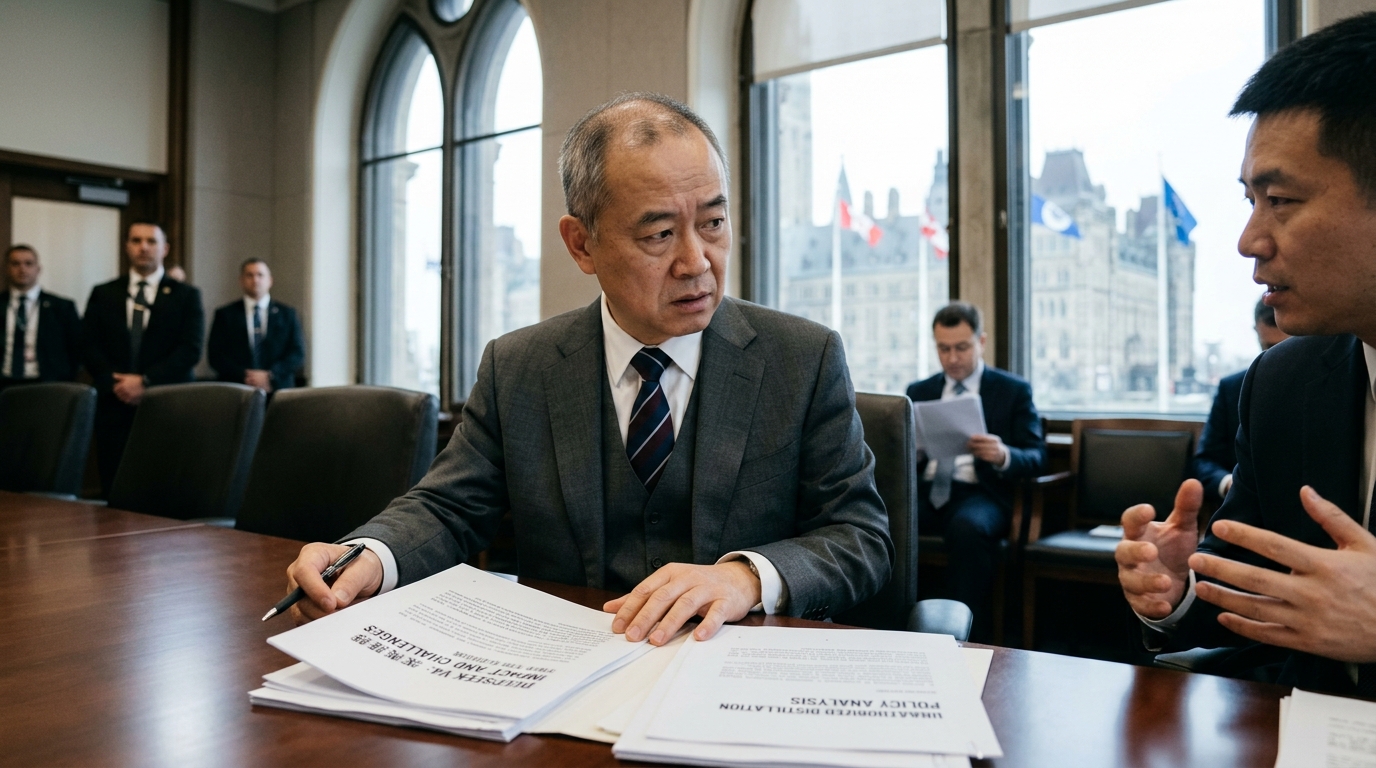
The global geopolitical chessboard of Artificial Intelligence is experiencing a seismic shift following the official launch of DeepSeek V4. The new model from the Chinese lab DeepSeek is not merely a technical upgrade; it represents a direct challenge to Silicon Valley's long-standing hegemony. However, this success is overshadowed by grave accusations from the United States, which alleges 'unauthorized distillation'—a process where Chinese labs utilize the outputs of top-tier Western models like GPT-4o and Claude 3.5 to train their own systems at a fraction of the cost.
The Art of Distillation: Innovation or Intellectual Theft?
Knowledge distillation is not a novel concept in computer science. Traditionally, it is used to transfer knowledge from a large, complex model (the 'teacher') to a smaller, more efficient one (the 'student'). The controversy arises when the 'student' belongs to a strategic rival, and the 'teacher' is protected by strict terms of service and intellectual property frameworks. US officials and tech executives argue that DeepSeek V4 achieved near-frontier performance levels not through original R&D, but by 'milking' the intelligence of American Large Language Models (LLMs).
DeepSeek, for its part, defends its methodology, highlighting its innovations in Mixture-of-Experts (MoE) architecture and low-level code optimizations that allow the model to operate with remarkable speed. Nevertheless, the suspicion that China has found a 'backdoor' to bypass NVIDIA chip export controls by leveraging Western software against its creators has triggered alarms within the US Department of Commerce.
Geopolitical Fallout and the Semiconductor War
The confrontation over DeepSeek V4 transcends code; it is about power. The US has invested billions in export restrictions aimed at preventing China from accessing high-end GPUs like NVIDIA's H100 and Blackwell. If China can produce GPT-4 level models using significantly less compute through distillation, the entire US sanctions strategy risks obsolescence.
- Sanctions Evasion: DeepSeek's high efficiency means Beijing requires fewer chips to achieve state-of-the-art results.
- Economic Disruption: DeepSeek offers its API at prices up to 20 times lower than OpenAI, threatening the profit margins of Silicon Valley giants.
- National Security: China's access to autonomous, powerful AI models enhances its capabilities in cyber warfare and information operations.
The Western Response: Legal Barriers and 'Closed' Ecosystems
The US response is expected to be multifaceted. Discussions are already underway regarding stricter monitoring of American API usage to detect query patterns suggestive of distillation attempts. Furthermore, the legal battle over the copyright of AI outputs is set to intensify. If the data generated by a model is deemed intellectual property, distillation could be legally classified as industrial espionage on an international scale.
"We are no longer in an innovation race; we are in a war of data attrition. Whoever controls the flow of information controls the future of intelligence," states a senior US government official.
DeepSeek V4 stands as a symbol of a new era where technological supremacy is not only secured in laboratories but also through the ability to adapt and assimilate global knowledge. China appears to have realized that in the 21st century, copying is not a sign of weakness but a strategic acceleration toward the summit of global power.