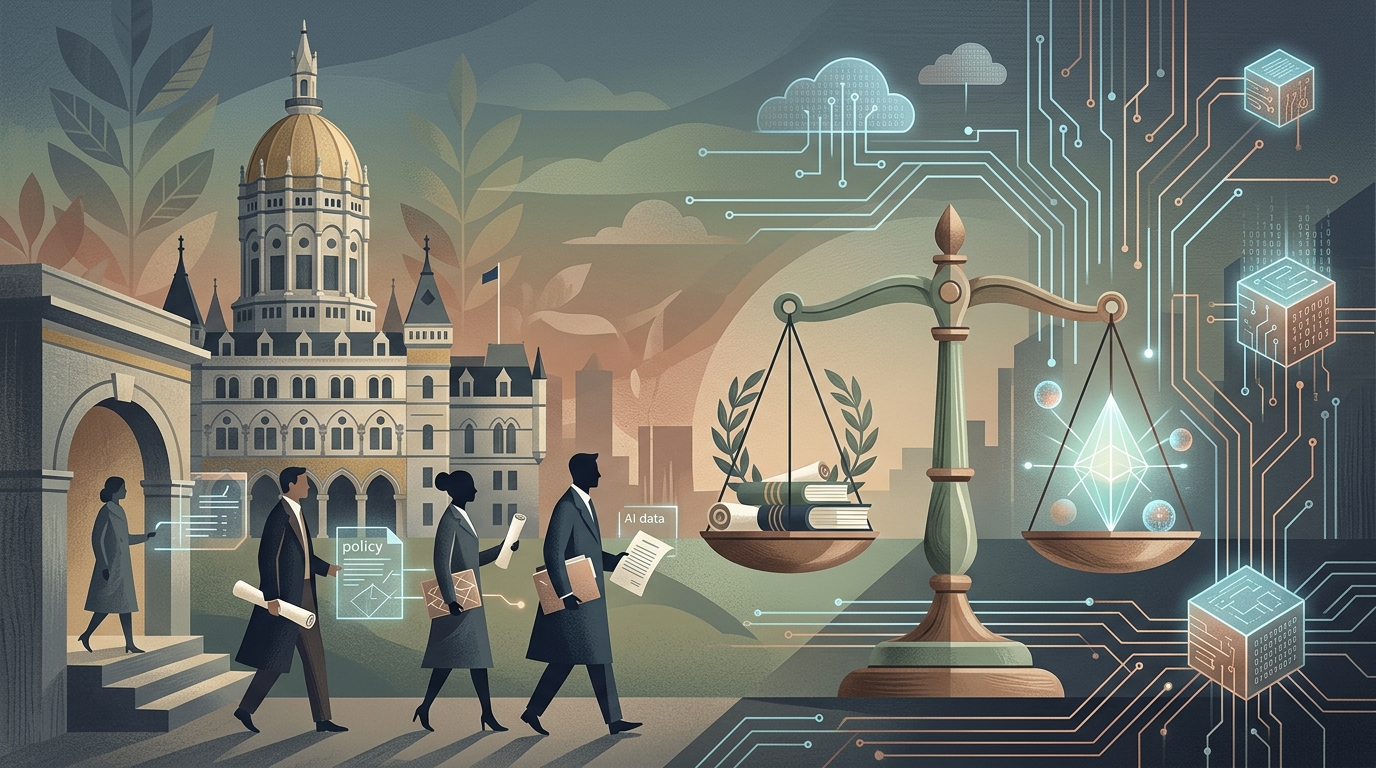
In a move that signals a new era for legislative oversight of technology in the United States, the Connecticut Senate has passed an amended version of Senate Bill 2. This decision followed hours of intense debate and political maneuvering, highlighting the challenges lawmakers face as they attempt to harness a technology that evolves far faster than the pace of bureaucracy.
The Battle Against Deepfakes and Misinformation
The centerpiece of the bill focuses on the fight against "deepfakes"—digitally manipulated images and videos that can be used for malicious purposes. The legislation makes it clear that creating non-consensual AI-generated pornographic content is a serious offense, while also setting strict rules for the use of AI in electoral processes. At a time when trust in institutions is wavering, Connecticut seeks to protect democratic integrity by mandating the labeling of AI-generated content.
Proponents of the bill argue that without these safeguards, social cohesion is at risk. The ability of AI to construct false realities demands an immediate legal response that goes beyond mere recommendations. The bill envisions the creation of a "digital watermark" or other identification methods so that citizens know when they are interacting with algorithms versus human creation.
Compromise with the Tech Industry
The original draft of the bill was significantly more stringent, drawing criticism from Governor Ned Lamont and tech industry representatives. The fear was that excessive restrictions could drive innovative companies away from the state, stifling economic growth. After extensive amendments, the final text represents a political compromise: it provides consumer protections without imposing prohibitive compliance costs on small and medium-sized tech firms.
- Exemption of certain open-source projects from strict limitations.
- Creation of an advisory body to monitor the evolution of AI.
- Focus on "high-risk" AI uses, such as in hiring and insurance.
This compromise is seen as critical for the future acceptance of similar legislation in other states. Connecticut is acting as a laboratory of democracy, testing how regulatory authority can coexist with a free market in the high-tech sector.
State Usage and Accountability
Another significant aspect of the bill concerns how the state itself utilizes AI. The legislation mandates regular audits of AI systems used by state agencies to ensure there are no algorithmic biases that could lead to discrimination against citizens based on race, gender, or socioeconomic status.
"We cannot allow algorithms to make life-altering decisions behind closed doors without any oversight," stated one of the bill's sponsors during the session.
This transparency also extends to the private sector, as companies developing high-risk AI systems will be required to provide documentation on how their models function. Although the industry warns about the protection of trade secrets, the Senate ruled that the public interest outweighs corporate secrecy in matters concerning fundamental rights.
The Future of Regulation in the U.S.
As Congress in Washington remains deadlocked over federal AI legislation, individual states are taking the lead. Connecticut, following in the footsteps of the European Union's AI Act, is trying to create a framework that could serve as a model for the entire country. However, there is a risk of a "patchwork" of different laws across states, which could complicate company operations at a national level.
The success of SB 2 will be judged by its implementation. The creation of an Office of Artificial Intelligence within the state government is the first step toward active oversight. The challenge remains: how will legislation stay relevant when AI models are updated every few months? Connecticut's answer is flexibility and continuous consultation between lawmakers, scientists, and civil society.