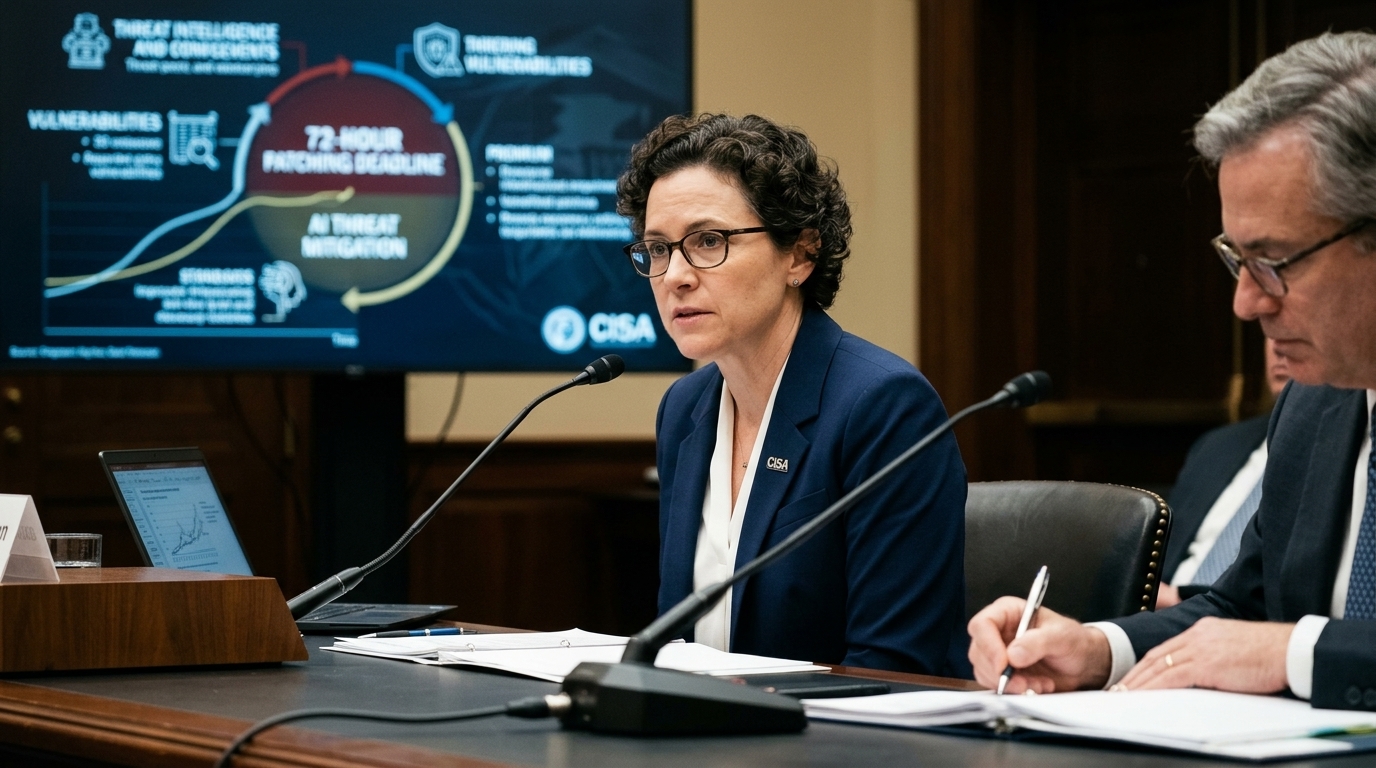
In an era where the velocity of digital assault is beginning to outpace human reaction times, the U.S. Cybersecurity and Infrastructure Security Agency (CISA) has issued a drastic tightening of its operational protocols. With a new directive reflecting the urgency of the moment, CISA now requires federal agencies to remediate critical security flaws in as little as three days, acknowledging that Artificial Intelligence has fundamentally rewritten the rules of engagement.
The traditional approach to cyber-defense, which allowed weeks or even months for the deployment of patches, is now considered obsolete and dangerous. “Defenders cannot afford to take weeks to patch,” a senior CISA official warned on Wednesday, emphasizing that the window between the discovery of a vulnerability and its weaponization by malicious actors has shrunk to mere hours, fueled by AI-driven automation tools.
AI as a Threat Multiplier
The primary driver behind this strategic pivot is the increasing utilization of Large Language Models (LLMs) and other forms of AI by state-sponsored hackers and criminal syndicates. These tools enable attackers to scan vast amounts of code in seconds, identifying weaknesses that would elude the human eye and automatically generating exploit code.
In the past, crafting a reliable exploit required deep expertise and significant time. Today, AI can be weaponized to perform the same task at a fraction of the cost and at unprecedented scale. This means that as soon as a software vendor announces a vulnerability, a race against time begins. Hackers use AI to reverse-engineer official patches, pinpointing exactly where the flaw lay and targeting those who have not yet upgraded their systems.
CISA’s Strategy and the KEV Catalog
CISA maintains the Known Exploited Vulnerabilities (KEV) catalog, which serves as the authoritative roadmap for federal cybersecurity. The new directive specifically targets vulnerabilities that are already being actively exploited in the wild. While the previous timeframe was typically 15 days, the new 72-hour requirement applies to cases where the risk to national security is immediate and severe.
- Strict Deadlines: Reducing the response time aims to close the "window of opportunity" for attackers.
- Risk Prioritization: Not all vulnerabilities require a 3-day turnaround, but those that AI can weaponize rapidly are prioritized.
- Vendor Accountability: CISA is pressuring tech companies to adopt "Secure by Design" principles, ensuring products are resilient from the start.
Implementation Challenges
Despite the necessity of the measure, its implementation is causing significant concern among Chief Information Officers (CIOs) across federal agencies. Many departments operate on legacy systems that are difficult to update without causing operational disruptions. The pressure to patch within 72 hours requires either massive human resources or, ironically, the deployment of AI-driven defensive automation.
"Speed is essential, but haste can lead to system instability. We must find the balance between security and operational continuity," says one cybersecurity analyst.
Furthermore, there is the risk of "patch fatigue." With thousands of new vulnerabilities discovered annually, technical teams are in a state of perpetual high alert, which can lead to human error or oversight.
The Geopolitical Context
This move does not occur in a vacuum. The United States is in a continuous digital standoff with adversaries such as China, Russia, and Iran. The "Volt Typhoon" operation, a Chinese cyber-espionage campaign targeting U.S. critical infrastructure, demonstrated that opponents are ready to exploit every second of delay. CISA, through these directives, is attempting to transform cyber-defense from a bureaucratic process into a dynamic, near-military operation.
In conclusion, CISA's new directive is an admission that the era of "human speed" in cybersecurity is over. For national infrastructure to survive in an AI-dominated landscape, defense must become as automated and rapid as the offense. The ultimate question is whether federal agencies can meet this exhausting pace before the next major exploit finds its mark.