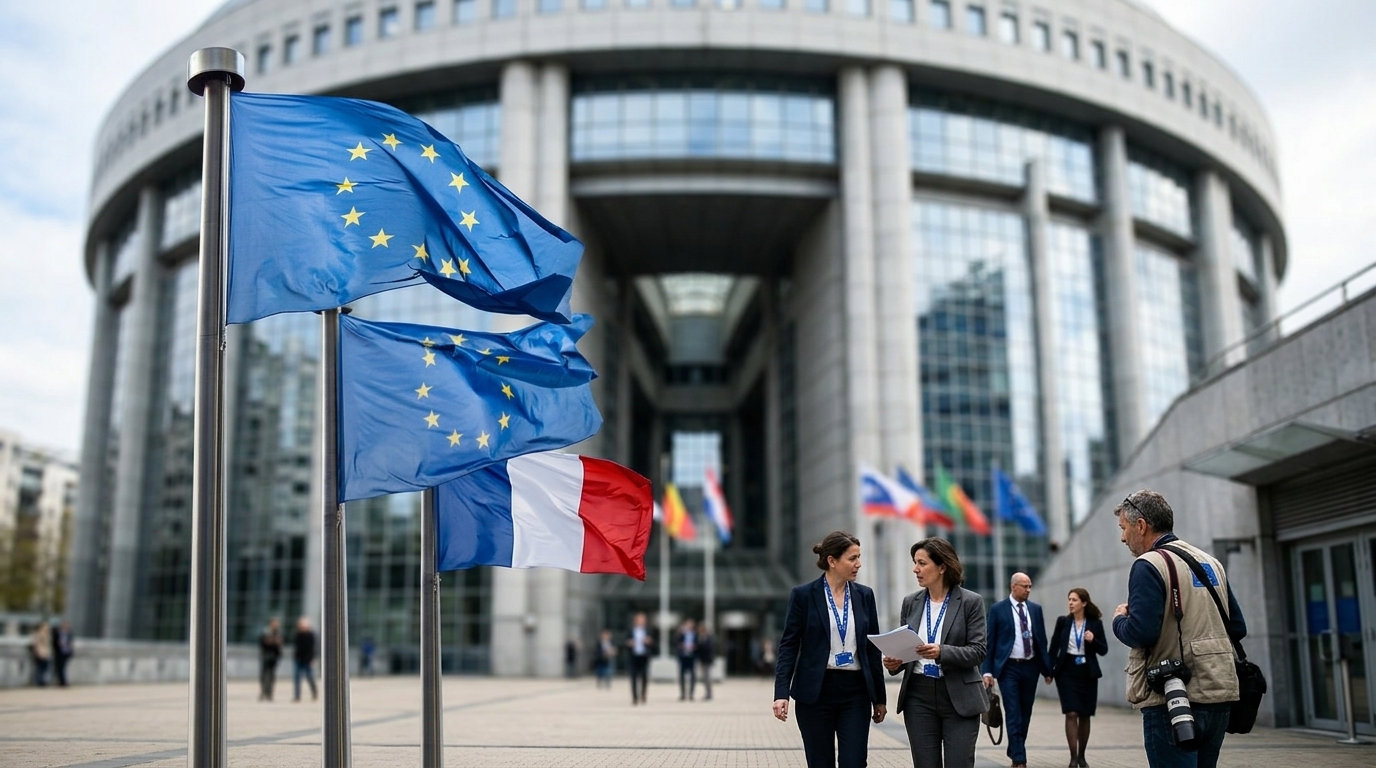
In a climate of intense political pressure and mounting electoral challenges across the continent, Brussels has reached a landmark agreement that aims to solve one of the European Union's most intractable puzzles: the effectiveness of returning those who do not qualify for asylum. This new political consensus, following the Pact on Migration and Asylum, focuses on tightening procedures and eliminating the legal loopholes that allowed thousands to remain on European soil despite rejection notices.
The Architecture of the New Agreement
The core of the agreement lies in the mutual recognition of return decisions. Until now, an expulsion order issued in Greece or Italy was often not enforced if the individual moved to Germany or France. Under the new framework, a return decision issued by one member state will have immediate validity across the entire Schengen Area. This is accompanied by the strengthening of the Schengen Information System (SIS), which will automatically alert all border authorities of any outstanding deportation orders.
Furthermore, the agreement provides for shorter deadlines for voluntary departure and stricter detention rules for those deemed a flight risk. The European Commission argues that 'efficiency' is the keyword, as the rate of successful returns in the EU remains historically low, hovering below 30% in recent years. The goal is to transform the return process from a bureaucratic labyrinth into a streamlined administrative procedure.
Border Externalization and 'Return Hubs'
One of the most controversial aspects of the agreement is the discussion surrounding the creation of return centers outside EU territory. While the text does not name specific countries, the philosophy of the 'Italy-Albania model' appears to be gaining traction. The idea is that migrants whose asylum applications are rejected at the borders will be transferred to controlled facilities in third countries until their repatriation process is finalized.
This approach reflects a shift toward realism—or cynicism, according to critics—as the EU attempts to decouple the asylum process from physical presence on European soil. Using developmental aid and visa policy as 'leverage' against countries of origin has now become an official tool of European diplomacy. "If a country does not accept its citizens back, it will face difficulties in issuing visas for its diplomats and citizens," a diplomatic source noted.
Implications for Greece and Frontline States
For Greece, this agreement is a double-edged sword. On one hand, accelerating returns could decompress the structures on the islands and Evros. Strengthening the role of Frontex, which is now transforming into an operational deportation arm with its own aircraft and personnel, is seen as a positive development for Athens. On the other hand, questions regarding funding and administrative burden remain. Managing 'closed centers' and ensuring human rights under the new, faster regime requires resources that frontline countries often struggle to mobilize.
"This is not just a legal regulation, but a political statement for the survival of the Schengen zone. Without effective returns, free movement within Europe risks collapsing under the weight of national border controls."
Reactions from humanitarian organizations have been sharp. Amnesty International and Human Rights Watch warn that the rush for returns could lead to violations of the principle of non-refoulement, sending individuals back to countries where their lives are at risk. However, the agreement includes a 'fundamental rights monitoring mechanism,' though it remains to be seen whether it will be truly independent or merely a bureaucratic alibi.
The Political Stakes
This agreement was not born in a vacuum. The rise of the far-right in countries like the Netherlands, Austria, and France has forced traditional political families (EPP, Socialists, Renew) to adopt a much harsher agenda. The Europe of 2026 is trying to balance the values of humanism with the need for security and control. The gamble is whether these new procedures will actually reduce flows through deterrence or if they will simply create a new generation of 'invisible' migrants within the EU, desperately avoiding detection and deportation.