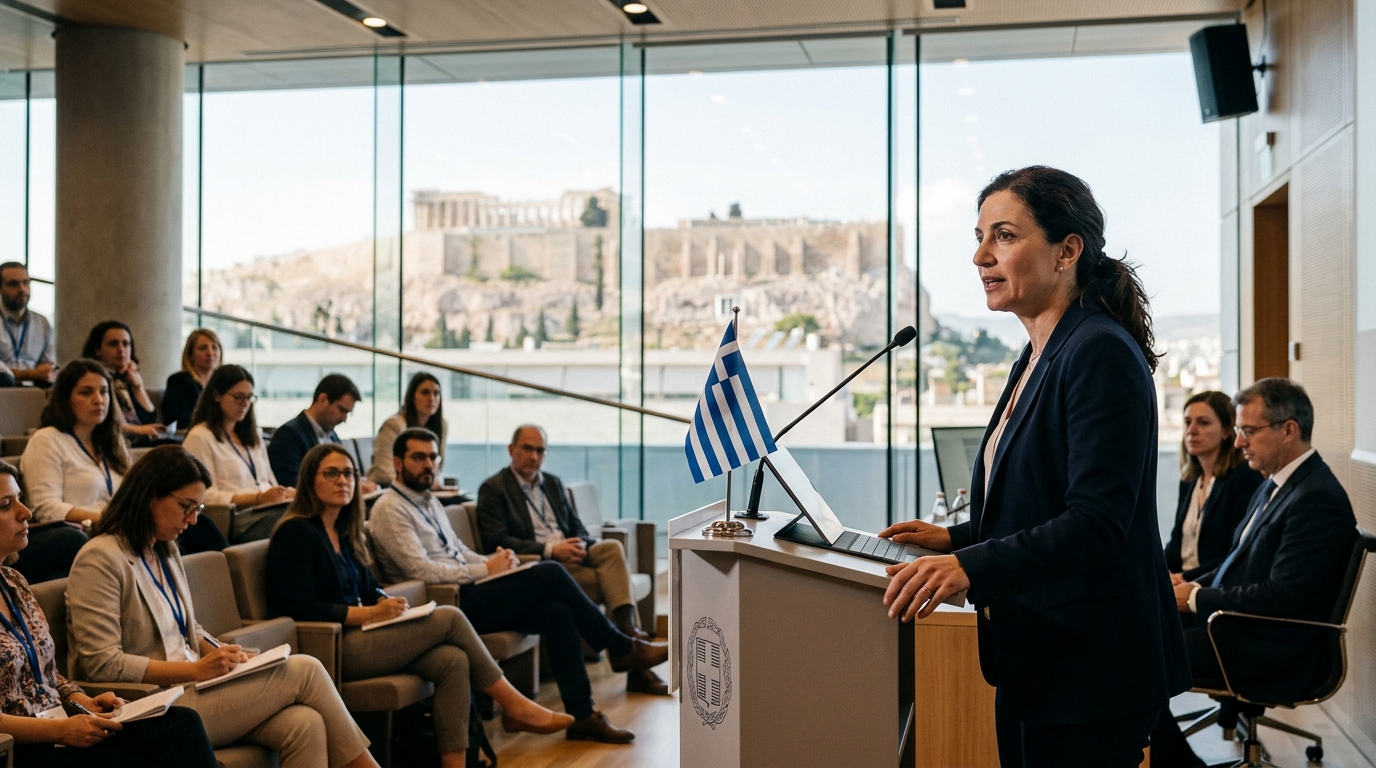
In the imposing setting of Delphi, where oracles once decided the fate of city-states, the modern economic reality of Greece and the Eurozone was laid bare. The 2026 Delphi Economic Forum found the global economy at a critical juncture, with Education Minister (and key government figure) Kyriakos Pierrakakis and European Commission Vice-President Valdis Dombrovskis sending messages that blended domestic confidence with external caution.
Kyriakos Pierrakakis, representing the government's line of stability, was categorical: no new package of measures is imminent. This statement was not merely a reassuring promise to the domestic audience, but a strategic positioning that the Greek economy now possesses the "defenses" to absorb shocks without resorting to emergency interventions that could derail the country's fiscal trajectory.
The Dombrovskis "Oracle" and the Threat of Stagflation
On the other hand, Valdis Dombrovskis, the man synonymous with Brussels' fiscal orthodoxy, grounded expectations for any loosening of the rules. His warning of a potential "stagflationary shock" due to the escalation in the Middle East resonated with particular intensity. Dombrovskis made it clear that the fiscal space for member states to react is now extremely limited, as Europe returns to a regime of strict surveillance under the new Stability and Growth Pact.
His firm "no" to the activation of an escape clause is the clearest signal yet to Eurozone governments: the era of "blank checks" opened by the pandemic is definitively over. For Greece, this means every euro of spending must be calculated, and every reform must bear fruit in terms of productivity, as external aid in the event of a crisis is no longer a given.
Geopolitical Uncertainty and Energy Costs
The discussion at Delphi highlighted the Middle East as the number one risk to European recovery. A further escalation in energy prices could reignite inflation just as growth is slowing down. This "double blow" is what concerns the Commission. Mr. Dombrovskis emphasized that the EU cannot continue to react to every crisis with new borrowing or fiscal loosening, as debt levels in many countries remain at historically high levels.
In this context, the Greek side insists on the importance of reforms. Mr. Pierrakakis emphasized that education and digitalization are Greece's "hidden weapons" for improving competitiveness. The logic is simple: if we cannot spend more, we must operate smarter. However, the reality of the market and the pressure on households from high prices remain the great challenges that no rhetoric about "no new measures" can fully dispel.
The New Fiscal Framework and Greece
The refusal of an escape clause means that from 2025 onwards, Greece must consistently produce primary surpluses, regardless of the international environment. This creates a "straitjacket" for economic policy. Analysis from officials at Delphi indicates that Athens is betting heavily on the absorption of Recovery Fund resources to maintain positive growth rates, which in turn will keep debt sustainable without the need for new austerity measures.
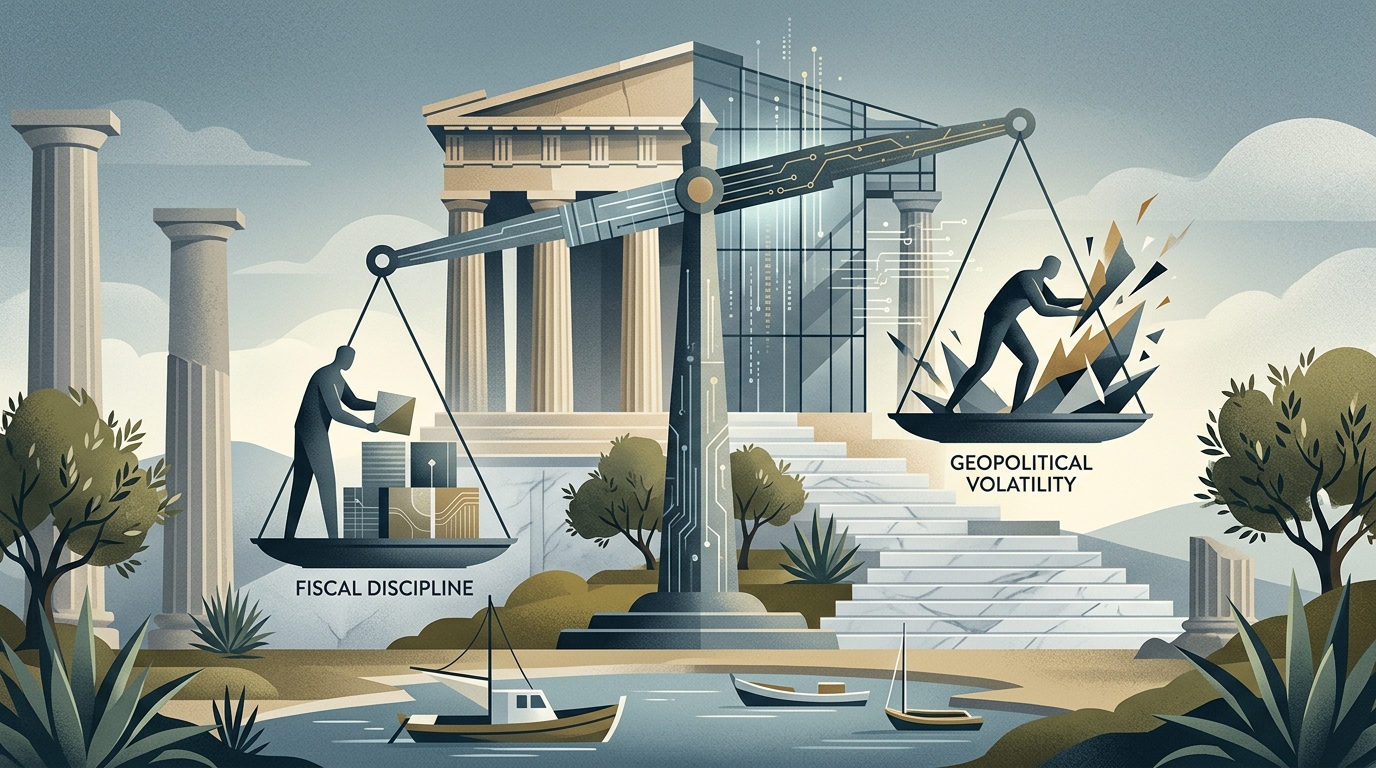
- Adherence to fiscal discipline serves as the "passport" for market confidence.
- Geopolitical instability remains the unpredictable factor that could overturn any budget.
- The EU's refusal to offer flexibility forces national governments into more conservative management.
In conclusion, the message from Delphi is clear: Greece is in a phase of maturity, but the environment around it is becoming increasingly hostile. While the government attempts to project confidence, Dombrovskis' warnings serve as a reminder that Europe is no longer willing to play the role of the "deus ex machina" in the event of new turbulence.